
Close Menu
    Facebook X (Twitter) Instagram
    SciTechDaily
    • Biology
    • Chemistry
    • Earth
    • Health
    • Physics
    • Science
    • Space
    • Technology
    Facebook X (Twitter) Pinterest YouTube RSS
    SciTechDaily
    Home»Biology»Chitinase 3-like-1, A Key to Fighting Pneumonia
    Biology

    Chitinase 3-like-1, A Key to Fighting Pneumonia

    By Helen Dodson, Yale UniversityJuly 19, 2012No Comments3 Mins Read
    Facebook Twitter Pinterest Telegram LinkedIn WhatsApp Email Reddit
    Share
    Facebook Twitter LinkedIn Pinterest Telegram Email Reddit
    Chi311
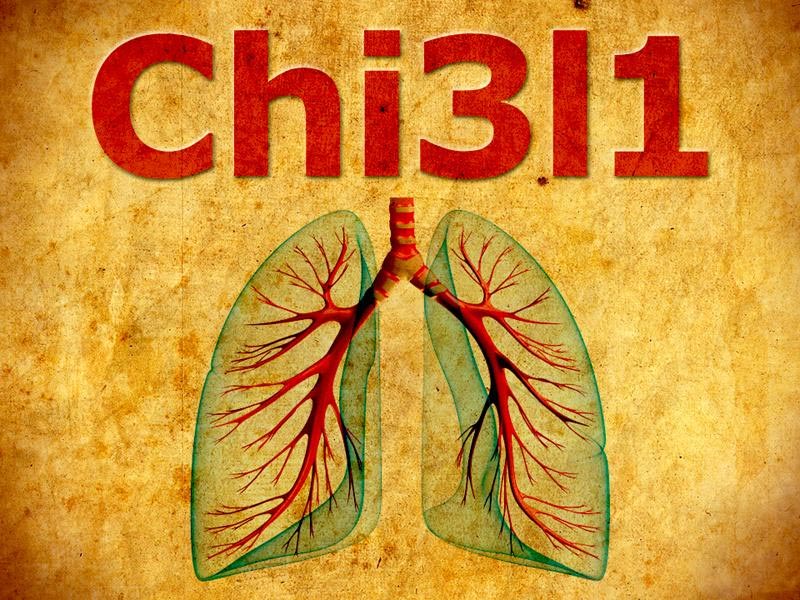
    The protein Chitinase 3-like-1 (Chi3l1) plays a vital role in regulating the immune response to Streptococcus pneumoniae. Credit: Illustration by Michael Helfenbein

    While working with mice, scientists at Yale University found that the protein Chitinase 3-like-1 (Chi3l1) was crucial in regulating the immune response to Streptococcus pneumonia, inhibiting the innate immune response and decreasing its ability to damage tissue in the host.

    A mysterious protein produced by a wide spectrum of living things is crucial in regulating the immune response to the most common form of pneumonia, a new Yale School of Medicine study shows. The study appears online in Cell Host & Microbe and in the July 19 print issue.

    The protein — present in the blood of every human being – is crucial to a successful immune system response to the bacteria and also seems to prevent that response from damaging the host, according to the researchers.

    “We believe this may be a major cornerstone in our understanding how we respond to many different kinds of pathogens,” said Dr. Jack A. Elias, chair of the Department of Internal Medicine and senior author of the paper.

    The Yale team investigated the protein, which has a number of names including chitinase 3-like-1 (Chi3l1), because it is a member of an ancient family of proteins found in species as diverse as plants, insects, and humans. This evolutionary conservation led researchers to believe that Chi3l1 plays an essential role in these organisms. However little was known about the functions of this protein in health or disease.

    The Yale team found that when mice lacking this key protein were exposed to Streptococcus pneumoniae, they experienced exaggerated levels of inflammation, suffered much greater damage from inflammation and hemorrhage, and had a higher rate of mortality and sepsis (blood poisoning) than those with the protein. They found that the protein helped immune system cells called macrophages to clear the pathogens from the body.

    They also found that Chi311 inhibited the innate immune response and decreased its ability to damage tissue in the host. The latter is particularly important, note the researchers, because an overwhelming innate immune system response contributes to the adverse consequences of infections, such as respiratory failure and sepsis, which are among the highest causes of death in hospitals.

    “In recent years there has been a much greater appreciation that the perfect immune system response is one that eliminates bacteria but does not kill the host,” said Dr. Charles Dela Cruz, assistant professor of medicine and lead author of the paper. “This molecule seems to help the organism achieve that balance.”

    Reference: “Chitinase 3-like-1 Promotes Streptococcus pneumoniae Killing and Augments Host Tolerance to Lung Antibacterial Responses” by Charles S. Dela Cruz, Wei Liu, Chuan Hua He, Adam Jacoby, Alex Gornitzky, Bing Ma, Richard Flavell, Chun Geun Lee and Jack A. Elias, 19 July 2012, Cell Host & Microbe.
    DOI: 10.1016/j.chom.2012.05.017

    The research was funded by a Parker Francis Fellowship, Flight Attendant Medical Research Institute (FAMRI) Award and NIH KO8 (Dela Cruz). Elias was supported by FAMRI and NIH grants R01-HL-093017 and U01-HL-108638.

    Other authors include Wei Liu, Chuan Hua He, Adam Jacoby, Alex Gornitzky, Bing Ma, Richard Flavell, and Chun Geun Lee.

    Never miss a breakthrough: Join the SciTechDaily newsletter.
    Follow us on Google and Google News.

    Disease Immune System Pneumonia Protein Yale University
    Share. Facebook Twitter Pinterest LinkedIn Email Reddit

    Related Articles

    ‘NoBody’ – A Microprotein on a Mission

    Researchers Solve Biological Mystery about the Common Genesis of Many Serious Diseases

    New Design Makes Previously Inaccessible Proteins Vulnerable to Drugs

    Understanding the Internal Process That Makes Salmonella Dangerous

    New Antibody Drug Boosts the Immune System’s Capacity to Fight Cancer

    Infrared Spectroscopy Analyzes Proteins in Picoseconds

    Complete Structure of the “Salvia Receptor” Revealed

    Using RNA Import to Repair Mutations in Human Mitochondria

    Researchers Stop Parkinson’s Disease in Animal Model

    Leave A Reply Cancel Reply

    • Facebook
    • Twitter
    • Pinterest
    • YouTube

    Don't Miss a Discovery

    Subscribe for the Latest in Science & Tech!

    Trending News

    Millions Take These IBS Drugs, But a New Study Finds Serious Risks

    Scientists Unlock Hidden Secrets of 2,300-Year-Old Mummies Using Cutting-Edge CT Scanner

    Bread Might Be Making You Gain Weight Even Without Eating More Calories

    Scientists Discover Massive Magma Reservoir Beneath Tuscany

    Europe’s Most Active Volcano Just Got Stranger – Here’s Why Scientists Are Rethinking It

    Alzheimer’s Symptoms May Start Outside the Brain, Study Finds

    Millions Take This Popular Supplement – Scientists Discover a Concerning Link to Heart Failure

    The Universe Is Expanding Too Fast and Scientists Can’t Explain Why

    Follow SciTechDaily
    • Facebook
    • Twitter
    • YouTube
    • Pinterest
    • Newsletter
    • RSS
    SciTech News
    • Biology News
    • Chemistry News
    • Earth News
    • Health News
    • Physics News
    • Science News
    • Space News
    • Technology News
    Recent Posts
    • Doctors Surprised by the Power of a Simple Drug Against Colon Cancer
    • Why Popular Diabetes Drugs Like Ozempic Don’t Work for Everyone: The “Genetic Glitch”
    • Scientists Create Improved Insulin Cells That Reverse Diabetes in Mice
    • Scientists Stunned After Finding Plant Thought Extinct for 60 Years
    • A Common Diabetes Drug May Hold the Key to Stopping HIV From Coming Back
    Copyright © 1998 - 2026 SciTechDaily. All Rights Reserved.
    • Science News
    • About
    • Contact
    • Editorial Board
    • Privacy Policy
    • Terms of Use

    Type above and press Enter to search. Press Esc to cancel.