
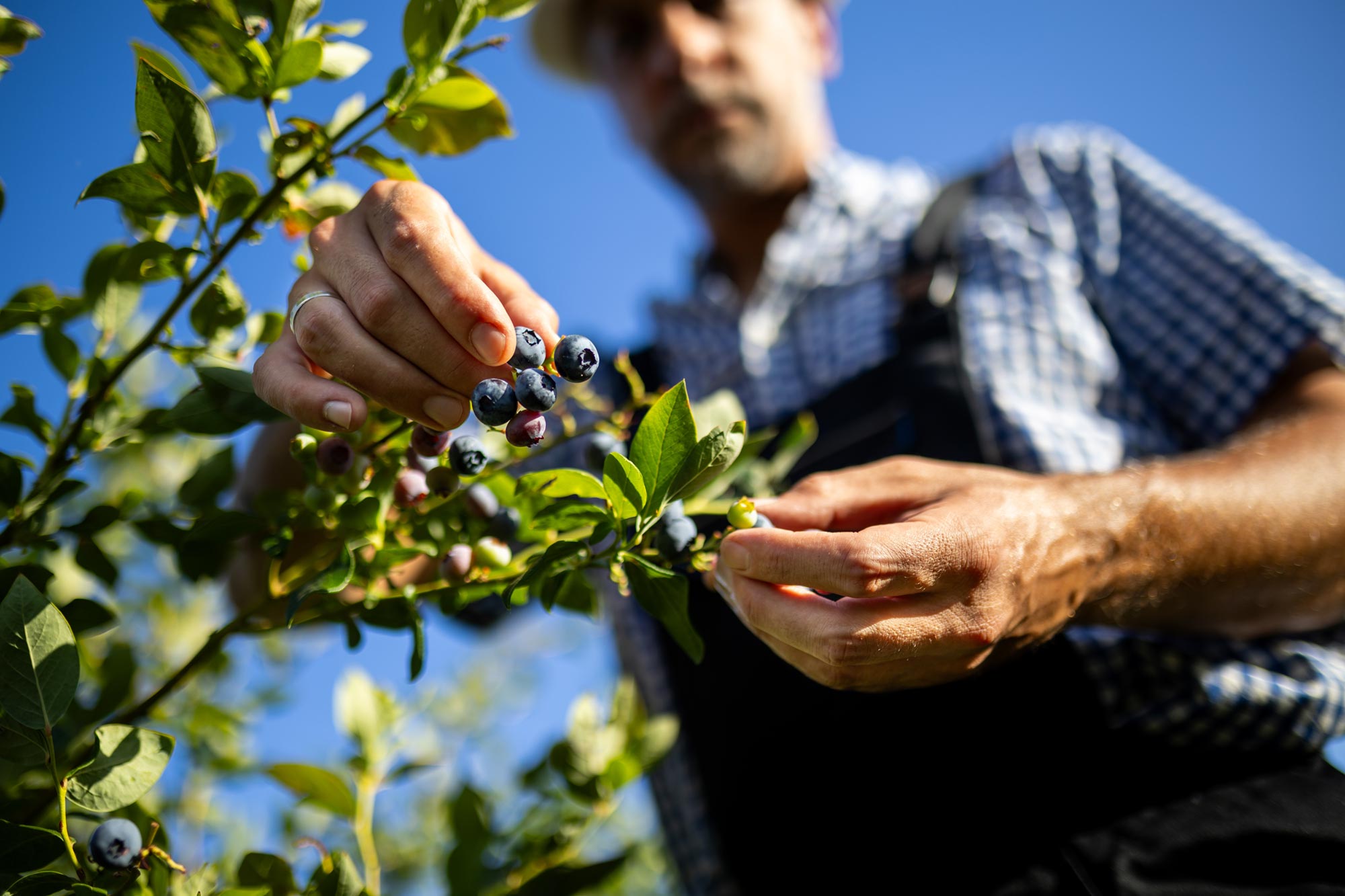
A newly identified pest is raising concerns for North Carolina’s blueberry industry.
What began as a mystery beneath North Carolina’s blueberry fields has now been traced to a surprising culprit: a giant root-feeding beetle never before confirmed attacking blueberries anywhere else in the United States.
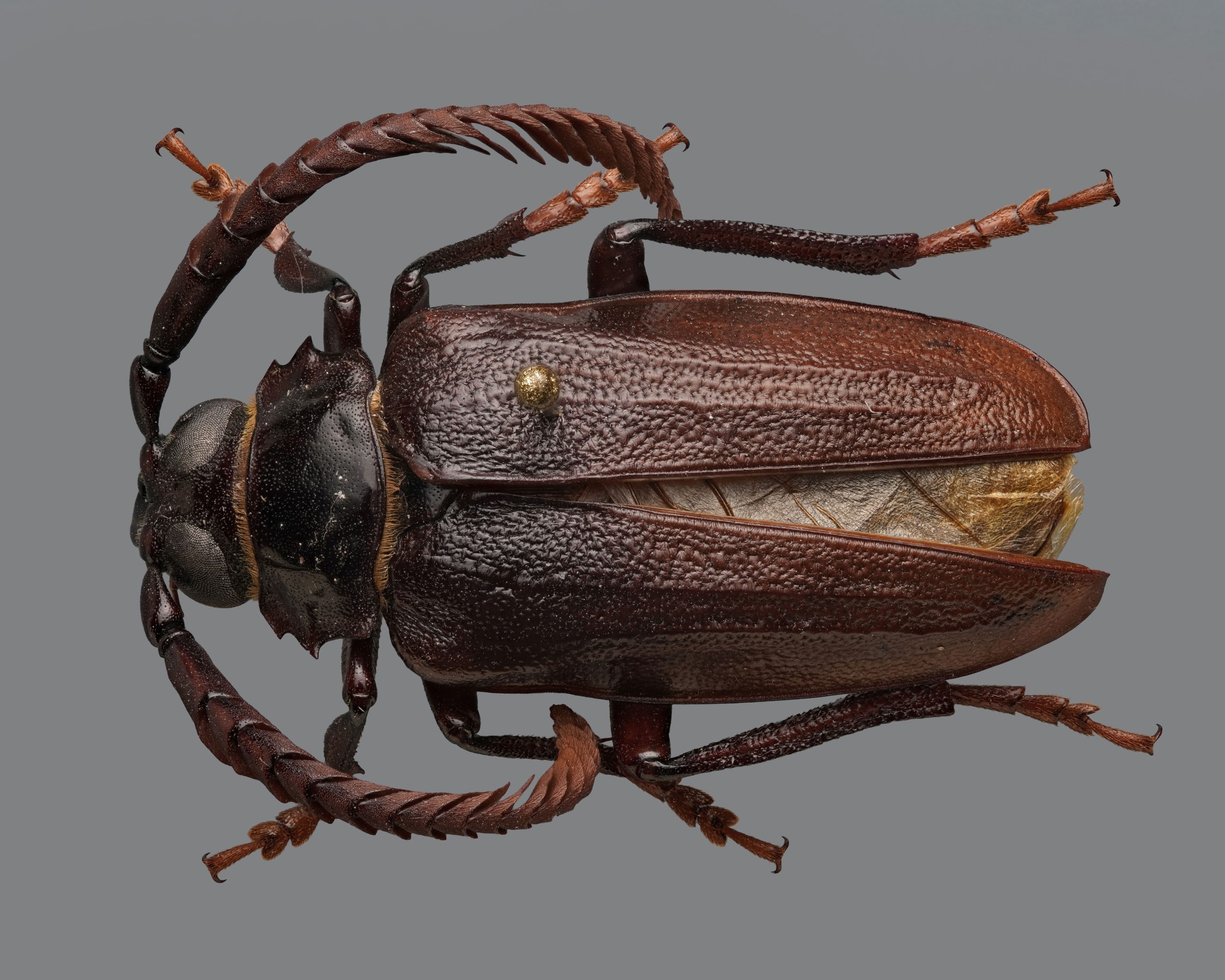
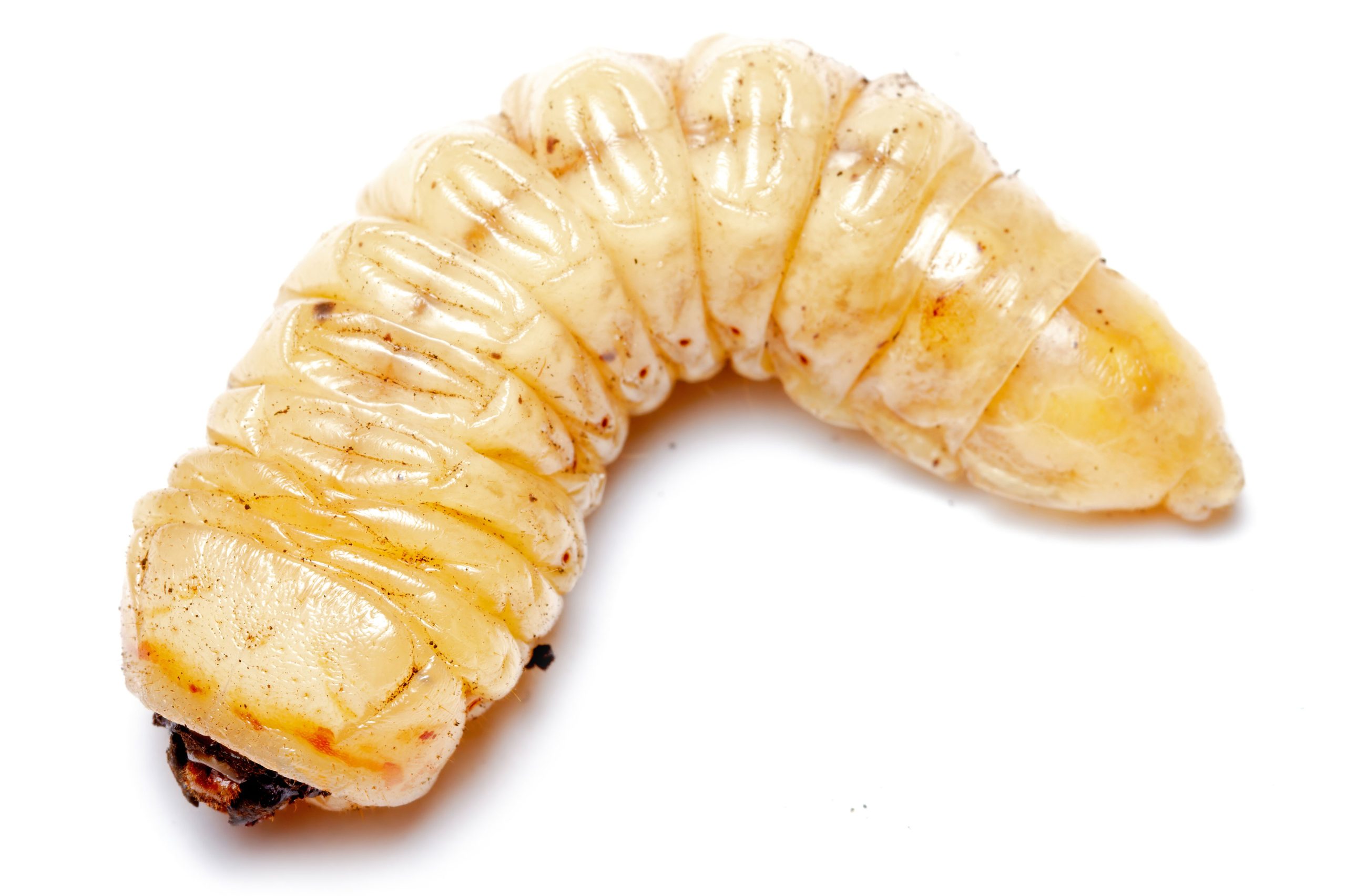
Researchers at North Carolina State University have identified the insect responsible for years of unexplained root damage in some blueberry plantings as Prionus imbricornus, a large species of longhorn beetle whose larvae can grow up to five inches (12.7 centimeters) long. While the beetle is well known for attacking the roots of hardwood trees, scientists have now confirmed that it is also feeding on blueberry bushes, making North Carolina the first state to document the species as a blueberry pest.
The discovery solves a problem that has frustrated growers and researchers for more than a decade. Reports of large underground larvae damaging blueberry roots date back to 2010, but identifying the exact species proved difficult because the insects spend most of their lives hidden in the soil.
A Hidden Threat Beneath the Soil
Unlike many agricultural pests that feed on leaves, fruit, or stems, P. imbricornus causes damage out of sight. Adult beetles emerge from the ground and are easily recognized by their long antennae, but they do not feed. The real threat comes from the larvae, which tunnel through the soil and consume roots.
Because healthy roots are essential for water and nutrient uptake, heavy infestations can weaken plants, reduce productivity, and potentially kill bushes. Root-feeding pests are often especially difficult to manage because damage may not become apparent until plants begin to decline.
For years, researchers knew Prionus larvae were present in affected blueberry fields, but determining which species was responsible was another matter. Many longhorn beetle larvae look remarkably alike, making visual identification unreliable.
That uncertainty created challenges for pest management, according to Kenneth Geisert, a graduate student in NC State’s College of Agriculture and Life Sciences and lead author of the study.
“Before now, researchers often just assumed the species of Prionus on their commodities based on adult identification,” Geisert said. “If that guess was incorrect, it could mean using a treatment strategy that did not line up with the problem and incorrectly associating species and their hosts. For instance, while P. imbricornus attacks roots, another type of longhorn beetle might attack the trunk of a tree, or dead branches. Without knowing which species of beetle you’re dealing with and their ecology, incorrect management can cause adverse effects on non-target insects.”
Using DNA to Identify the Culprit
To identify the culprit, researchers placed black panel traps baited with sex pheromones at six farms in Pender, Sampson, Bladen, and New Hanover counties. The traps captured adult beetles that could be used for comparison.
The team then applied genetic barcoding, a technique that examines standardized DNA segments from larvae. Scientists compared those DNA sequences with genetic material from known Prionus adults to determine the species.
The analysis identified the larvae as P. imbricornus with 98% to 99% accuracy.
Lorena Lopez, an assistant extension professor in NC State’s Department of Entomology and Plant Pathology and a co-author of the study, said the finding brings both benefits and new challenges.
“On one hand, it’s very important that we know which species we’re dealing with,” she said. “On the other, North Carolina was the first state to ever report Prionus infestation in blueberries, and there are no insecticides currently labeled against this pest in blueberries.”
To help growers manage the problem, Lopez has begun testing insecticides against the pest. Researchers hope to identify products that work effectively and determine the best timing for treatments based on the beetle’s reproductive cycle.
Targeting larvae early in their development could reduce root damage and provide blueberry growers with a much-needed tool for controlling this emerging pest.
Reference: “Prionus imbricornis (Coleoptera: Cerambycidae), an emerging pest in North Carolina blueberries” by Kenneth A Geisert, Gareth S Powell and Lorena Lopez, 1 June 2026, Journal of Integrated Pest Management.
DOI: 10.1093/jipm/pmag018
Never miss a breakthrough: Join the SciTechDaily newsletter.
Follow us on Google and Google News.
1 Comment
thanks