
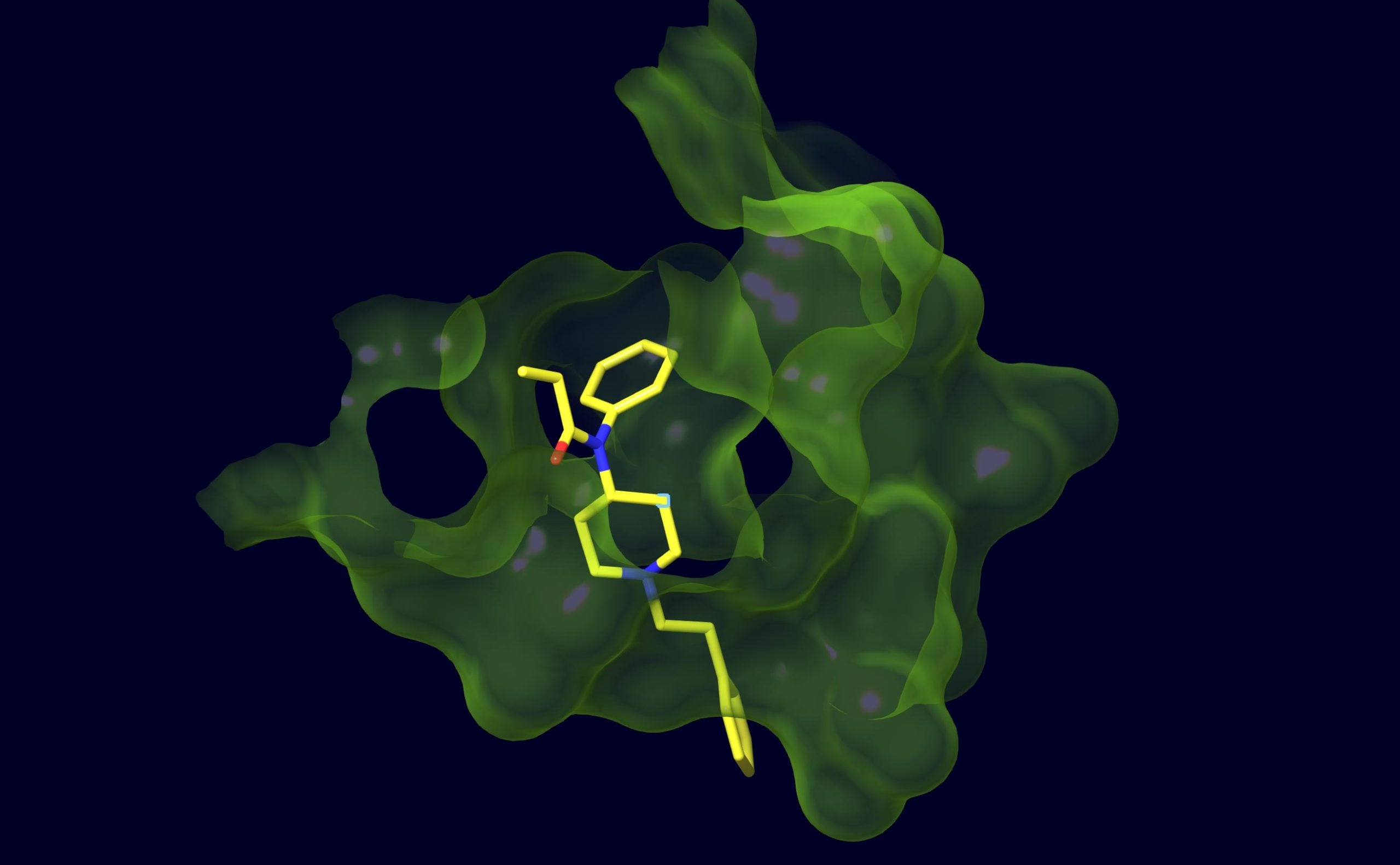
An experimental vaccine could help stop fentanyl and future designer-drug variants before they can trigger a deadly overdose.
Fentanyl has become one of the deadliest drugs in the United States, with fentanyl and related synthetic opioid variants now claiming more lives each year than car crashes and gun violence combined. When taken in excessive amounts, these drugs disrupt critical brain functions and can stop the signals that control breathing. Although existing treatments can reverse an overdose, they must be administered quickly to be effective.
Researchers at Scripps Research are exploring a very different strategy. Instead of treating an overdose after it happens, they have developed an experimental vaccine designed to train the immune system to neutralize fentanyl before the drug can reach the brain. Their findings, published in the Journal of Medicinal Chemistry, suggest the vaccine may protect not only against fentanyl itself but also against many fentanyl-related “designer drugs” that are modified to increase potency or avoid detection.
“What this research shows us is that we don’t have to keep playing catch-up with every new synthetic designer drug that emerges,” says senior author Kim Janda, the Ely R. Callaway, Jr. Professor of Chemistry at Scripps Research. “By training the immune system to recognize the entire fentanyl class—not just individual structures—we can stay ahead of illicit drug traffickers.”
A Vaccine Designed for More Than One Drug
For years, scientists have been working on vaccines that generate antibodies capable of binding to fentanyl in the bloodstream before it can affect the brain. Janda’s laboratory has previously developed vaccine candidates targeting both fentanyl and heroin.
However, traditional approaches usually require researchers to use the drug itself, or a very close chemical imitation, to teach the immune system what to recognize. That creates challenges during vaccine development because these substances are heavily regulated. It also limits effectiveness because the immune system becomes trained to identify only the specific drug used in the vaccine.
“The way the fentanyl landscape is evolving, the black-market drug makers are constantly coming up with new versions to skirt regulations and avoid detection in standard screenings,” says Janda. “We need countermeasures that are going to work against all these future variants at once, not just one at a time.”
Testing an Unconventional Approach
Janda and his colleagues recently created a modified fentanyl-like compound that maintained pain-relieving effects while removing many of the drug’s harmful side effects. In the new study, they investigated whether a related molecule with a different core structure, but sharing some key features with fentanyl, could serve as the basis for a vaccine.
“When we started testing this molecule as a vaccine component, we honestly didn’t know if it would work,” says Arran Stewart, a research associate in the Janda lab and first author of the study. “The conventional wisdom says that to get the immune system to recognize fentanyl, you have to use something that looks like fentanyl. We were doing the opposite.”
The researchers linked the modified molecule to a carrier protein and administered four vaccine doses to mice over an eight-week period.
The results were unexpected. The immune system did not require an exact chemical copy of fentanyl to produce protective antibodies. Instead, it learned to recognize a broader molecular signature shared by drugs across the fentanyl family.
Broad Protection Against Fentanyl Variants
When the scientists evaluated the antibodies against multiple fentanyl designer drugs, the vaccine demonstrated the broad recognition they had hoped to achieve. The antibodies strongly bound to fentanyl as well as other dangerous variants, including carfentanil, China White, acetylfentanyl and furanylfentanyl.
At the same time, the antibodies did not react to commonly used medical opioids such as morphine, oxycodone, remifentanil and alfentanil.
The protective effects extended beyond laboratory testing. Mice that received the vaccine maintained nearly normal breathing after being given fentanyl doses that would ordinarily cause severe respiratory depression. The researchers also found that fentanyl levels in the brains of vaccinated mice were about 70% lower than in unvaccinated animals.
Potential Tool for Preventing Fentanyl Overdoses
Human clinical trials will still be needed to determine whether the vaccine is safe and effective in people. Nevertheless, Janda believes the approach could eventually help prevent overdoses among individuals in substance abuse recovery programs and others who face a high risk of fentanyl exposure.
“The public health potential here is significant,” says Janda. “But so is the lesson that we can design vaccines that recognize an entire drug class, not just a singular drug.”
Reference: “Redefining Drug Immune Recognition: A Radically Reconfigured Molecular Architecture Enables Broad Fentanyl-Class Protection” by Arran W. Stewart, Lisa M. Eubanks, Bin Zhou, Rachel C. Steinhardt and Kim D. Janda, 12 May 2026, Journal of Medicinal Chemistry.
DOI: 10.1021/acs.jmedchem.6c00991
In addition to Janda and Stewart, the authors of the study are Lisa Eubanks, Bin Zhou, and Rachel Steinhardt, all from Scripps Research.
This work was supported by the Shadek Family Foundation.
Never miss a breakthrough: Join the SciTechDaily newsletter.
Follow us on Google and Google News.
4 Comments
Very interesting concept, and hopefully it will work in humans. My only concern is whether it would give a green light to addicts by telling them that it is OK to overdose because you won’t die.
Wish they could fund something to work on meth addiction.
This is super hopeful news. A vaccine as a treatment option for addicts would be unprecedented!
Now if they could do the same for alcohol… That’s the drug that nearly took me down.
“…, with fentanyl and related synthetic opioid variants now claiming more lives each year than car crashes and gun violence combined.”
Yet, the mainstream media rarely mentions fentanyl, while having diatribes against gun ownership weekly, and more frequently after a mass shooting. My suspicion is that most of the mass shootings that are not gang-related are an attempt at ‘suicide by cop.’ Why else would someone expend 100+ rounds and only actually kill the same number as they could with a revolver, as happened recently at the Covenant School in Tennessee?
Unless something is done to address the desire to experience the feelings resulting from using fentanyl, people will have little motivation to use something that they may be concerned will dull the experience. There is a related issue that while most overdose deaths are classified as accidental, many may be suicides without a note.
It is interesting that rising suicide rates are a problem world wide across many cultures. We need to better understand why that is. Related to that is the rise in recreational drug use when people should understand that there is no control over the quality or concentration of what classic illicit drugs are cut with. Why do people take the risk?
Perhaps a better approach would be similar to what was done to reduce coyote predation on sheep. Carcasses were laced with something that would make the coyotes very sick, but not kill them. They were thus trained to avoid eating mutton.