
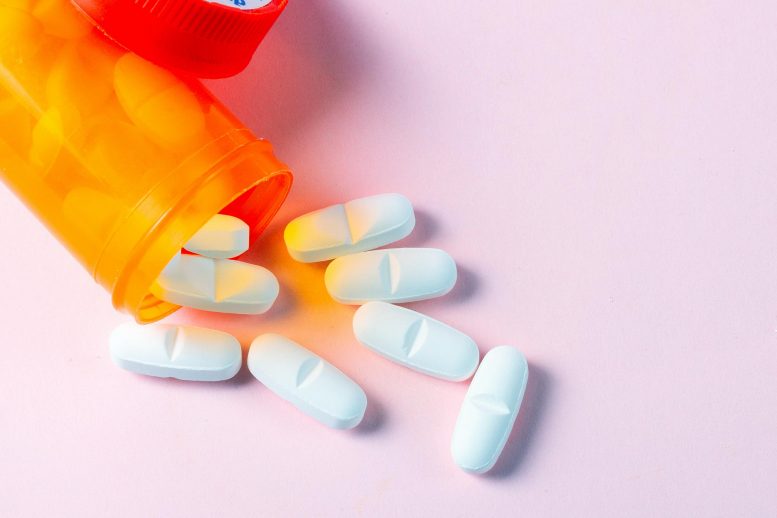
Opioids are the most powerful painkillers we have, but they’re incredibly addictive. Tens of thousands of people in the U.S. die of an opioid overdose every year. Will we ever have drugs that are just as good at getting rid of pain but without the risk of addiction and overdose?
If you or someone you know is struggling with opioid addiction in the US, SAMHSA can help (free of charge). Call them at 1-800-662-HELP (4357) or visit their website.
Video Transcript:
Opioids are the most powerful painkillers we have, but they’re also super addictive.
In 2017, millions of people around the world were addicted to opioids and 115,000 died of an overdose.
This is not a new problem.
For centuries we’ve been trying to find ways of making opioids less addictive, like in the 1890s, when we modified morphine to make a drug called heroin. We all know that didn’t work.
So will we ever have drugs that are just as good at getting rid of pain, but without the risk of addiction and overdose?
Opioids have been around for thousands of years, since the beginning of human civilization. It all started with opium, which was made from the milky fluid of an opium poppy.
The opium poppy was apparently referred to as the joy plant because of how it would make you feel.
People also noticed it was great at treating pain during the Civil War, the Union Army apparently issued 10 million opium pills to their soldiers.
It didn’t take long to realize that people were getting hooked on opium. So scientists started looking for some other opioids that might not cause the same issue.
In 1803, a German chemist named Friedrich Sertürner discovered a chemical in that milky fluid that was a lot more powerful than opium. He called it morpheme, which we now call morphine.
He found that it was a lot more powerful than opium so he reasoned that you would need less of it to get the same pain relief. And that would mean less risk for addiction.
As it turned out, Sertürner got addicted while doing the research.
And although he sounded the alarm, people didn’t listen. Within a couple of decades, morphine was being mass produced by a major German pharmaceutical company. And it quickly became clear that Sertürner’s theory was wrong. People could be just as addicted to morphine.
So what did they do about it? Make heroin.
No, seriously. They made heroin.
Heroin was also really effective at treating pain, but at an even lower dose. So again, scientists reason that not needing as much of it would make it a less addictive opioid.
In fact, in the early 1900s, a religious organization in the United States supplied free samples of heroin through the mail to try to wean people off of morphine.
Here’s your heroin, sir.
That did not work either.
Fast-forward about a century later and scientists have created opioids like Oxycontin, which again was supposed to be less addictive.
You’re probably seeing a trend here. Throughout history, we’ve been trying to get the same painkiller benefits that opioids give us without creating a new addictive drug. But what happened is that we’ve just created more types of opioids that people are getting addicted to.
So why are opioids so addictive? And if we know they’re this addictive and that people are overdosing on them, why are they still being prescribed?
Well, they’re incredible painkillers. And a lot of people rely on them to deal with chronic pain from an injury or surgery or even cancer.
Here’s why they work so well. Opioids mimic pain-relieving chemicals or endorphins that your body naturally produces.
So when you take an opioid, it gets into your bloodstream and from there goes to your nervous system, binding to opioid receptors in your brain, spinal cord, and peripheral nerves.
When it binds, it blocks the release of chemicals called neurotransmitters that normally send your brain the message, “Hey, I’m in pain.”
Sounds great, right?
Now let’s get to the addiction part.
Opioids cause your brain to release dopamine. Dopamine is a neurotransmitter that our brain makes when we’re expecting or experiencing a reward.
Like when we eat food we love or get a text from someone we really like. Dopamine makes us feel happy. And normally its levels are kept in check by a neurotransmitter called gamma-aminobutyric acid or GABA.
But opioids also block GABA release. So dopamine can just do its thing, totally unregulated getting your brain hooked on that happy feeling.
That’s addiction. And with addiction comes tolerance where you need more and more of a drug to get the same physical effects.
If you take too much of an opioid you’ll overdose, and if you’re not treated quickly, you could stop breathing.
Over-the-counter painkillers like ibuprofen don’t mimic endorphins. So they’re not going to be powerful painkillers, but that means they also don’t cause dopamine release, which means they’re not addictive.
So will we ever have painkillers that work as well as opioids, but won’t lead to addiction and overdose?
Scientists are trying, but it’s been really hard to find something that’s so good at treating pain, without getting dopamine flowing.
There’s a lot of ongoing research looking at how our bodies experience pain to figure out if there might be other nervous system targets that wouldn’t lead to dopamine release.
As for helping people who are already addicted and have developed a tolerance to opioids, but want to get off of them, there are drugs out there that can help with the painful symptoms that come from withdrawal.
Researchers are also developing completely new approaches, like creating vaccines that don’t get your immune system to bind to opioids or their breakdown products and stop them from binding to opioid receptors on your cells.
This is actually a pretty big area of research that’s received quite a bit of funding in recent years. So it’ll be interesting to see where it goes.
Never miss a breakthrough: Join the SciTechDaily newsletter.
Follow us on Google and Google News.
2 Comments
There are numerous other negative side-effects to opioid use than its additive qualities. Far better we find less damaging alternative pain-relieving methods than these compounds.
Actually, the creation of heroin(acetyl dimorphine) did work. Heroin causes less depression of respiration for the same amount of pain relief than any other opiate.
You can relieve more pain with heroin, without having the patient stop breathing, not a bad thing if you ask me. The banning of heroin in the US is the result of a moral panic, and is bad policy, particularly for cancer, and burn patients.