
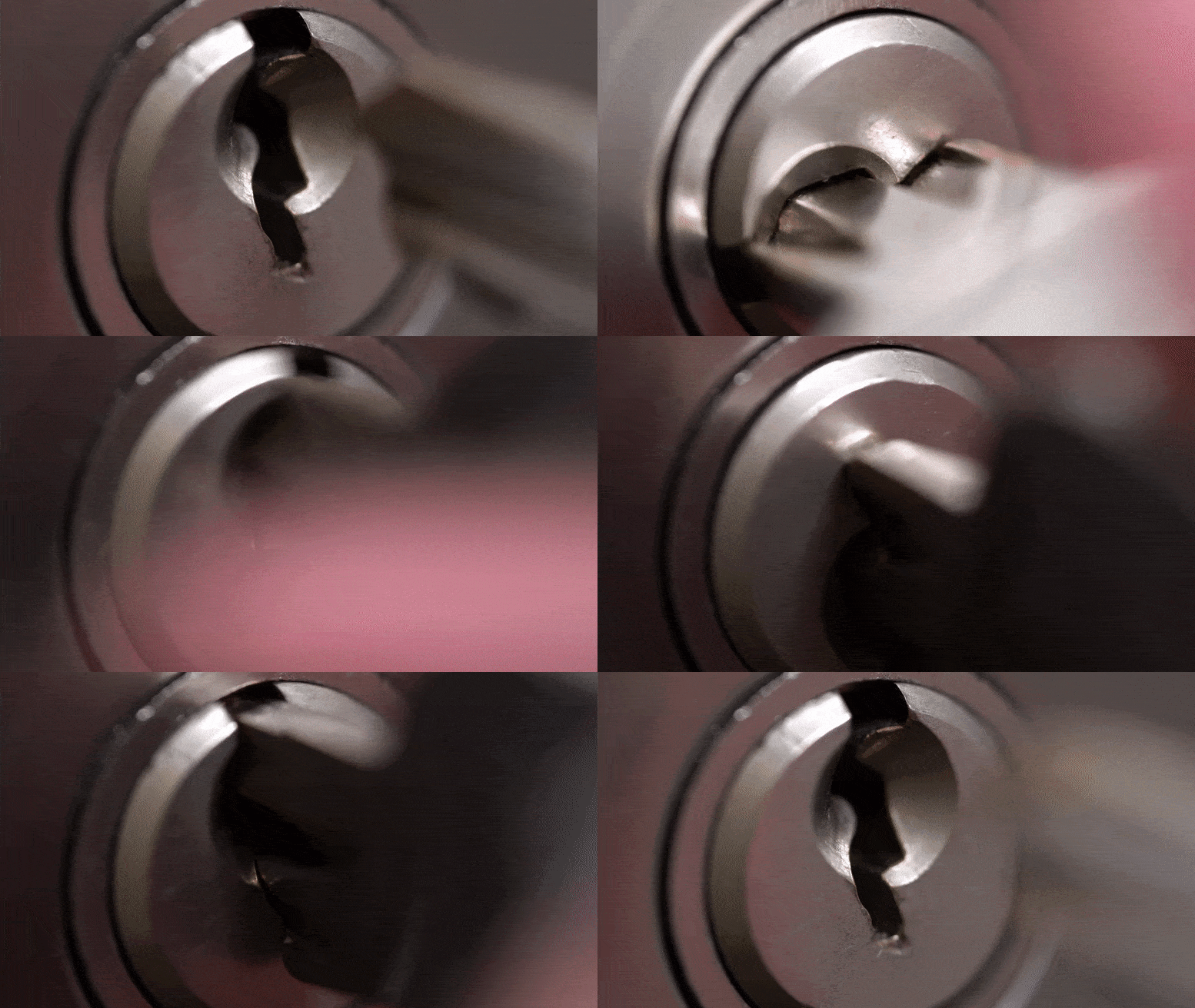
Keys open locks by aligning pins to specific valley depths, much like passwords protect security. Both require precision and secrecy to prevent unauthorized access.
Have you ever wondered how keys work to open locks? I teach a course in computer security where we learn how locks function – and also how they can be broken or bypassed. We do this because locks teach important principles about security in general.
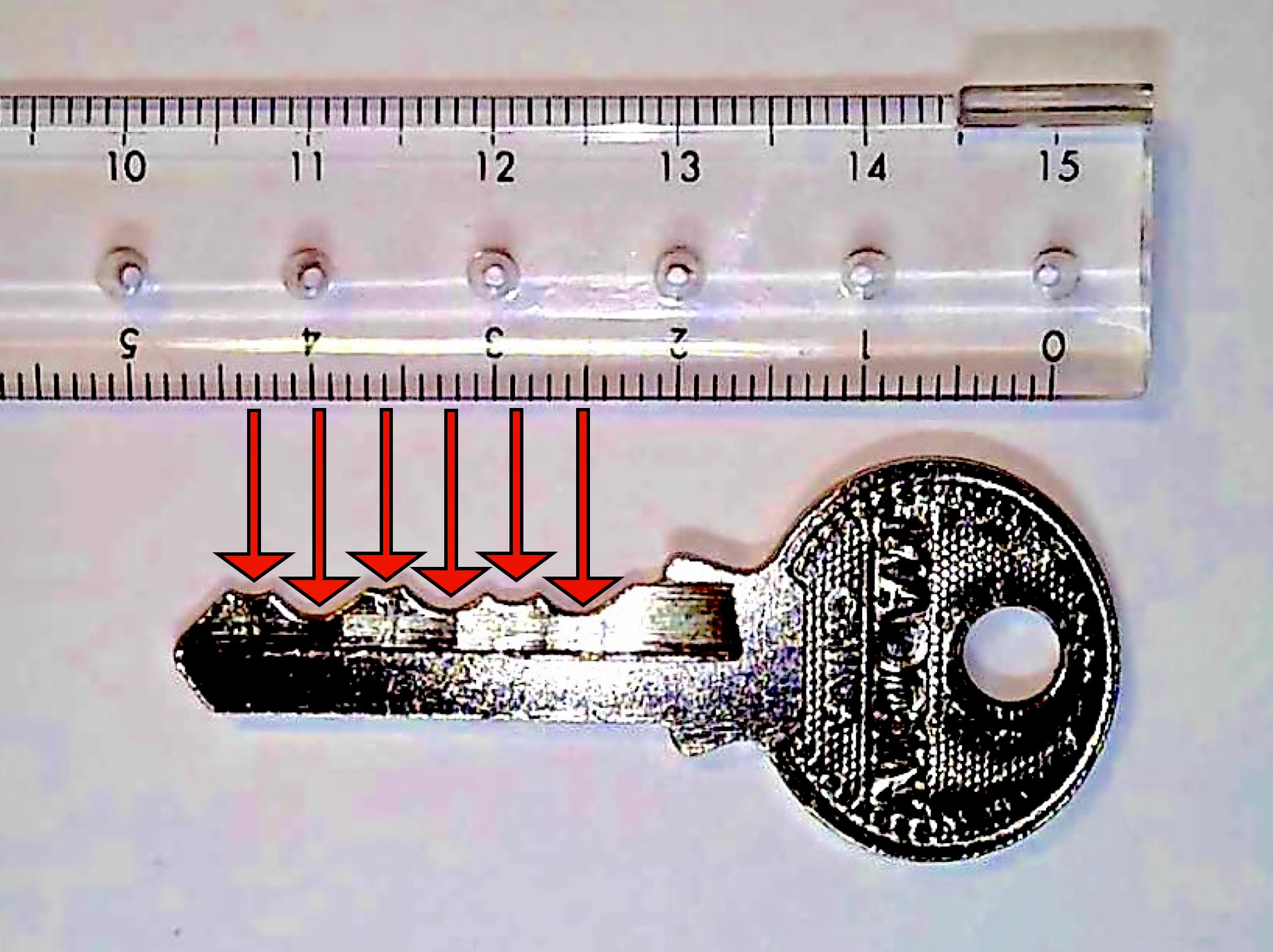
If you look closely at a key, you’ll see its upper edge has a bunch of V-shaped valleys. If you inspect the key more closely, perhaps with a ruler, you’ll notice the bottoms of these valleys are equally spaced. The depth of the valleys encodes a sequence that is accepted by the lock, with each valley contributing one value to the combination.
Pins and Shafts: Lock Functionality Explained
Inside the lock is a cylinder – the part that moves when you stick your key in and turn it. The key can turn only if all its valleys are the right depth for your particular lock.
But how does your lock detect whether your key’s valleys have the right sequence of depths?
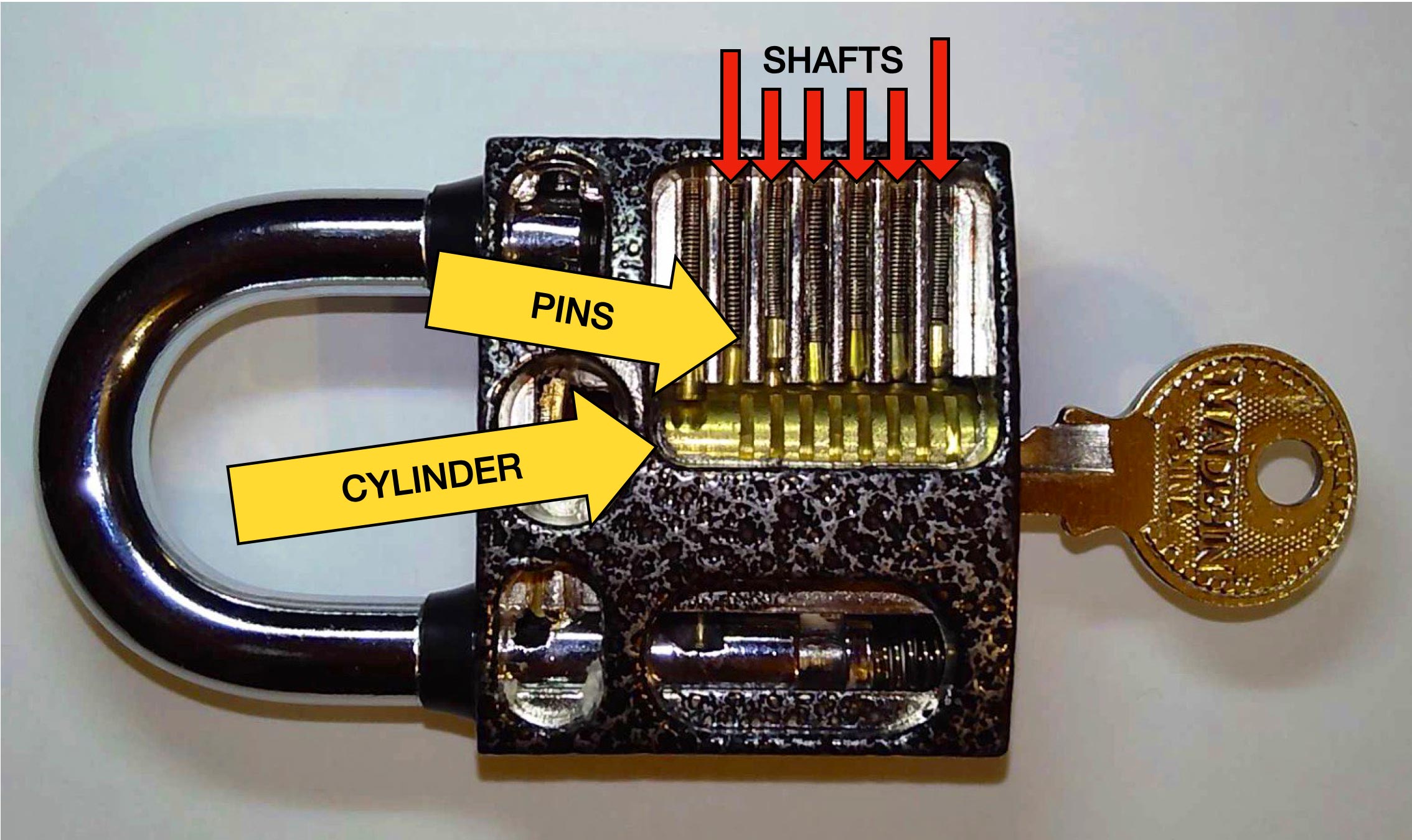
Inside the lock are vertical shafts, one centered over each valley of the key. In each shaft is a pair of metal pins that can freely slide up and down. Depending on where the pins are, they can block the cylinder from turning and prevent the lock from opening. This happens whenever a pin is partially sticking into or out of the cylinder.
When you stick a key in the lock, the pins fall into the valleys. If a valley is too high, it causes a pin to stick out and jam the cylinder. If a valley is too low, the pin sinks too low and the pin above it will sink into the cylinder and jam it. However, if the right key is inserted with each valley at just the right depth, none of the pins get in the way.

Keys are made by placing a blank key into a grinding machine that is programmed to carve out the exact valleys that are needed. A locksmith can also change a lock by removing its pins and fitting it with new ones to match a chosen key.
Keys as Security Tools: Similarities to Passwords
In computer security, we say that security relies on “something you know, something you have or something you are.” A password is an example of something you know. A key is an example of something you have. A fingerprint would be an example of something you are. But as you can see, a key is also very much like a password, except it is encoded by grinding a piece of metal.
For this reason, you shouldn’t ever post a picture of your house key on the internet. That would be like posting a picture of a credit card or a password – someone could use the photo to duplicate the key.
It is also possible to unlock or “pick” locks without a key. By sliding a thin piece of metal into the cylinder and gently pushing the pins to the correct height one by one, locks can be opened. However, it takes a great deal of skill and practice to do this.
Lessons from Locks for Computer Security
What does this teach us about security? First, we must make keys secret by making a very large number of possible keys, so that the right one is hard to guess or build. It’s the same for passwords. Second, it’s important to engineer a lock or computer program that requires every bit of the key or password to be exactly correct.
It’s important to study the inner workings of locks and computer programs to understand how their design might allow someone to break them.
Written by Scott Craver, Associate Professor of Electrical and Computer Engineering, Binghamton University, State University of New York.
This article was first published in The Conversation.
Never miss a breakthrough: Join the SciTechDaily newsletter.
Follow us on Google and Google News.