
Close Menu
    Facebook X (Twitter) Instagram
    SciTechDaily
    • Biology
    • Chemistry
    • Earth
    • Health
    • Physics
    • Science
    • Space
    • Technology
    Facebook X (Twitter) Pinterest YouTube RSS
    SciTechDaily
    Home»Biology»Helping Injured Pigeons Fly Again With Dog and Sheep Bones
    Biology

    Helping Injured Pigeons Fly Again With Dog and Sheep Bones

    By Cell PressNovember 20, 2019No Comments3 Mins Read
    Facebook Twitter Pinterest Telegram LinkedIn WhatsApp Email Reddit
    Share
    Facebook Twitter LinkedIn Pinterest Telegram Email Reddit
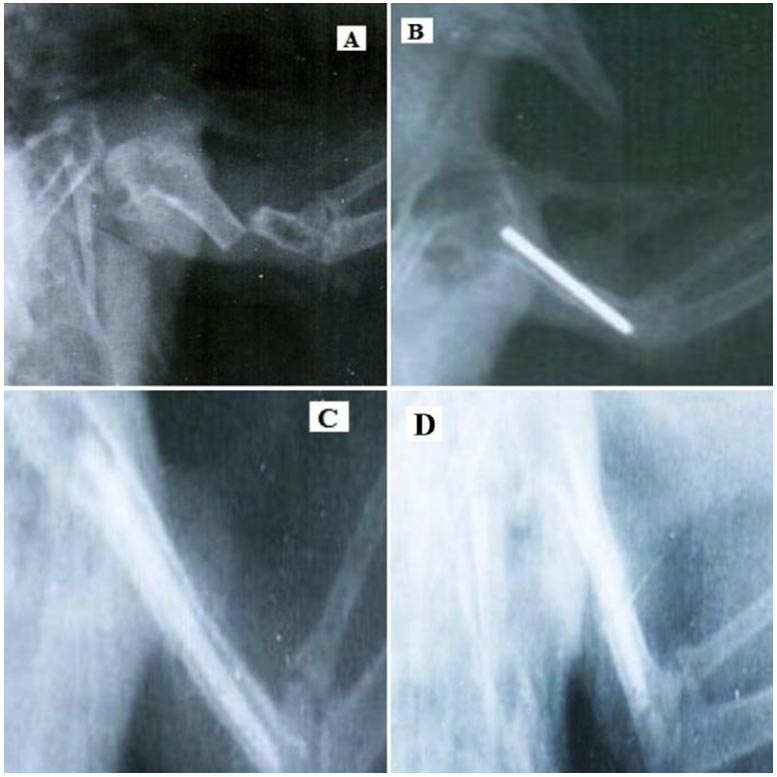
    Bone Pin Treatment for Pigeon Wing Fracture
    These images show fracture of pigeons humeral bones of different groups at 14 post-op week. A. The control group with no fixation; B. the CMP group with conventional metal pincfixation; C. the OBP group fixed by pin made of ovine long bone; and D. the CBP group fixed by pin made from canine long bone. Credit: Nazhvani et al.

    Sheep and dog bones can be whittled into orthopedic pins that stabilize pigeons’ fractured wings, helping the fractures to heal properly without follow-up surgery. Researchers describe the treatment, which is cheaper and more efficient than using metal pins for pigeon rehabilitative surgeries, November 20th in the journal Heliyon.

    “There is no need for the implants to be removed because they will ultimately be absorbed by the body,” says first author Saifullah Dehghani Nazhvani, of the Shiraz University School of Veterinary Medicine’s department of surgery in Iran. “Therefore, the implants can be used for wild birds, such as eagles, owls, and seagulls.”
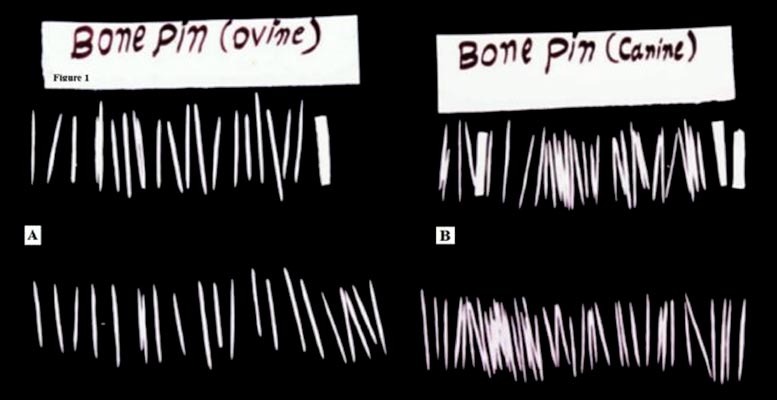
    Bone Pins
    These images show bone pins. A. Pins made of sheep’s long bones (Tibia and Femur) and B. pins made of dog’s long bones (Tibia and Femur). Credit: Nazhvani et al.

    Nazhvani works at a veterinary clinic at Shiraz University, where they frequently see wild and companion birds suffering from fractures in their wings or legs. They typically use metal pins, which is standard for these types of procedures, but they noticed imbalances in the flight, take off, or landings after fracture repair. Therefore, they wanted a technique to use lightweight pins that they did not need to remove.

    Nazhvani’s team thought bones could be the answer. They sanded and processed sheep and dog bones, obtained from animals that had previously died, into pins small enough to be inserted into a pigeon’s humeral bones—the wing bone closest to a bird’s body. After 32 weeks of observation, pigeons with sheep or dog bone orthopedic pins were able to fly as well as before the operation.

    “There was no rejection of any of the implanted bones at all,” says Nazhvani. “And for pigeons who underwent the treatment, there was early function of the wing and more solid repair than we thought due to slow absorption of the implant and its contribution to the healing process.”

    The researchers are already applying their findings to the birds that come into their clinic. They are also trying to make plates made from cattle or horse bone and compare them to conventional metal plates for other types of rehabilitative bird surgeries.

    ###

    Reference: “Humeral fracture treatment in pigeons by bone pins made from ovine and canine bones” by Seifollah Dehghani Nazhvani, Fatemeh Etemadi Mehrdad Mohammadi and Fatemeh Dehghani Nazhvani, 20 November 2019, Heliyon.
    DOI: 10.1016/j.heliyon.2019.e02679

    This work was supported by Shiraz University.

    Never miss a breakthrough: Join the SciTechDaily newsletter.
    Follow us on Google and Google News.

    Bones Cell Press Zoology
    Share. Facebook Twitter Pinterest LinkedIn Email Reddit

    Related Articles

    New Research Reveals That Dolphins “Smile” To Signal for Playtime

    Embryos of Many Species Use Sound to Prepare for the Outside World – Hear Nile Crocodile Embryos Before Hatching

    No Joke: Pigs and Rodents Can Breathe Through Their Butts

    Good News and Bad News for African Elephants: Range Is Just 17% of What It Could Be

    Researchers Baffled by Mystifying Circling Behavior Captured in Whales, Sharks, Penguins, and Sea Turtles

    “Lasso Climbing” – Scientists Discover Bizarre New Fifth Mode of Snake Locomotion

    57,000 Year-Old Wolf Pup Mummy Uncovered in Canadian Permafrost

    “Stink Flirting” – Male Ring-Tail Lemurs Exude Fruity-Smelling Perfume to Attract Mates

    “Bound by Blood” – Vampire Bats Keep ‘Friends’ Made in Captivity After Release Into Wild

    Leave A Reply Cancel Reply

    • Facebook
    • Twitter
    • Pinterest
    • YouTube

    Don't Miss a Discovery

    Subscribe for the Latest in Science & Tech!

    Trending News

    Scientists Discover Cheap, Natural Remedy for High Blood Pressure

    Earth’s Upper Atmosphere Is Cooling Fast and Scientists Finally Know Why

    32,000 Olympic Pools of Magma Nearly Erupted Beneath Atlantic Island

    Exercise Changes the Heart in a Way Researchers Never Expected

    Too Much Sleep May Age Your Body Faster, New Study Warns

    Scientists Uncover Promising New Strategy To Stop Parkinson’s in Its Tracks

    Experts Reveal the Surprising Cancer Link Behind a Common Vitamin

    This Strange “Golden Orb” Found 2 Miles Deep Stumped Scientists for Years

    Follow SciTechDaily
    • Facebook
    • Twitter
    • YouTube
    • Pinterest
    • Newsletter
    • RSS
    SciTech News
    • Biology News
    • Chemistry News
    • Earth News
    • Health News
    • Physics News
    • Science News
    • Space News
    • Technology News
    Recent Posts
    • The Type of Alcohol You Drink Could Affect How Long You Live
    • 19-Year Study Reveals the Surprising Truth About Sitting and Dementia
    • This Common Vitamin May Help Stop Prediabetes From Turning Into Diabetes
    • Canada’s Billion-Year-Old Rocks Could Hold the Future of Clean Energy
    • Climate Change Is Quietly Choking Rivers Across the Planet
    Copyright © 1998 - 2026 SciTechDaily. All Rights Reserved.
    • Science News
    • About
    • Contact
    • Editorial Board
    • Privacy Policy
    • Terms of Use

    Type above and press Enter to search. Press Esc to cancel.