
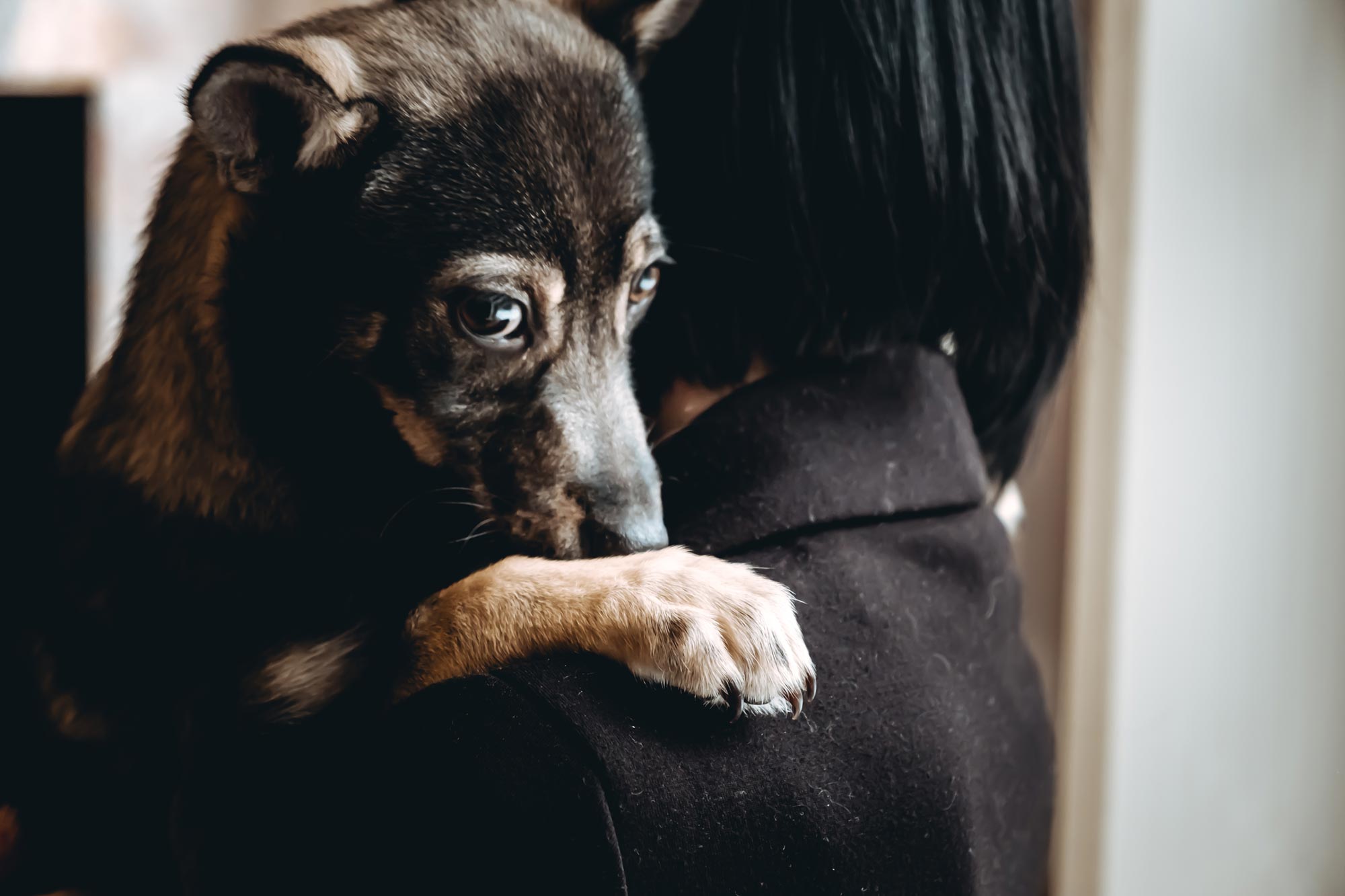
Scientists found that spending time with cats and dogs can improve owners’ mood, but not through the stress-relieving mechanism they anticipated.
Many people turn to their pets after a difficult day, assuming a cuddle with a cat or a walk with a dog will melt away stress.
But a new study suggests the emotional benefits of pet companionship may be more complicated: while interacting with pets generally makes owners feel better, it does not necessarily buffer them from stress, and cats and dogs may not influence those moments in quite the same way.
“Our findings indicate that stress-buffering is not the mechanism causing momentary emotional well-being when interacting with a pet. Interaction with either species did not act as a buffer for negative emotions,” said corresponding author Dr. Mayke Janssens, an assistant professor of psychology at The Open University. “In cats, we even observed that a higher level of interaction was associated with a stronger link between stress and negative emotions in owners.”
Each to their own pet
After joining the study, participants received 10 app alerts each day for five days. Each alert asked them to answer questions about their current mood, what they were doing, and whether they were near or interacting with their pets. The process produced almost 8,000 reports collected in daily life, giving Janssens, Peeters, and colleagues a detailed look at pet owner interactions as they happened.
The results showed that pet interaction was generally linked with more positive emotions. When people interacted more with their pets, they tended to report more positive feelings and fewer negative ones. This pattern appeared in both cat owners and dog owners.
“Dog owners were probably more likely to identify as ‘dog people,’ whereas cat owners were more likely to identify as ‘cat people,’” said first author Dr. Sanne Peeters, a researcher at The Open University, pointed out. “It’s possible that this owner-pet ‘match’ partly explains why the findings were so similar for dogs and cats.”
Stress busters?
The study next looked at whether interacting with a pet while stressed reduced negative emotions more than simply being near the animal. The results did not support that idea. When owners were stressed, more interaction with a pet did not appear to protect their mood from the effects of stress.
“The positive effects of pet interaction on well-being appear to be genuine, but they don’t seem to happen because pets help people handle stress better at the exact moment the stress occurs,” Janssens said. “Interacting more intensively with the companion animal did not provide additional emotional benefits beyond those that may arise from the animal simply being present.”
That suggests the emotional benefits of pet interaction may come from something other than stress buffering, meaning a process that reduces the emotional impact of stress. The exact explanation is still unknown and may vary depending on the setting and the person.
“It could be that interacting with a pet provides a sense of companionship and that pets help people feel more connected and less alone, which in turn could contribute to improved emotional well-being,” said Janssens.
Cat vs dog
One result appeared to differ by species. Among stressed cat owners, interacting more with their cats did not seem to ease negative emotions. Instead, higher interaction was linked with more intense negative feelings.
“One speculative explanation is that because interactions with cats are often more passive and less demanding in nature, a higher level of interaction might be more emotionally evocative. This might not match the need for support in stressful moments,” Peeters pointed out.
That finding should be interpreted cautiously. The cat owner group was smaller than the dog owner group, and the link between cat interaction and stronger negative emotions during stress did not appear consistently across all analyses.
For dog owners, interacting with a pet during stress did not make negative emotions worse. It also did not appear to improve them.
Still, the findings do not show that one species is the better pet.
“I wouldn’t say that one species makes a ‘better’ pet than the other,” concluded Peeters. “Instead, it’s more likely about owner personality and preference. The main conclusion is that interacting with dogs and cats appears to provide similar emotional benefits.”
Reference: “Human-animal interaction: understanding the role of dog and cat interactions in emotional wellbeing” by Sanne Peeters, Nele Jacobs, Karin Hediger, Jannes Eshuis and Mayke Janssens, 27 April 2026, Frontiers in Psychology.
DOI: 10.3389/fpsyg.2026.1768288
This research was funded by Nestlé Purina PetCare.
Never miss a breakthrough: Join the SciTechDaily newsletter.
Follow us on Google and Google News.
2 Comments
Of course not. Pets themselves can be a source of stress, for instance, if they’re constantly ill or if they constantly misbehave.
They really didn’t have to do that elaborate study that generated 8000 reports that they had to then sift through and analyze. All they had to do was check people’s blood pressure while they are petting their pets or interacting with them or near them or whatever. I’ve read that petting a dog/cat will bring down your BP but it’s a myth. I’ve checked my BP while petting my dog or cats on my lap and it doesn’t change. I generally have high BP so I really would have like this to work. It doesn’t. Pets can’t erase the rest of the world and that is where the stress comes from. And to echo what Boba said, sometimes the pets themselves become a source of stress. My pets are all seniors and have health issues. There are lots of allergies and vomiting and other issues. My two cats fight with each other and that is more stress. But just knowing these three little people love me and need me is enough of a comfort that I would never live without them and they make my life overall better. Another source of stress is thinking what would happen to my pets if something happened to me. I worry about that a lot. But, you’ve got to take the good with the bad, yin with the yang. That is life.