
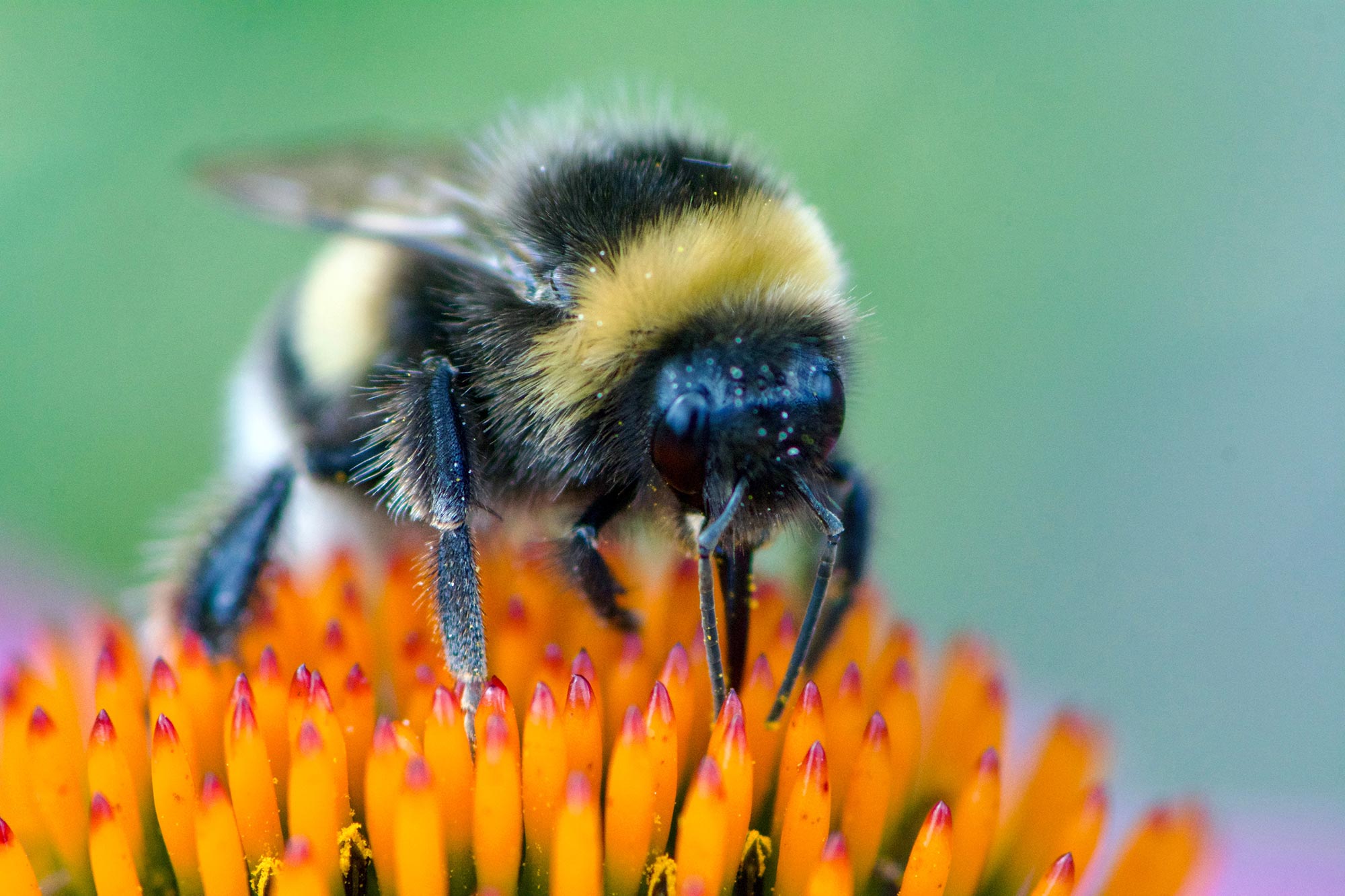
Scientists have uncovered molecular changes in bumblebees exposed to a common pesticide, revealing potential links between crop protection practices and pollinator health.
Every bite of fruit, vegetable, or seed crop may owe something to a bee. Pollinators are responsible for helping many of the world’s food crops reproduce, making them a cornerstone of modern agriculture. Yet the same farming tools used to protect harvests can sometimes put these essential insects at risk.
One pesticide drawing increasing attention from researchers is sulfoxaflor. Introduced in 2013, the chemical is widely used to control sap-feeding pests such as aphids that damage crops, including corn and soybeans. While it can be highly effective against agricultural pests, studies have shown that it is also toxic to bees. Researchers are still investigating how exposure to low levels of the chemical influences bee reproduction at the molecular level.
Low-Dose Exposure Alters Gene Activity
Scientists at Georgia Tech found that sulfoxaflor can interfere with reproduction and alter gene activity in bumblebees. Supported by funding from the U.S. Department of Agriculture, the researchers exposed worker bumblebees to low doses of the pesticide and examined changes in gene expression.
The study revealed that ovarian tissue experienced the largest changes in gene activity. According to the researchers, these disruptions could reduce reproductive success and potentially contribute to long-term declines in bee populations.
To investigate the effects, the team flash-froze bee tissues and analyzed RNA to measure changes in gene activity after pesticide exposure. They also used computational models to determine which biological processes were most strongly affected.
“What makes this study exciting is that it connects molecular changes in gene expression to real-world consequences for individual bees and their colonies,” said Michael Goodisman, a professor in the School of Biological Sciences. “That type of connection is rare and gives us a much clearer picture of how pesticides affect bees.”
Balancing Crop Protection and Pollinator Health
The findings underscore a major challenge facing agriculture.
“We need pesticides to control crop pests, but they can also harm essential non-target insects like bumblebees,” said Sarah Orr, who led the research as a postdoctoral fellow at Georgia Tech and now works as an assistant professor at the University of Tampa. “As a scientist, my goal is to identify practical solutions that support pest management while also protecting beneficial insects and the food systems that depend on them.”
Maintaining that balance is especially important because healthy bee populations are essential for pollination.
“We need many bees for successful pollination,” Orr said. “If they’re not producing enough offspring, pollination will decline.”
Pesticides are only one of several pressures affecting bumblebees. Rising temperatures and extreme heat events are also becoming increasingly important stressors. By learning more about how chemicals such as sulfoxaflor influence bee biology, researchers hope to help farmers safeguard both crop yields and the pollinators that support them.
Reference: “Integrative assessment of sulfoxaflor effects on gene expression, reproduction, and behavior in the bumblebee Bombus impatiens” by Michael A. Catto, Jixiang Xu, Kayla A. Murray, Emma Leigh M. Bossard, Michael A.D. Goodisman and Sarah E. Orr, 8 April 2026, Ecotoxicology and Environmental Safety.
DOI: 10.1016/j.ecoenv.2026.120101
Never miss a breakthrough: Join the SciTechDaily newsletter.
Follow us on Google and Google News.
1 Comment
To the surprise of no one.
I don’t recall pesticides, herbicides and other “cides” ever producing desired outcomes without seriously harmful side effects.