
Close Menu
    Facebook X (Twitter) Instagram
    SciTechDaily
    • Biology
    • Chemistry
    • Earth
    • Health
    • Physics
    • Science
    • Space
    • Technology
    Facebook X (Twitter) Pinterest YouTube RSS
    SciTechDaily
    Home»Biology»Scientists “Scent Train” Honeybees to Boost Sunflower Seed Production
    Biology

    Scientists “Scent Train” Honeybees to Boost Sunflower Seed Production

    By Cell PressOctober 12, 2020No Comments3 Mins Read
    Facebook Twitter Pinterest Telegram LinkedIn WhatsApp Email Reddit
    Share
    Facebook Twitter LinkedIn Pinterest Telegram Email Reddit
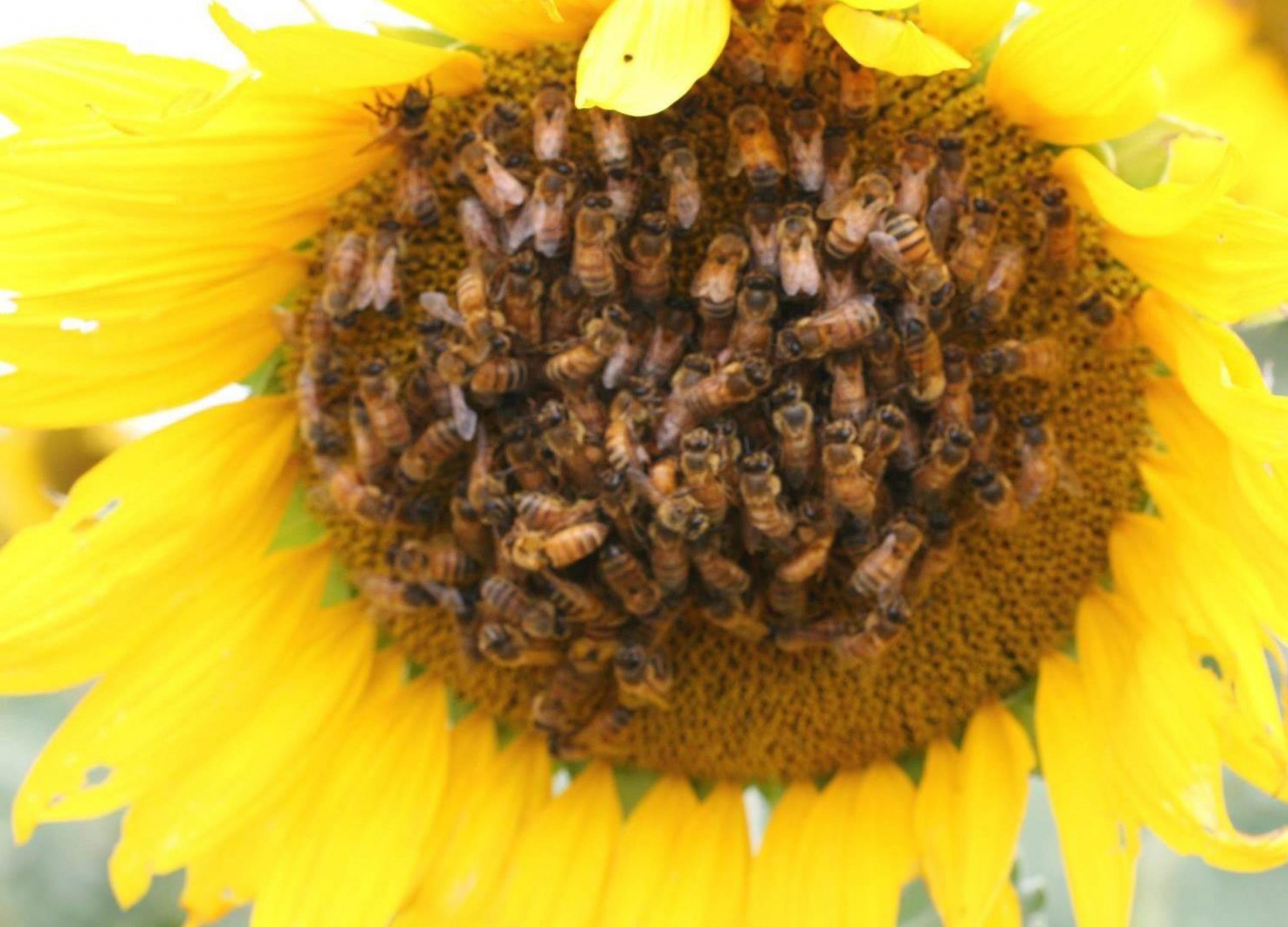
    Trained Bees on Sunflower
    This image shows a large group of trained bees clustered on a sunflower. Credit: Walter Farina

    If you want a dog to hunt something down, it helps to let them sniff an item to pick up the scent. Now, researchers reporting in Current Biology in September 2020 have found that scent training honeybees in the hive might work in a similar way — and that this approach could make bees more efficient in pollinating a desired crop. The findings show that honeybees given food scented with odors that mimicked sunflowers supported a significant increase in sunflower crop production.

    “We show that it’s possible to condition honeybees to a rewarded odor inside the colony, and this experience modifies the bees’ odor-guided behaviors later,” says Walter Farina of Universidad de Buenos Aires, Argentina. “The most surprising and relevant result is that the foraging preferences for the target crop are so prolonged and intensive that it promoted significant increases in the crop yields.”
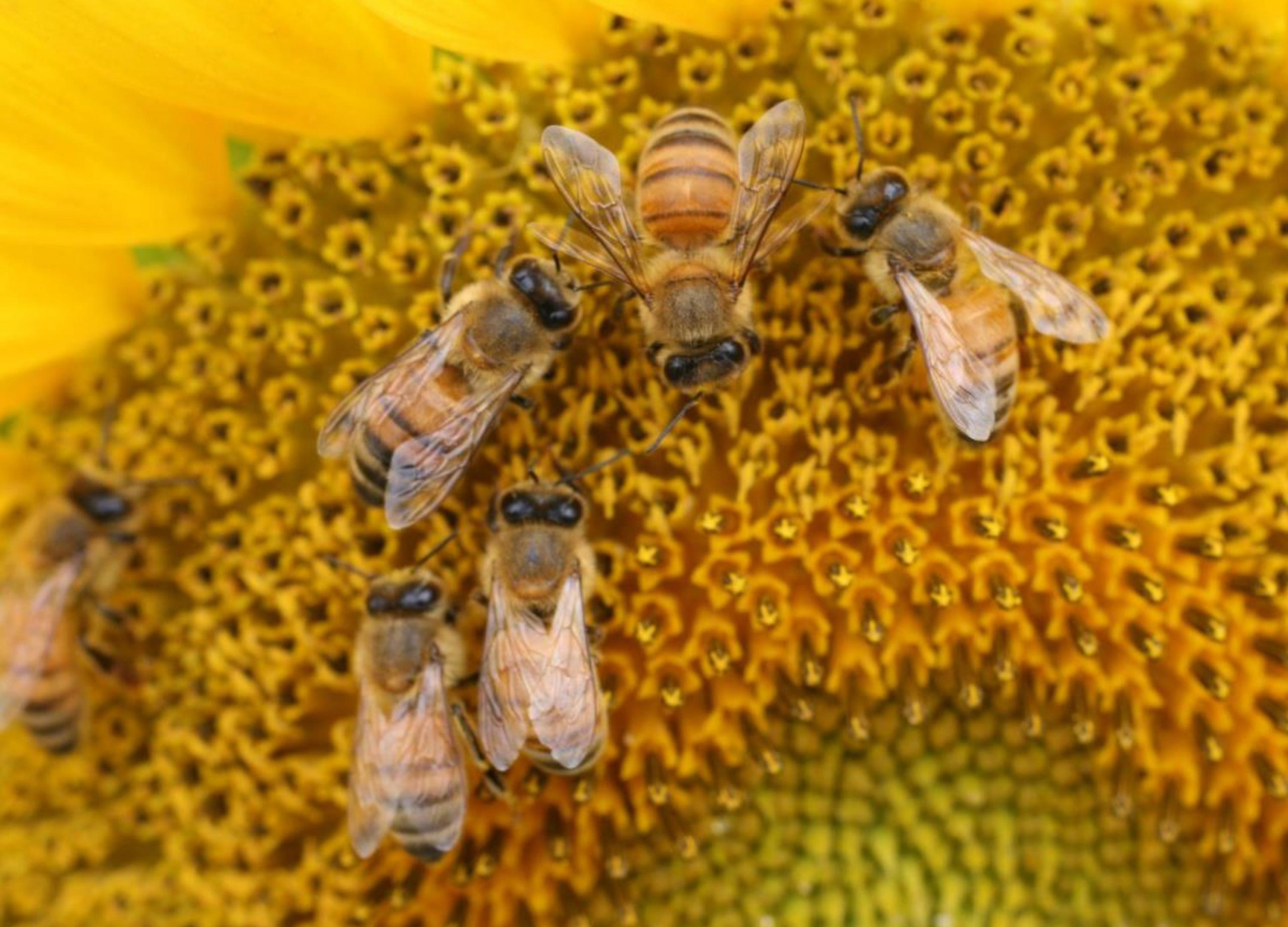
    Bees on Sunflower
    This image shows bees on a sunflower. Credit: Walter Farina

    Farina’s team had previously shown that honeybees could establish stable and long-term memory related to food scents inside the nest. They also knew that those in-hive memories could influence the bees’ choices about which plants to visit later.

    To raise bees with a memory that would support later foraging on sunflowers, the researchers first developed a simple synthetic odorant mixture that the bees associated with the natural floral scent of sunflowers. Next, they fed the hives with scented food. They found that those early experiences and memories of the scent of sunflower influenced the bees’ later foraging preferences, as inferred by decoding their waggle dances.

    Bee Hives with Sunflower Field
    This image shows man-made bee hives alongside a sunflower field. Credit: Walter Farina

    The bees’ training led them to visit sunflowers more. Those trained bees also brought more sunflower pollen back to the hive. This increased visitation and foraging on sunflowers also boosted the flowers’ production of seeds by 29 to 57 percent.

    “Through this procedure, it is possible to bias honeybee foraging activity and increase yields significantly,” Farina says. “In other words, pollination services might be improved in pollinator-dependent crops by using simple mimic odors as part of a precision pollination strategy.”

    The researchers say they are now studying other pollinator-dependent crops, including almonds, pears, and apples. Ultimately, their goal is to develop an array of new odor mimics to improve pollination efficiency and productivity of many important agricultural crops.

    Reference: “Learning of a Mimic Odor within Beehives Improves Pollination Service Efficiency in a Commercial Crop” by Walter M. Farina, Andrés Arenas, Paula C. Díaz, Cinthia Susic Martin and M. Cecilia Estravis Barcala, 17 September 2020, Current Biology.
    DOI: 10.1016/j.cub.2020.08.018

    This work was supported by FONCYT-ANPCYT, FONARSEC-ANPCYT, the University of Buenos Aires, and CONICET.

    Never miss a breakthrough: Join the SciTechDaily newsletter.
    Follow us on Google and Google News.

    Agriculture Bees Cell Press Entomology
    Share. Facebook Twitter Pinterest LinkedIn Email Reddit

    Related Articles

    The Surprising Medicine Hidden in Honeybee Pollen

    “Something Is Happening to the Bees” – 25% of Known Bee Species Haven’t Appeared in Public Records Since the 1990s

    Honey Bees Unusual Defense Against Giant Hornet Attacks: Animal Poop

    Honey Bees Use Animal Dung to Fend Off Giant “Murder” Hornets

    Researchers Create First Global Map of Bee Species

    Group Genomics Drive Aggression in Africanized Honey Bees

    Surprisingly, Plants Are Better Pollinated in Cities Than in the Countryside

    Common Pesticides Are Severely Affecting Bees

    Honeybees Switch Roles within the Hive

    Leave A Reply Cancel Reply

    • Facebook
    • Twitter
    • Pinterest
    • YouTube

    Don't Miss a Discovery

    Subscribe for the Latest in Science & Tech!

    Trending News

    Enormous Prehistoric Insects Puzzle Scientists

    Scientists Develop Bioengineered Chewing Gum That Could Help Fight Oral Cancer

    After 37 Years, the World’s Longest-Running Soil Warming Experiment Uncovers a Startling Climate Secret

    NASA Satellite Captures First-Ever High-Res View of Massive Pacific Tsunami

    ADHD Isn’t Just a Deficit: Study Reveals Powerful Hidden Strengths

    Scientists Discover Stem Cells That Could Regrow Teeth and Bone

    Early Cannabis Use May Stall Key Brain Skills in Teens

    Popular Vitamin D Supplement Has “Previously Unknown” Negative Effect, Study Finds

    Follow SciTechDaily
    • Facebook
    • Twitter
    • YouTube
    • Pinterest
    • Newsletter
    • RSS
    SciTech News
    • Biology News
    • Chemistry News
    • Earth News
    • Health News
    • Physics News
    • Science News
    • Space News
    • Technology News
    Recent Posts
    • Quantum Breakthrough: New Algorithm Solves “Impossible” Materials in Seconds
    • Could the Universe’s Hidden Shape Solve One of Physics’ Biggest Mysteries?
    • Rewriting Dinosaur Evolution: Scientists Unearth Remarkable 150-Million-Year-Old Stegosaur Skull
    • Scientists Identify Two Simple Treatments for Cancer-Related Cognitive Impairment
    • Omega-3 Supplements Linked to Cognitive Decline in Surprising New Study
    Copyright © 1998 - 2026 SciTechDaily. All Rights Reserved.
    • Science News
    • About
    • Contact
    • Editorial Board
    • Privacy Policy
    • Terms of Use

    Type above and press Enter to search. Press Esc to cancel.