
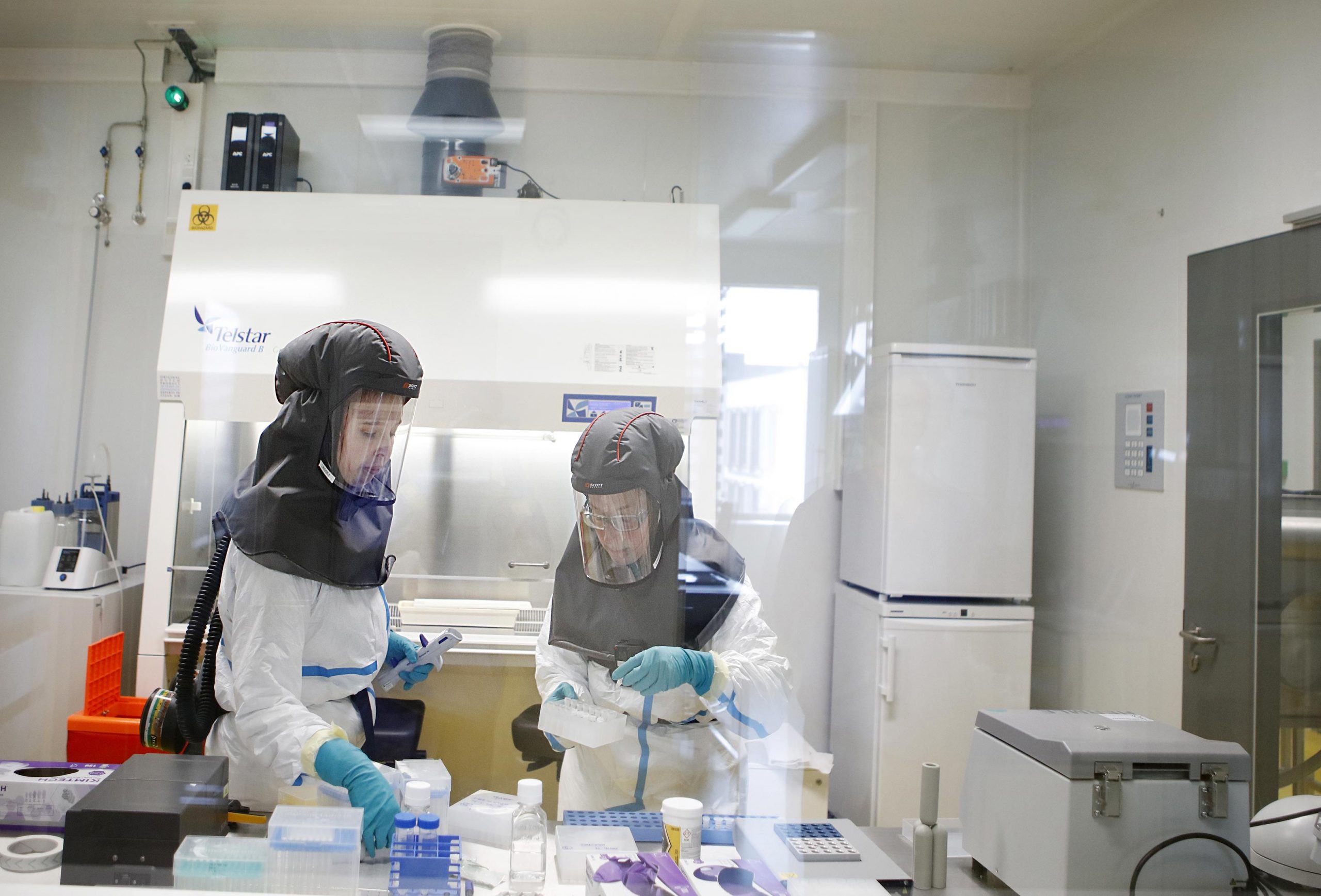
Virologists at the Rega Institute have shown that the anti-malaria drug hydroxychloroquine does not limit SARS-CoV-2 coronavirus replication in hamsters. A high dose of the anti-flu drug favipiravir, by contrast, has an antiviral effect in the hamsters. The team published their findings in the Proceedings of the National Academy of Sciences (PNAS).
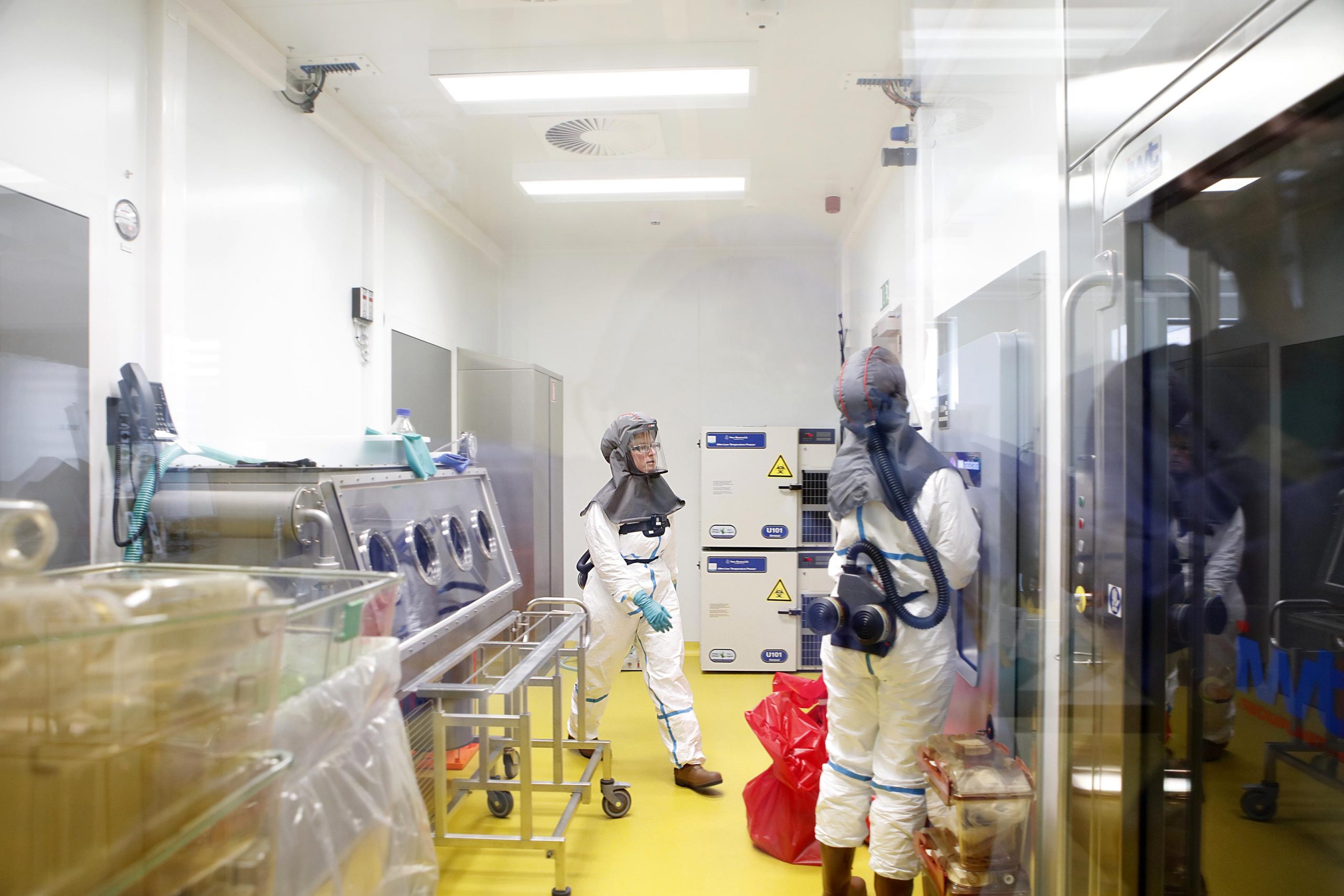
Virologists at the KU Leuven Rega Institute have been working on two lines of SARS-CoV-2 research: searching for a vaccine to prevent infection, and testing existing drugs to see which one can reduce the amount of virus in infected people.
To test the efficacy of the vaccine and antivirals preclinically, the researchers use hamsters. The rodents are particularly suitable for SARS-CoV-2 research because the virus replicates itself strongly in hamsters after infection. Moreover, hamsters develop a lung pathology similar to mild COVID-19 in humans. This is not the case with mice, for example.
For this study, the team of Suzanne Kaptein (PhD), Joana Rocha-Pereira (PhD), Professor Leen Delang, and Professor Johan Neyts gave the hamsters either hydroxychloroquine or favipiravir – a broad-spectrum antiviral drug used in Japan to treat influenza – for four to five days. They tested several doses of favipiravir. The hamsters were infected with the SARS-CoV-2 virus in two ways: by inserting a high dose of virus directly into their noses or by putting a healthy hamster in a cage with an infected hamster. Drug treatment was started one hour before the direct infection or one day before the exposure to an infected hamster. Four days after infection or exposure, the researchers measured how much of the virus was present in the hamsters.
Hydroxychloroquine versus favipiravir
Treatment with hydroxychloroquine had no impact: the virus levels did not decrease and the hamsters were still infectious. “Despite the lack of clear evidence in animal models or clinical studies, many COVID-19 patients have already been treated with hydroxychloroquine,” explains Joana Rocha-Pereira. “Based on these results and the results of other teams, we advise against further exploring the use of hydroxychloroquine as a treatment against COVID-19.”
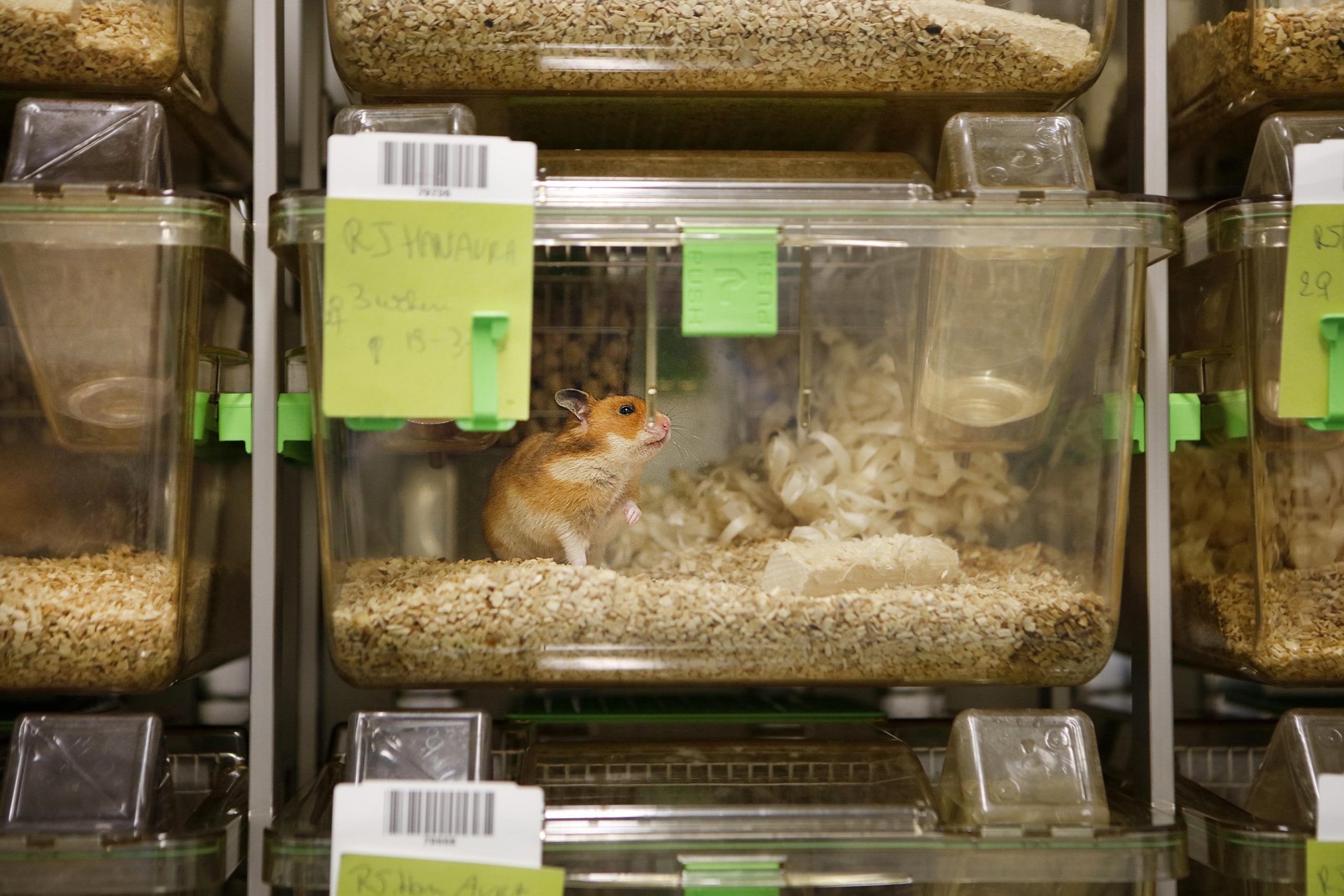
A high dose of favipiravir, however, had a potent effect. A few days after the infection, the virologists detected hardly any infectious virus particles in the hamsters that received this dose and that had been infected intranasally. Moreover, hamsters that were in a cage with an infected hamster and had been given the drug did not develop an obvious infection. Those that had not received the drug all became infected after having shared a cage with an infected hamster.
A low dose of the drug favipiravir did not have this outcome. “Other studies that used a lower dose had similar results,” Professor Delang notes. “The high dose is what makes the difference. That’s important to know because several clinical trials have already been set up to test favipiravir on humans.”
Cautious optimism
The researchers are cautiously optimistic about favipiravir. “Because we administered the drug shortly before exposing the hamsters to the virus, we could establish that the medicine can also be used prophylactically, so in prevention,” Suzanne Kaptein notes.
“If further research shows that the results are the same in humans, the drug could be used right after someone from a high-risk group has come into contact with an infected person. It may likely also be active during the early stages of the disease.”
General preventive use is probably not an option, however, because it is not known whether long-term use, especially at a high dose, has side effects.
No panacea
Further research will have to determine whether humans can tolerate a high dose of favipiravir. “In the hamsters, we detected hardly any side effects,” says Delang. In the past, the drug has already been prescribed in high doses to Ebola patients, who appear to have tolerated it well.
“Favipiravir is not a panacea,” the researchers warn. This flu drug, nor any other drug, has not been specifically developed against coronaviruses. As a result, the potency of favipiravir is to be considered moderate at best.
The study also highlights the importance of using small animals to test therapies against SARS-CoV-2 in vivo. “Our hamster model is ideally suited to identify which new or existing drugs may be considered for clinical studies,” explains Professor Johan Neyts. “In the early days of the pandemic, such a model was not yet available. At that time, the only option was to explore in patients whether or not a drug such as hydroxychloroquine could help them. However, testing treatments on hamsters provides crucial information that can prevent the loss of valuable time and energy with clinical trials on drugs that don’t work.”
Reference: “Favipiravir at high doses has potent antiviral activity in SARS-CoV-2−infected hamsters, whereas hydroxychloroquine lacks activity” by Suzanne J. F. Kaptein, Sofie Jacobs, Lana Langendries, Laura Seldeslachts, Sebastiaan ter Horst, Laurens Liesenborghs, Bart Hens, Valentijn Vergote, Elisabeth Heylen, Karine Barthelemy, Elke Maas, Carolien De Keyzer, Lindsey Bervoets, Jasper Rymenants, Tina Van Buyten, Xin Zhang, Rana Abdelnabi, Juanita Pang, Rachel Williams, Hendrik Jan Thibaut, Kai Dallmeier, Robbert Boudewijns, Jens Wouters, Patrick Augustijns, Nick Verougstraete, Christopher Cawthorne, Judith Breuer, Caroline Solas, Birgit Weynand, Pieter Annaert, Isabel Spriet, Greetje Vande Velde, Johan Neyts, Joana Rocha-Pereira and Leen Delang, 9 October 2020, Proceedings of the National Academy of Sciences.
DOI: 10.1073/pnas.2014441117
Never miss a breakthrough: Join the SciTechDaily newsletter.
Follow us on Google and Google News.
1 Comment
It is not a good news…