
A new study challenges a 60-year-old assumption about the body’s main structural building block, opening new possibilities for treating fibrosis and cancer.
For more than half a century, collagen has been depicted as a long, rigid molecular cable, the structural protein that helps give skin, bones, tendons, and organs their strength. But that familiar image may capture only what collagen becomes after it leaves the cell, not how it actually exists while being made.
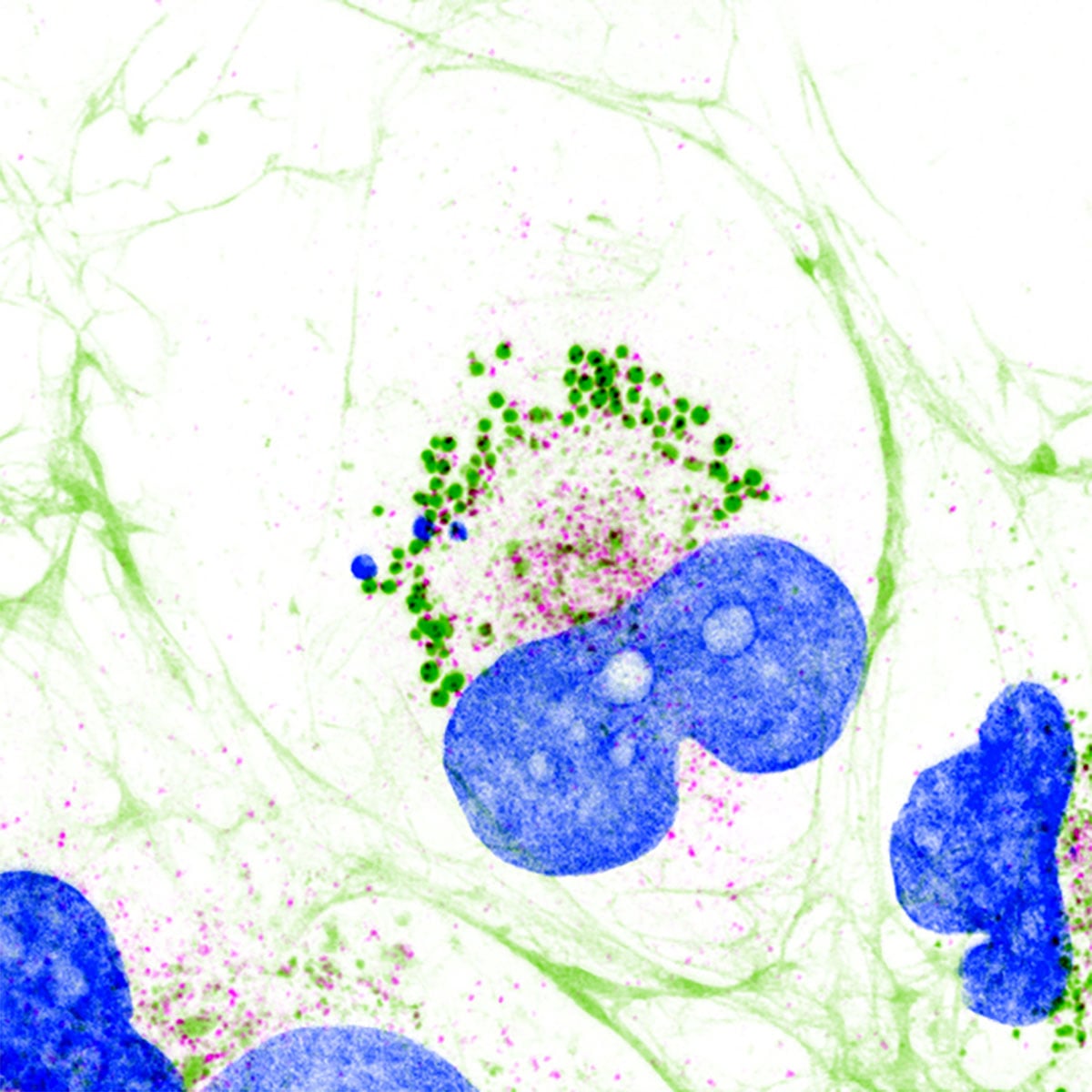
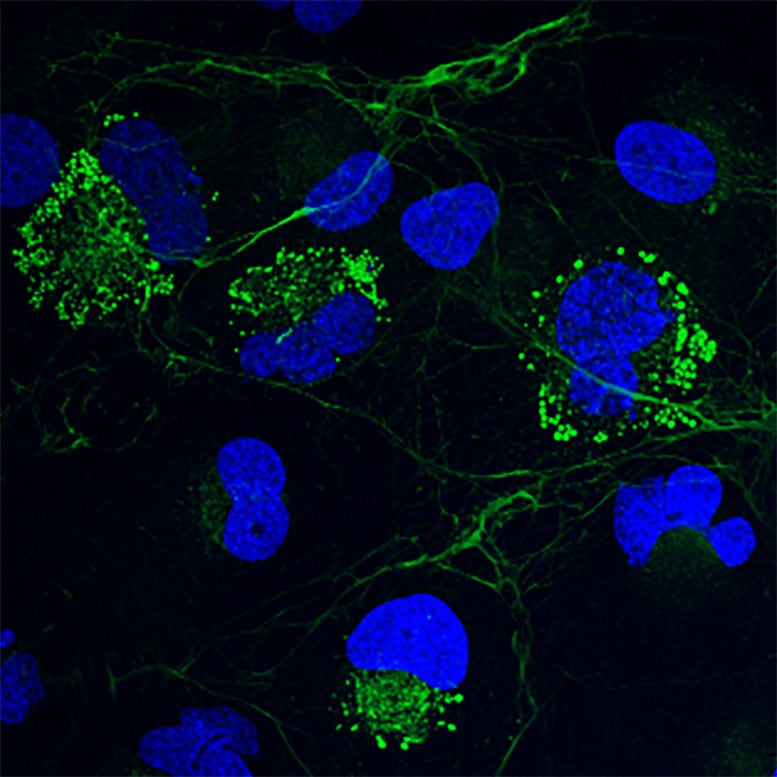
Using high-resolution imaging of living cells, researchers at the Center for Genomic Regulation (CRG) in Barcelona have now observed collagen in a strikingly different form: as soft, liquid-like droplets rather than stiff rods.
Published in the Journal of Cell Biology, the study provides the first direct view of the most abundant protein in the human body in its natural intracellular state. Collagen makes up roughly one-third of the body’s total protein mass, yet how cells safely package and transport such a large structural molecule has remained a longstanding puzzle.
“Inside a cell, collagens are not rigid molecules as one had assumed. They are in fact, very pliable, taking a liquid condensate form much like oil in a drop of water,” explains ICREA Research Professor Vivek Malhotra, senior author of the study at the CRG in Barcelona.
That liquid-like form may help protect cells from their own structural machinery. Outside the cell, collagen is meant to assemble into the rigid fibers that hold tissues together. If the same fiber building process happened inside the cell, it could be deadly.
“This is another way by which cells ensure that collagens probably never become fibrous inside the cell,” says Malhotra. “Because if it were to become fibrous, it would kill the cell.”
The discovery also points to a different way of thinking about how cells export collagen. For decades, many models of protein transport have centered on receptors and vesicles, the small membrane sacs that move cargo through the cell. Work on this transport system in the 1980s and 1990s was recognized with a Nobel Prize in 2013.
Malhotra and colleagues now propose a “liquid extrusion” hypothesis. In this model, collagen moves from its production site to the next compartment of the secretory pathway through a physical process similar to capillary action. If confirmed, the idea could affect how scientists understand wound healing, fibrosis, and cancer.
A sixty-year puzzle in cell biology
Collagen is made inside a cellular compartment called the endoplasmic reticulum (ER). The new study focused on procollagen 1, a precursor form that matures into type 1 collagen. Type 1 collagen is the body’s most common collagen, making up around 90% of total collagen.
The long-standing puzzle comes from size. When purified collagen is viewed under a microscope, it appears as a long, rigid rod that can stretch up to 400 nanometers. Vesicles, the sacs that normally transport proteins from where they are made toward the outside of the cell, are only about 60 to 90 nanometers across.
Ever since collagen’s structure was described more than half a century ago, cell biologists have struggled with a basic question: how does such a large molecule get out of the cell? The new study suggests that the answer is partly that collagen has been viewed at the wrong stage. Inside the cell, it is not yet the rigid rod familiar from textbook images. That structure describes collagen after it has left cells and assembled into tissue-supporting fibers.
Using high-resolution live cell imaging of human hepatic stellate cells, the liver cells that make collagen and contribute to scarring in liver fibrosis, the team saw collagen gather into small droplets. These droplets merged, split apart, and exchanged material with their surroundings.
Those behaviors are hallmarks of a condensate, a concentrated protein compartment that separates from its surroundings in a way that resembles oil droplets forming in water.
According to Soumya Bhattacharyya, first author of the study, much of cell biology has focused on condensates in the nucleus and stress granules in the cytosol. “We’re just beginning to understand condensates inside the endoplasmic reticulum,” says Bhattacharyya.
The discovery: “I had no idea where it would lead to”
The finding began with microscopy images taken in May 2024 by Dr. Soumya Bhattacharyya, a postdoctoral researcher in Vivek Malhotra’s lab. Bhattacharyya was using liver cells to study what happens when fibrotic cells increase collagen production.
“I had no idea what it would lead to. But when we took the samples, what struck me were these bright spherical structures you can’t miss,” recalls Bhattacharyya.
The lab’s first reaction was caution. The result appeared to challenge a deeply held assumption in cell biology.
“I thought it must be an artifact,” says Malhotra.
The team then spent months testing whether the collagen clusters inside the endoplasmic reticulum were simply cellular junk. Cells have a quality control system for identifying badly folded proteins, helping refold them or marking them for destruction. A central player in that system is a chaperone called BiP.
If the collagen droplets were piles of misfolded protein, the researchers expected to find high levels of BiP. Instead, the droplets contained helper proteins, including chaperones that specifically recognize properly folded collagen.
The role of TANGO1
The study also sheds light on TANGO1, a protein discovered by the Malhotra lab about two decades ago and known to be essential for collagen export. When the researchers depleted TANGO1, collagen droplets still formed. However, they no longer sat at the ER exit sites where cargo leaves the compartment, and collagen secretion fell.
That result suggests TANGO1 acts less like a conventional cargo receptor and more like a mooring point that holds the collagen droplet at the export site. The authors propose that collagen may then leave the cell through wetting, a physical process in which the liquid droplet attaches to and flows through the exit site.
Malhotra offers two possible physical mechanisms for this transfer. “Imagine you have a rubber ball with a nozzle, filled with liquid. You squeeze it, you force the liquid to come out of this little orifice. Is that the mechanism? Or is the liquid rising by capillary forces, just like nutrients flow up against gravity in plants by capillary action?”
The liquid extrusion model remains a hypothesis. The team is already planning the next experiments to directly visualize the export mechanism. The researchers also plan to work with external partners to develop a mouse model and test whether the same process occurs in living tissue.
Implications for fibrosis and cancer
If confirmed, the model could matter for diseases in which cells secrete too much collagen. These include liver, lung, and skin fibrosis, as well as cancers that use a dense collagen-rich matrix to shield themselves from chemotherapy and the immune system.
“One of the major problems in cancer is that the cells secrete so many collagens and other proteins out into the extracellular matrix that they hide in a shell made of these components and become chemo- and immuno-refractory, meaning they are not seen by the chemical therapeutics or by the immune system,” Malhotra says.
“People are trying to find ways to break this tissue cement and our study could help inform those strategies,” he adds.
The proposed model points to possible new strategies. One would be to degrade TANGO1, preventing collagen cargo from being captured at the exit site. Another would be to dissolve the condensate itself, stopping the cargo from being organized before export. Both ideas remain exploratory, but they offer new ways to think about controlling the body’s most abundant structural protein.
Reference: “Procollagen 1 assembles into phase-separated condensates in the endoplasmic reticulum” by Soumya Bhattacharyya, Jose Wojnicki, Nathalie Brouwers, and Vivek Malhotra, 11 June 2026, Journal of Cell Biology.
DOI: 10.1083/jcb.202603129
Funding: Ministerio de Ciencia, Innovación y Universidades (España), Generalitat de Catalunya, European Research Council
Never miss a breakthrough: Join the SciTechDaily newsletter.
Follow us on Google and Google News.