
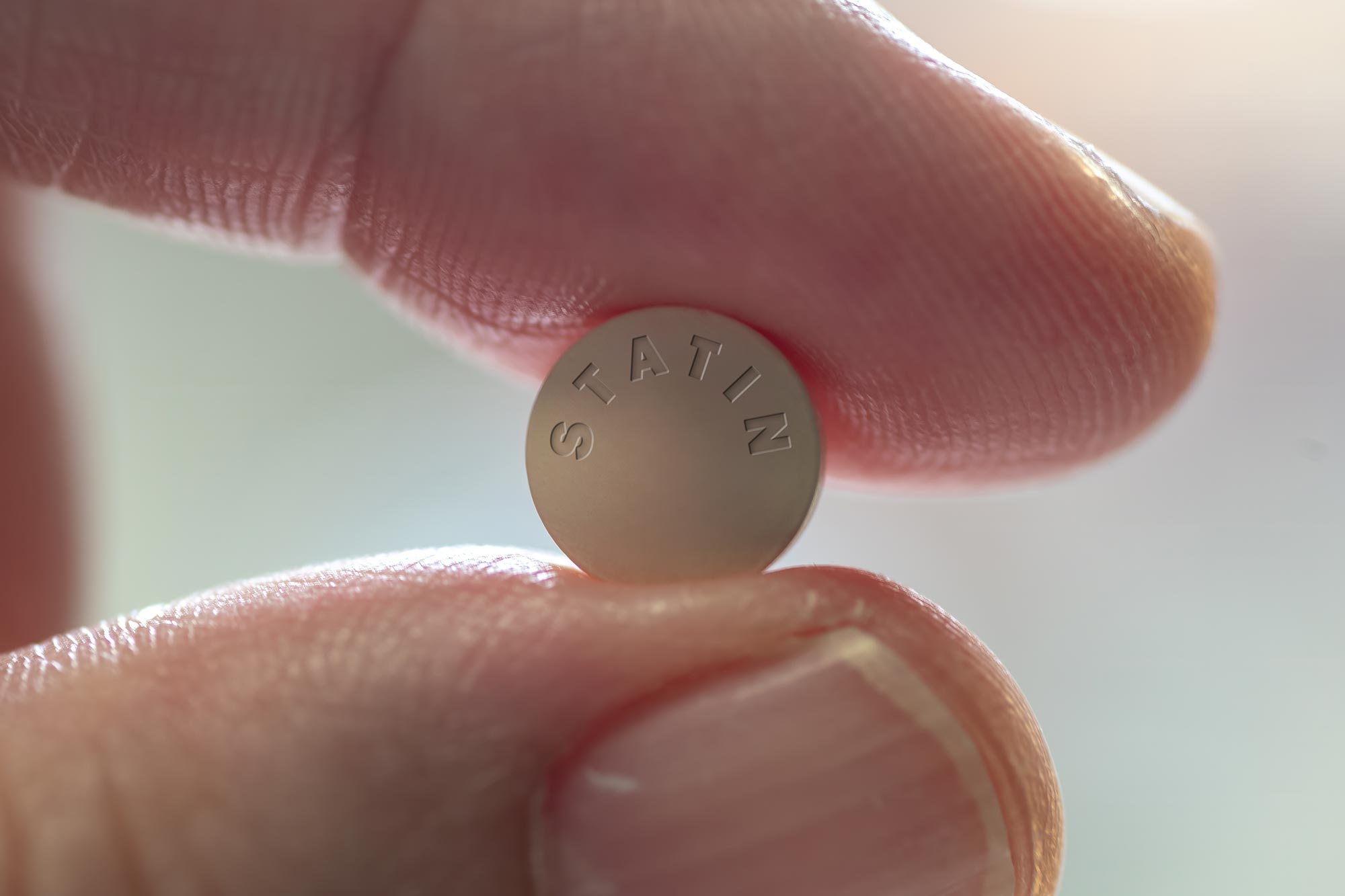
The discovery may explain why some people experience side effects from statins and could lead to future therapies that make the drugs easier to tolerate.
A drug can save the heart and still trouble the muscle.
Statins work by blocking a key step in the body’s cholesterol-making machinery, primarily in the liver. That same biochemical pathway, however, also helps cells produce molecules involved in energy balance and normal cellular function. For some patients, interfering with it appears to have consequences far beyond cholesterol.
The result can be pain, weakness, or a marked drop in exercise tolerance—symptoms that are difficult to explain and often even harder to treat. They also create a clinical dilemma: the people who benefit most from statins may be the same people forced to reduce their dose or stop taking them.
New research from McMaster University offers a possible explanation for that tradeoff. The study suggests that statins can place muscle cells under metabolic stress by disrupting how they generate and use energy. Instead of remaining a purely metabolic problem, that stress may then activate immune signaling inside the muscle itself, turning a disturbance in energy production into inflammation and tissue damage.
Side effects can derail treatment
“Statins are among the most effective medications we have for reducing cardiovascular disease risk and preventing early death,” said Jonathan Schertzer, professor in McMaster’s Department of Biochemistry and Biomedical Sciences and senior author of the study.
“Unfortunately, muscle side-effects lead some people to reduce their dose or stop taking the medication altogether. We wanted to understand why this happens and whether it might be possible to separate the side-effects from the benefits.”
That question matters because statin-associated muscle symptoms are estimated to affect seven to 29 percent of people who take the drugs. Doctors have long recognized that some patients develop muscle problems, but the chain of events inside the body has been difficult to pin down. Without that map, it has been harder to imagine how to treat the symptoms without weakening the drug’s cholesterol-lowering effect.
Muscle cells trigger immune damage
Led by first authors Nazli Robin and Nicole Barra of the Schertzer Lab at McMaster, the researchers studied the problem in muscle cells and mouse models. This allowed them to follow the damage at the cellular level, where the first clues appeared.
They found that statins can interfere with how muscle cells generate energy. That disruption then sets off an immune response inside the cells themselves. The immune system normally helps defend the body from threats, but when activated in the wrong place or for too long, it can contribute to inflammation and tissue injury.
When the researchers blocked that immune response in their experiments, much of the muscle damage was prevented. That result changed the direction of the story. The side effects did not appear to be an unavoidable consequence of lowering cholesterol.
“One of the most exciting findings of the research is that the mechanism causing muscle side-effects appears to be separate from the mechanism that lowers cholesterol,” said Schertzer. “That suggests it may one day be possible to target the side-effects without interfering with the cardiovascular benefits that make statins so valuable.”
The study also connects two systems often discussed separately: metabolism and immunity. Changes in the way muscle cells handled energy appeared to activate immune signaling within those same cells, offering a clearer explanation of how inflammation can become part of a drug side effect.
Future therapies need testing
The findings are still at an early stage. More research will be needed before they can lead to treatments for patients who struggle with statin intolerance. Still, the pathway identified in the study gives scientists several possible targets for future drug development.
That could matter for people who benefit from statins but cannot stay on the dose they need because of muscle symptoms. A therapy that reduces the immune-driven muscle damage while leaving cholesterol-lowering intact could help more patients remain on treatment.
“These findings give us a clearer understanding of why some patients experience muscle symptoms and provide promising directions for making these important medications safer and more effective in the future,” added Schertzer.
Reference: “Statins promote muscle metabolic danger and NLRP3-mediated myopathy via lower protein-prenylation and YAP” by Nazli Robin, Nicole G. Barra, Kevin P. Foley, Yujin E. Li, Akhilesh K. Tamrakar, Danish Patoli, Irena A. Rebalka, Tabitha Cree, Kaitlyn Bibby, Khang Nguyen, Rhianna Davis, Darryl Y. Chan, Brittany M. Duggan, Brandyn D. Henriksbo, Megan E. Borges, Dana Kukje Zada, Han Fang, Daniel M. Marko, Paul Gregorevic, Kevin I. Watt, Richard J. Mills, Gary Sweeney, Thomas J. Hawke, Bénédicte F. Py and Jonathan D. Schertzer, 19 June 2026, Science Advances.
DOI: 10.1126/sciadv.adz3612
The research was funded by the Natural Sciences and Engineering Research Council of Canada (NSERC).
Never miss a breakthrough: Join the SciTechDaily newsletter.
Follow us on Google and Google News.
4 Comments
Statins inhibit HMG co-A reductase
This enzyme is also necessary for generation of dolichol and subsequent generation of co-enzyme Q needed in mitochondria.
The myositis is related to deficiency in co-enzyme Q and so replacing this with supplement would help alleviate muscle pains found in some people who take statins
I’ve got Diverticulor decease and statins make it worse. And more painful
Thank You for your studies .I get muscle pain from statins I need them but pain is bad my hopes for your success is great
I hope the research finds a solution. I went through three different statins trying to find one that didn’t cause severe muscle pain. Even my eyelashes hurt. Liver enzyme tests finally convinced my doctors I was statin sensitive. When I discontinued the statins the pain went away. Again, fingers crossed for the research.