
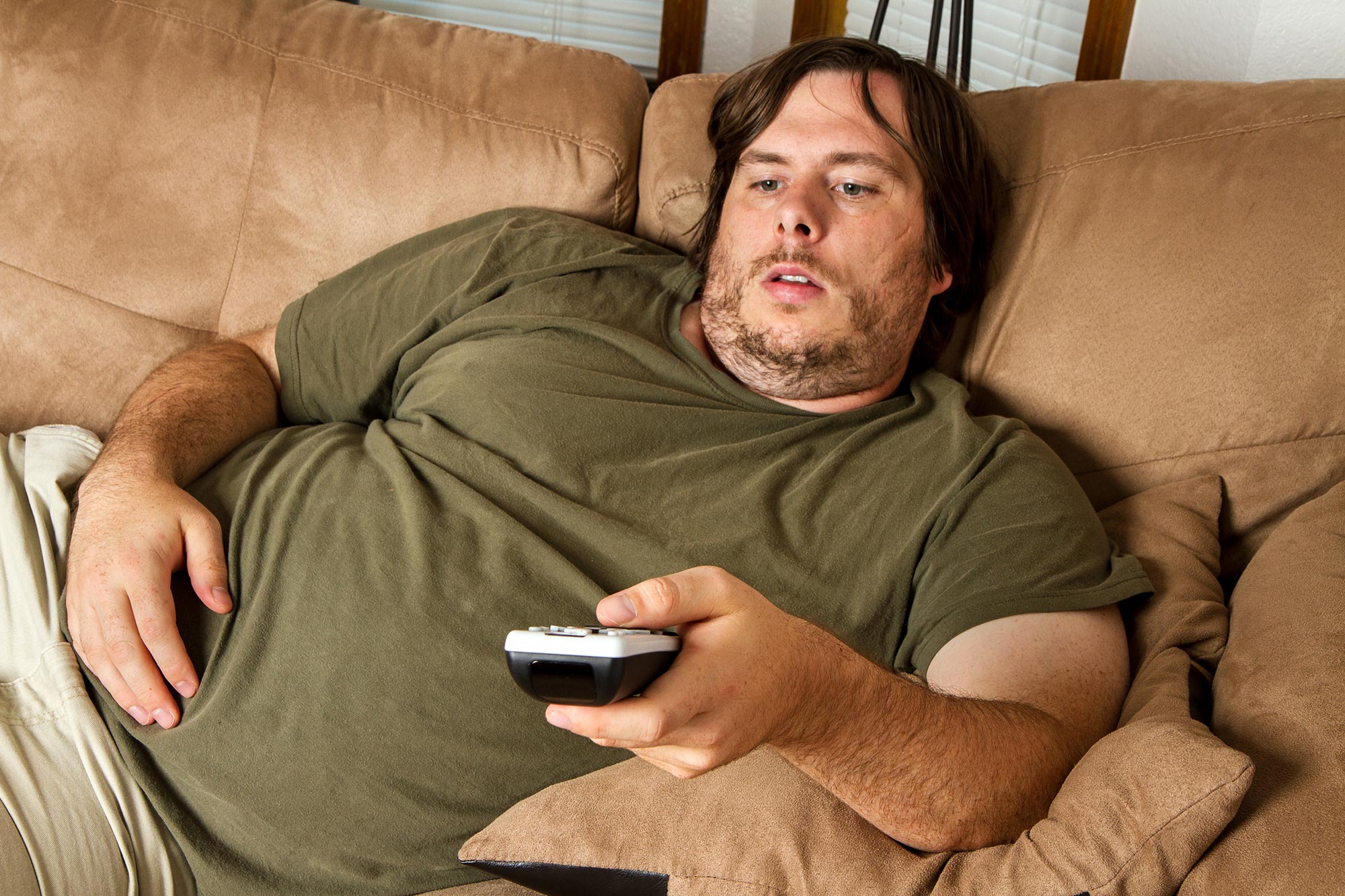
Hours of uninterrupted sitting could be more dangerous than you think.
A large study found that every additional hour spent in prolonged, uninterrupted sedentary periods each day was associated with a 9% higher risk of dying from cancer. The findings suggest that how people accumulate sedentary time may matter alongside the total amount.
The study, published July 2 in the open-access journal PLOS Medicine, was led by Frederick Ho of the University of Glasgow in the UK and colleagues.
Sedentary behavior includes sitting, reclining, or lying down while awake. It can happen almost anywhere, including at a desk, in a car, or while watching television. Previous research has connected high levels of sedentary time with poorer health, but most guidelines do not distinguish between sitting continuously and sitting for the same amount of time with regular movement breaks.
How Researchers Measured Sedentary Behavior
To explore that difference, researchers analyzed data from 91,292 UK Biobank participants who wore activity monitors for seven days. Their health was then tracked for a median of 12.38 years.
The researchers separated sedentary time into two main patterns. Prolonged sedentary behavior involved periods lasting at least 30 minutes in which at least 90% of the time was sedentary. Interrupted sedentary behavior included shorter periods or stretches broken up by more than 10% non-sedentary activity.
Participants who accumulated more prolonged sedentary time had a higher risk of cancer death (HR 1.09; 95% CI 1.06, 1.11). They were also more likely to develop cancer overall, including obesity-related cancers (such as esophageal, liver, kidney, pancreatic, colorectal, breast, ovarian, and thyroid cancers) and cancers associated with type 2 diabetes.
Breaking Up Sitting May Lower Cancer Risk
Sedentary time that was regularly interrupted showed the opposite pattern and was associated with lower risks across every outcome examined.
The findings also suggest that movement does not have to be intense to potentially make a difference. Replacing one hour of prolonged sedentary time each day with light physical activity was associated with a 12% lower risk of cancer death.

Light activity can include ordinary movements such as walking around the home or office, completing household tasks, or standing up and moving briefly between periods of sitting. These small breaks may help the body regulate blood sugar, fats, and other metabolic processes that can be disrupted during extended inactivity.
“Our findings suggest that the health effects of sedentary behavior may depend not only on total sedentary time, but also on whether that time is accumulated in prolonged bouts or interrupted by activity,” the authors say. “This pattern is biologically plausible: experimental studies have shown that interrupting prolonged sitting with short bouts of activity can improve metabolic responses compared with uninterrupted sitting.”
Study Limitations and Practical Takeaways
The results do not prove that extended sitting directly causes cancer. The study followed a single group of UK Biobank volunteers, who tend to be healthier and more active than the wider UK population. That health volunteer bias may limit how broadly the findings apply.
The activity monitors were also worn for only seven days, which may not fully represent participants’ long-term routines. Researchers could not determine why people were sedentary, such as whether they were working, driving, resting, or watching television.
Even with those limitations, the research adds to evidence that exercise alone may not tell the whole story. Someone can meet recommended exercise targets and still spend much of the remaining day sitting without interruption.
The practical message is not that people must replace every seated hour with a workout. It is that regular, low-effort movement may be worth building into the day, especially during long stretches at a desk or on the couch.
The authors add, “Current health guidelines focus heavily on moderate or vigorous exercise, but our findings show that light movement shouldn’t be ignored. Moving forward, clinical trials will help us move beyond blanket advice and develop personalized strategies for breaking up sitting time.”
Reference: “Accelerometry-measured prolonged and interrupted sedentary behavior and cancer incidence and mortality: A cohort study of 91,292 UK Biobank participants” by Ziyi Zhou, Stewart G. Trost, Gemma C. Ryde, Solange Parra-Soto, Zhe Fang, Chao Xu, Yujia Lu, Kai Wang, Mengxi Du, Zhi Li, Yuebin Lv, Jason M.R. Gill, Stuart R. Gray, Carlos Celis-Morales, Marc J. Gunter, Edward Giovannucci, Jill P. Pell, Mingyang Song and Frederick K. Ho, 2 July 2026, PLOS Medicine.
DOI: 10.1371/journal.pmed.1004767
This work was supported by the American Cancer Society (grant code MRSG-17-200-01-NEC to MS, www.cancer.org) and the U.S. National Institutes of Health (grant codes U01CA261961, R01CA263776, and R01CA285851 to MS, www.nih.gov).
Never miss a breakthrough: Join the SciTechDaily newsletter.
Follow us on Google and Google News.
2 Comments
The general findings of the study may be valid but, “experience-based,” as a still cancer free now eighty-two year old lay American male who’s been battling externally imposed sluggish metabolism for forty-five years and counting aggravated with a partially disabling on-the-job low back injury for thirty-one years and counting, the more likely causes are long-term medically unrecognized sub-acute non-IgE-mediated food allergy reactions aggravated (or not) with officially (FDA in the US) approved food poisoning (e.g., soy processed with hexane with some residue, added artificially cultured “free” [can cross the blood-brain barrier] MSG and the artificial sweetener aspartame, said to cause cancers in some people), minimally. I fail to see how any large cohort study can be presumed to be reliable without factoring-in such common dietary negatives.
Get up and boogie, or not.