
Close Menu
    Facebook X (Twitter) Instagram
    SciTechDaily
    • Biology
    • Chemistry
    • Earth
    • Health
    • Physics
    • Science
    • Space
    • Technology
    Facebook X (Twitter) Pinterest YouTube RSS
    SciTechDaily
    Home»Health»Night-Time Exposure to Blue Light – Including Many Tablet and Phone Screens – Associated With Increased Risk of Cancer
    Health

    Night-Time Exposure to Blue Light – Including Many Tablet and Phone Screens – Associated With Increased Risk of Cancer

    By Barcelona Institute for Global Health (ISGlobal)July 29, 20201 Comment4 Mins Read
    Facebook Twitter Pinterest Telegram LinkedIn WhatsApp Email Reddit
    Share
    Facebook Twitter LinkedIn Pinterest Telegram Email Reddit
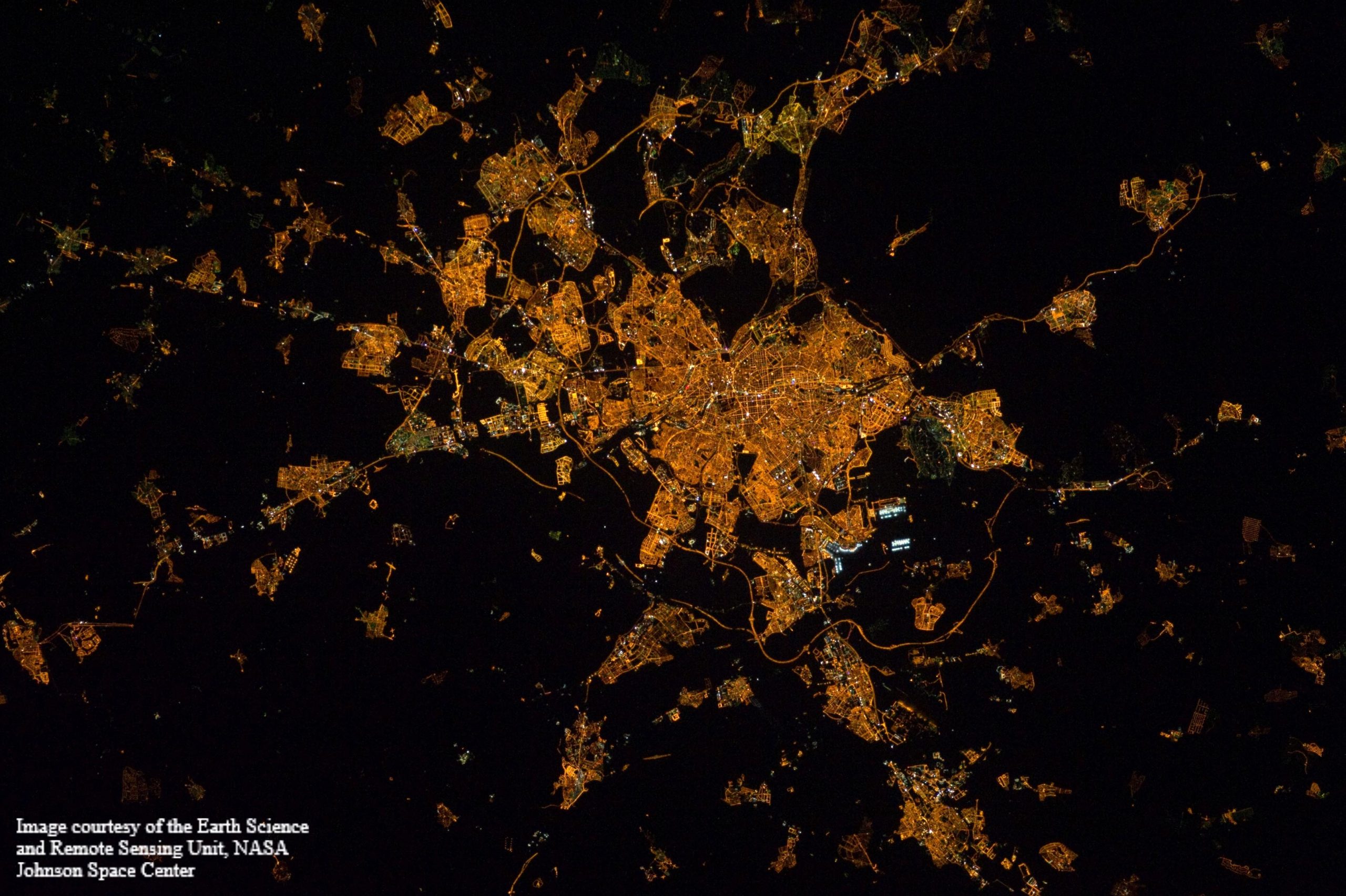
    Night Image of Madrid
    International Space Station night image of Madrid, courtesy of the Earth Science and Remote Sensing Unit, NASA. 12 February 2012. Time: 02:22:46 GMT (local time 03:22:46) (ISS030-E-82052). Credit: Courtesy of the Earth Science and Remote Sensing Unit, NASA.

    Blue light has become an increasingly common component of urban outdoor lighting. But how does it impact our health? A team led by the Barcelona Institute for Global Health (ISGlobal), a center supported by the “la Caixa” Foundation, has conducted the first study of the association between night-time exposure to outdoor artificial light and colorectal cancer. The findings, published in Epidemiology, show that exposure to the blue light spectrum may increase the risk of this type of cancer.

    Previous studies have found associations between night-time exposure to artificial light — especially blue light — and various adverse health effects, including sleep disorders, obesity, and increased risk of various types of cancer, especially in night-shift workers. Blue light is a range of the visible light spectrum emitted by most white LEDs and many tablet and phone screens. An earlier study by ISGlobal found a link between exposure to blue light at night and an increased risk of breast and prostate cancer.

    “Using the same methodology as the previous study, we decided to analyze the relationship between exposure to artificial light and colorectal cancer, the third most common type of cancer worldwide after lung and breast cancer,” explained Manolis Kogevinas, Scientific Director of the Severo Ochoa Distinction at ISGlobal and coordinator of the new study. The World Health Organisation’s International Agency for Research on Cancer (IARC) classifies night-shift work as probably carcinogenic to humans; breast, prostate, and colorectal cancer are associated with the highest risk.
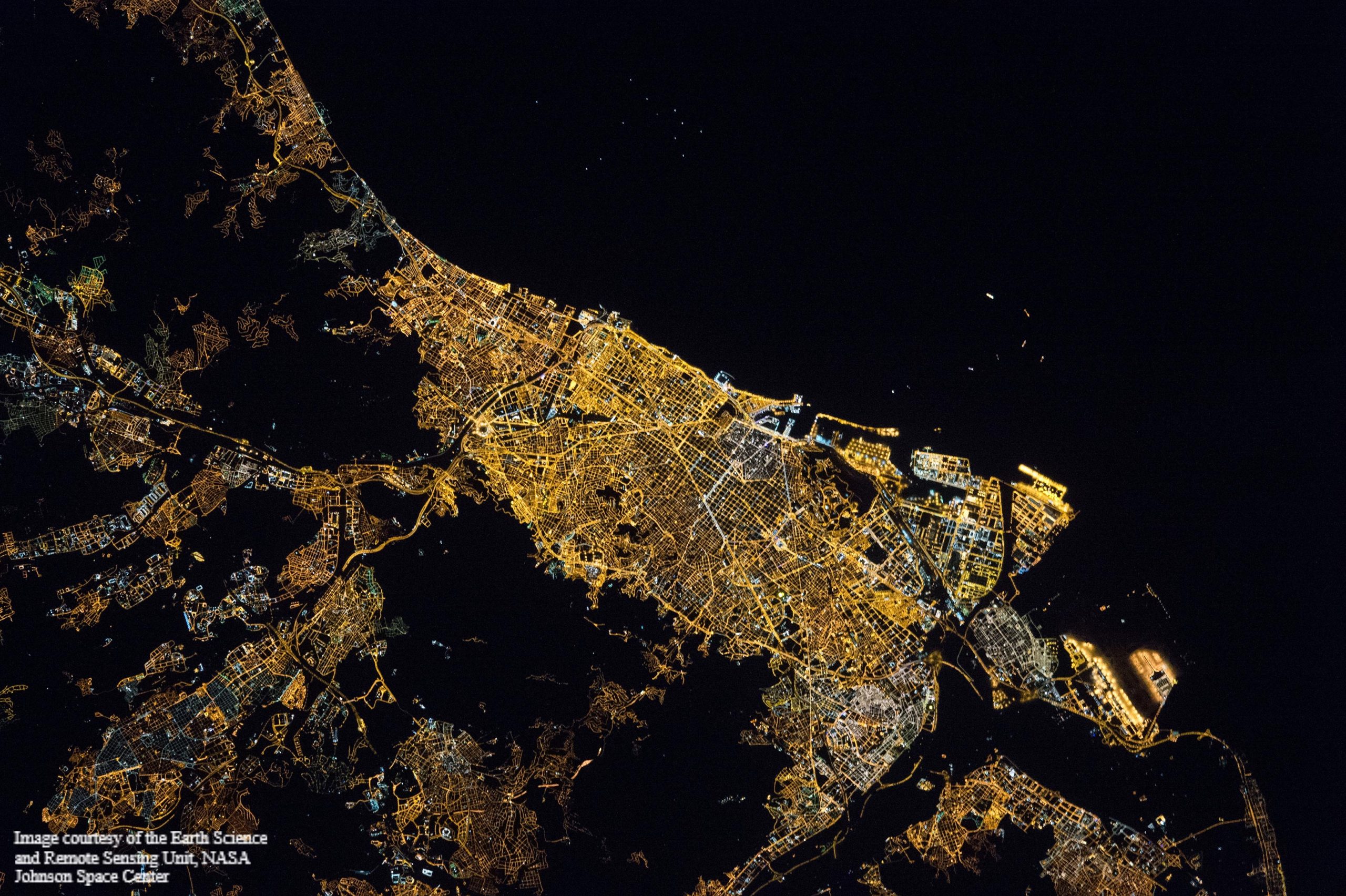
    Night Image of Barcelona
    International Space Station night image of Barcelona, courtesy of the Earth Science and Remote Sensing Unit, NASA. 18 April 2013. Time: 22:10:46 GMT (local time 00:10:46) (ISS035-E-23385). Credit: Courtesy of the Earth Science and Remote Sensing Unit, NASA.

    The authors analyzed data obtained through the MCC-Spain project on approximately 2,000 adults in Barcelona and Madrid, of whom 660 had colorectal cancer and the rest were randomly selected from the local population. Individuals with a history of working night shifts were excluded. Night-time levels of outdoor artificial light were determined using images from the International Space Station (ISS).

    Results from both cities showed that participants with the highest exposures to blue light had a 60% higher risk of developing colorectal cancer than the less exposed population. No association was found with full-spectrum light.

    “Night-time exposure to light, especially blue-spectrum light, can decrease the production and secretion of melatonin, depending on the intensity and wavelength of the light,” explains Kogevinas.

    Because exposure to light was estimated using satellite images, this calculation did not take into account individual behaviors such as the use of rolling shutters, which is common in Spain and other Mediterranean countries. The estimate of exposure can therefore be interpreted as the amount of light people are exposed to when they are outside their homes — a common pattern in Spain — and inside their homes before closing the shutters and going to bed.

    “There is growing concern about the effects of light on ecosystems and human health,” commented Kogevinas. “Research on the potential effects of light exposure is still in its infancy, so more work is needed to provide sound, evidence-based recommendations to prevent adverse outcomes.”

    Reference: “Association between outdoor light-at-night exposure and colorectal cancer in Spain (MCC-Spain study)” by Garcia-Saenz, Ariadna; Sánchez de Miguel, Alejandro; Espinosa, Ana; Costas, Laura; Aragonés, Nuria; Tonne, Cathryn; Moreno, Victor; Pérez-Gómez, Beatriz; Valentin, Antonia; Pollán, Marina; Castaño-Vinyal, Gemma; Aubé, Martin and Kogevinas, Manolis, 24 June 2020, Epidemiology.
    DOI: 10.1097/EDE.0000000000001226

    Never miss a breakthrough: Join the SciTechDaily newsletter.
    Follow us on Google and Google News.

    Cancer Carcinogens Epidemiology Popular
    Share. Facebook Twitter Pinterest LinkedIn Email Reddit

    Related Articles

    Landmark Study Links Never Marrying to Significantly Higher Cancer Risk

    Alarming 500% Surge: Colorectal Cancer Rates Skyrocket Among U.S. Youths

    Toxic Rides: New Study Reveals Hidden Dangers in Your Car’s Air

    Beer Consumption Linked to Higher Prostate Cancer Risk

    Biologist Reveal Boost in Certain Amino Acids is an Early Sign of Cancer

    Neurologists Discover New Method to Fight Glioblastomas

    Researchers Find a New Target to Treat a Wide Spectrum of Cancers

    Compound in Panda Blood Could Fight Superbugs

    New Study Questions the Benefits of Mammograms

    1 Comment

    1. Steve A. Reid, M.D. on July 31, 2020 7:49 am

      Correlation is not causation.

      Reply
    Leave A Reply Cancel Reply

    • Facebook
    • Twitter
    • Pinterest
    • YouTube

    Don't Miss a Discovery

    Subscribe for the Latest in Science & Tech!

    Trending News

    Bone-Strengthening Discovery Could Reverse Osteoporosis

    Scientists Uncover Hidden Trigger Behind Stem Cell Aging

    Scientists Find Way to Reverse Fatty Liver Disease Without Changing Diet

    Could Humans Regrow Limbs? New Study Reveals Promising Genetic Pathway

    Scientists Reveal Eating Fruits and Vegetables May Increase Your Risk of Lung Cancer

    Scientists Reverse Brain Aging With Simple Nasal Spray

    Scientists Uncover Potential Brain Risks of Popular Fish Oil Supplements

    Scientists Discover a Surprising Way To Make Bread Healthier and More Nutritious

    Follow SciTechDaily
    • Facebook
    • Twitter
    • YouTube
    • Pinterest
    • Newsletter
    • RSS
    SciTech News
    • Biology News
    • Chemistry News
    • Earth News
    • Health News
    • Physics News
    • Science News
    • Space News
    • Technology News
    Recent Posts
    • What Makes Rubber So Strong? Scientists Finally Solve 100-Year-Old Mystery
    • Scientists Decode Mysterious Magnetic “Maze Domains” To Boost EV Efficiency
    • Scientists Say This Fungus Could Survive the Trip to Mars
    • The Universe Is Expanding Too Fast and Scientists Can’t Explain Why
    • Gaining Weight Young May Be More Dangerous Than You Think
    Copyright © 1998 - 2026 SciTechDaily. All Rights Reserved.
    • Science News
    • About
    • Contact
    • Editorial Board
    • Privacy Policy
    • Terms of Use

    Type above and press Enter to search. Press Esc to cancel.