
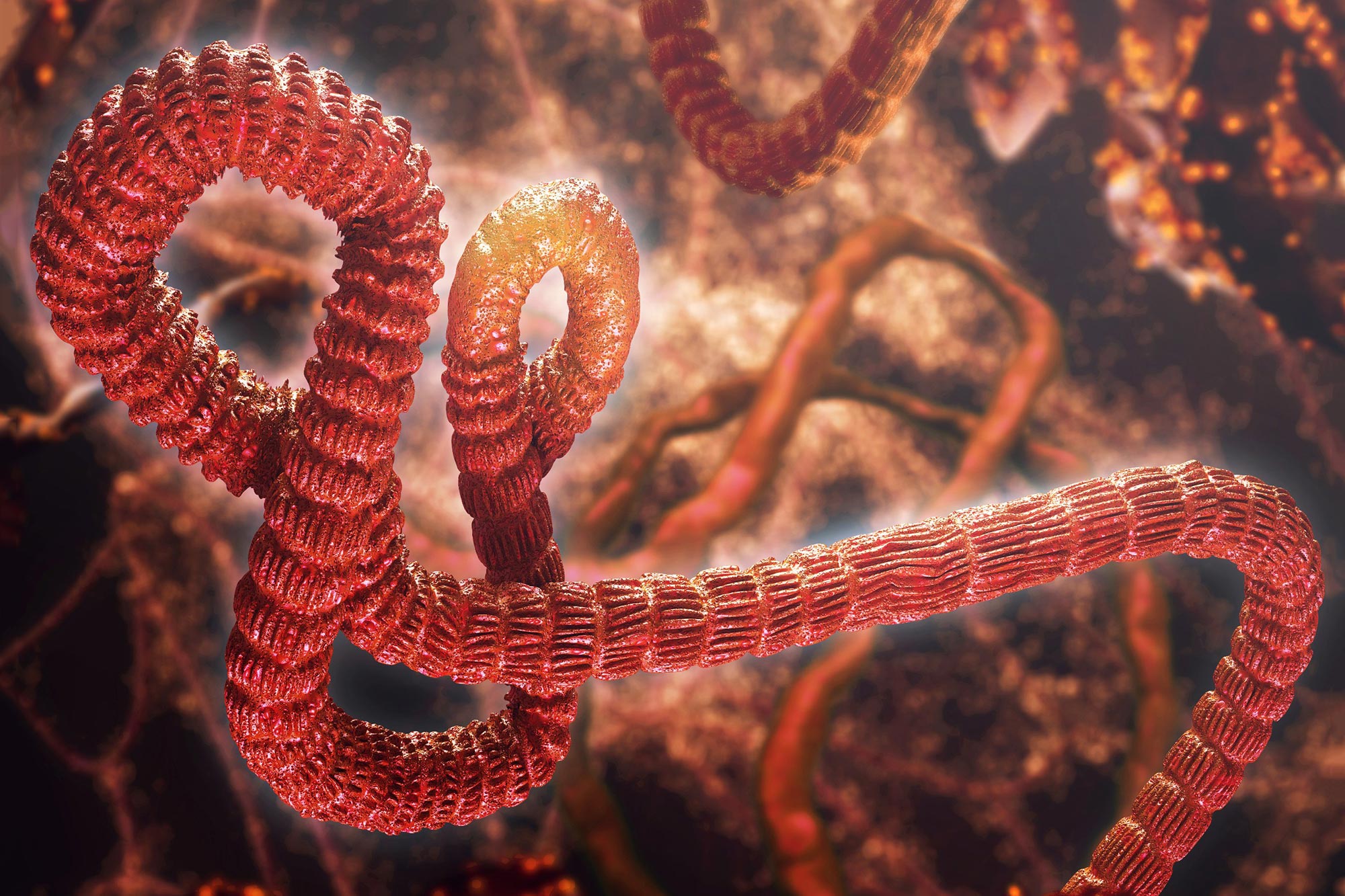
BU virologist Nancy Sullivan says the Bundibugyo outbreak in the Democratic Republic of the Congo underscores the need for broader outbreak preparedness.
The death of a nurse marked the moment health officials recognized that something dangerous was spreading. The illness was Bundibugyo virus, a rare but potentially deadly infection now driving a growing outbreak in the Democratic Republic of Congo and exposing how poorly prepared health systems can be for diseases that receive little attention between emergencies.
Boston University professor Nancy Sullivan examines that vulnerability in a review published in the New England Journal of Medicine. She argues that the outbreak should serve as a warning: planning cannot focus only on the infectious threats most likely to make headlines.
Bundibugyo belongs to the filovirus family, a group of viruses that includes the better-known Ebola virus. Before the current crisis, health officials had recognized only two Bundibugyo outbreaks—in Uganda in 2007 and the Democratic Republic of Congo (DRC) in 2012—but the latest outbreak has already surpassed both in its pace and size. According to the WHO, 695 cases and 138 deaths had been confirmed in the DRC and Uganda as of June 11.
Delays weaken outbreak control
Stopping a virus like Bundibugyo depends on speed. Sullivan, a Boston University professor of biology and virology, immunology & microbiology, explains that health workers must quickly identify infections, separate patients from others, trace people who may have been exposed, strengthen infection-control measures, and provide supportive care.
Each step helps break a different link in the chain of transmission. Yet in places with limited laboratory resources, even determining what disease a patient has can take too long. Testing delays can leave infected people in contact with family members, caregivers, and other patients while the virus continues spreading.
Bundibugyo causes severe hemorrhagic fever, an illness that can trigger widespread inflammation, damage the inner lining of blood vessels, produce uncontrolled bleeding, and lead to the failure of several organs. The virus passes through direct contact with infected bodily fluids, placing caregivers at particular risk, especially inside hospitals. The 2026 outbreak was formally identified after a nurse died.
Diagnosis presents one of the greatest obstacles. Early symptoms can look much like malaria, typhoid fever and several other illnesses, so doctors cannot reliably identify Bundibugyo from symptoms alone. Laboratory confirmation is essential, Sullivan said.
That requirement creates a logistical problem in the DRC. Limited local testing capacity means samples may need to travel considerable distances to national reference laboratories, the centralized facilities equipped to confirm difficult or dangerous infections.
“Delays in specimen collection, transportation and testing can postpone confirmation by days or weeks, which hinders the isolation of infected persons, contact tracing and the initiation of outbreak-control measures,” Sullivan wrote.
Rare pathogens expose preparedness gaps
The outbreak reveals a broader weakness in infectious disease planning. Preparedness programs often concentrate resources on pathogens considered the most common or most likely to cause a major emergency. Bundibugyo shows why that strategy can leave dangerous blind spots.
After decades with little recognized activity, the virus has returned as a serious threat. Its reappearance illustrates how difficult it is to predict which pathogen will drive the next outbreak. Sullivan has called for countermeasures that can address any virus capable of causing severe illness or death in humans, rather than waiting until a neglected disease begins spreading widely.
Researchers have made progress on vaccines and treatments for the Ebola, Sudan, and Marburg viruses. Bundibugyo occurs far less often, however, and no licensed vaccine or therapy has been developed specifically for it. Evidence indicates that vaccines designed for other virus species may offer some protection, but that possibility does not replace the need for dedicated preparation.
“Preparedness planning should extend beyond diagnostics, vaccines, and therapeutics to include operational readiness for multinational outbreak response,” she said.
Reference: “Bundibugyo Virus Disease in 2026 — Clinical and Public Health Responses” by Nancy J. Sullivan, 23 June 2026, New England Journal of Medicine.
DOI: 10.1056/NEJMra2607216
Never miss a breakthrough: Join the SciTechDaily newsletter.
Follow us on Google and Google News.
2 Comments
Diversity – is when life congregates in a environmental niche and evolves together in relative isolation. This is wholly necessary for a healthy ecology. People mixing across continents destroys diversity.
Do you understand?
lmaoaysalol