
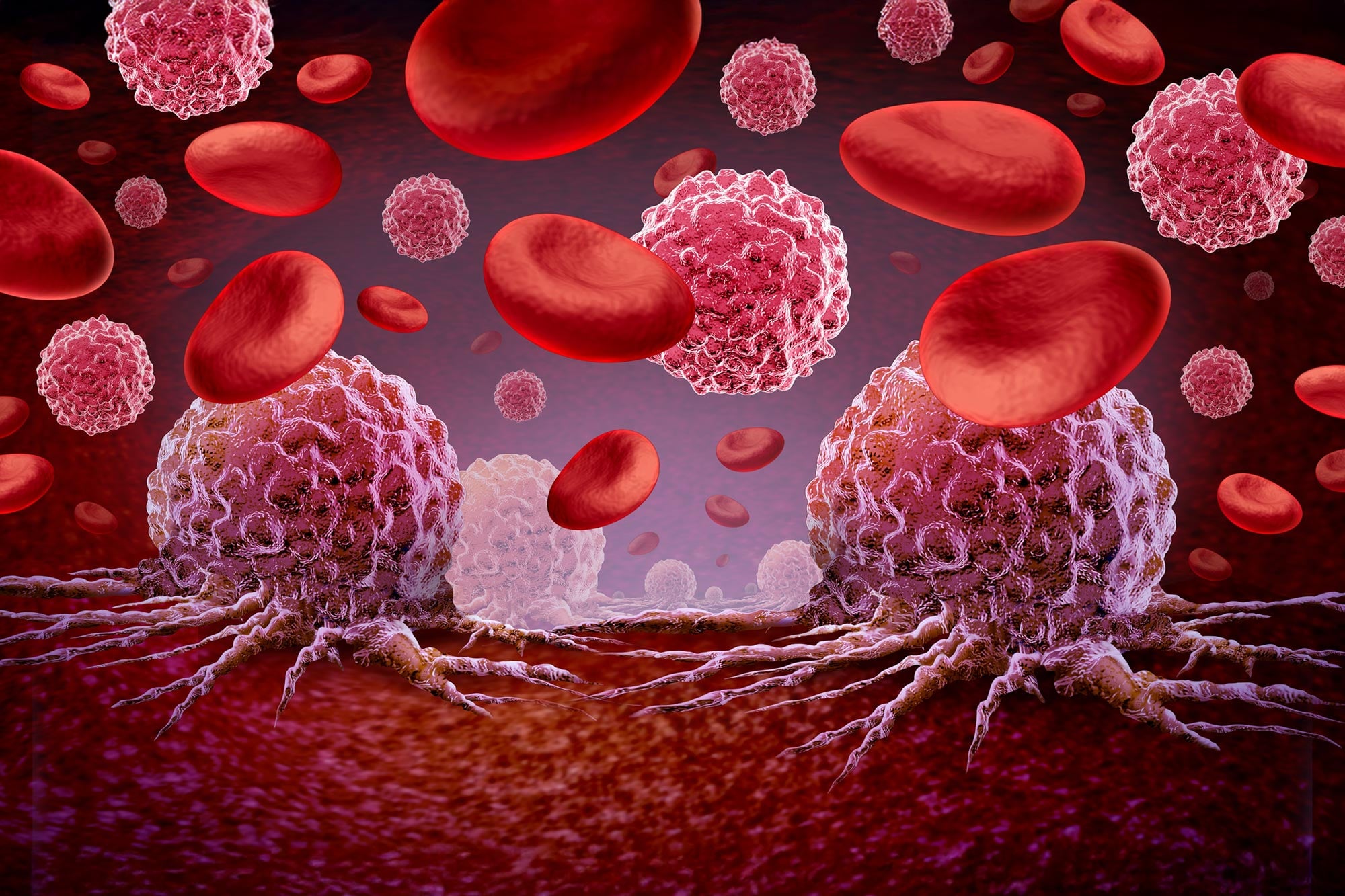
T cells may use a previously unknown CD64-dependent pathway to attack acute myeloid leukemia.
T cells are generally thought to identify cancer through a well-established molecular recognition system. Yet when researchers removed a key part of that system from acute myeloid leukemia (AML) cells, the immune cells continued killing them. The unexpected result led scientists at The University of Texas MD Anderson Cancer Center to uncover an alternative route through which T cells may attack this aggressive blood cancer.
The work, published in Proceedings of the National Academy of Sciences (PNAS), was led by Cassian Yee, M.D., professor of Melanoma Medical Oncology, and Kapil Saxena, M.D., a former member of the Yee laboratory. Their findings indicate that T cells can recognize and destroy AML cells through a pathway involving the CD64 protein and an intact T cell receptor (TCR), even when the usual recognition machinery is absent.
“By chasing a simple, unexplained observation, we challenged a basic assumption about how T cells can recognize and kill tumor cells,” Yee said. “The freedom to explore things that aren’t conventional is what drives innovation, and this contrarian finding is an example of that, with broad implications for overcoming immune resistance in leukemia and possibly other cancers.”

AML often evades immune recognition
AML begins in the bone marrow and can advance rapidly. Targeted drugs and stem cell transplantation have improved treatment for some patients, but relapse and therapy resistance remain common.
Cancer cells can escape immune attack by reducing or eliminating proteins called the major histocompatibility complex (MHC). These molecules normally display identifying signals that help T cells distinguish their targets.
Under the conventional model, a T cell uses its TCR to recognize a cancer-related peptide presented by an MHC molecule. The researchers therefore expected that removing MHC from AML cells would make them invisible to T cells.
T cells kill without MHC recognition
That prediction did not hold. Activated T cells still efficiently destroyed AML cells that lacked MHC. The effect appeared across several AML cell lines and in primary patient samples, including cells from relapsed disease and cancers carrying high-risk mutations.
Because natural killer (NK) cells can attack targets without relying on MHC, the researchers first investigated whether NK-related pathways were responsible. Disabling several known NK cell mechanisms did not stop the T cells from killing the leukemia cells.
The absence of an MHC requirement also suggested that the TCR might be unnecessary. Yet when the researchers removed TCRs from the T cells, their ability to eliminate AML cells disappeared.
The findings revealed an unexpected mechanism: T cells still required an intact, activated TCR signaling system, yet they could target leukemia cells without the conventional MHC recognition pathway long considered essential to T cell activity.
A CRISPR screen identifies CD64
After ruling out several established immune pathways, the researchers used a genome-wide CRISPR screen to search for the missing component. They genetically modified AML cells, repeatedly exposed them to T cells, and identified changes that allowed some leukemia cells to survive.
The screen pointed to CD64, a receptor commonly found on early myeloid cells, along with genes involved in interferon-gamma signaling. When CD64 was removed, AML cells became resistant to T cell attack. Adding CD64 to leukemia cells that were normally resistant made them more vulnerable.
A second immune pathway emerges
Together, the experiments uncovered a previously unknown form of T cell-mediated killing that depends on CD64 and an activated TCR but bypasses traditional MHC recognition. This additional route may help explain why AML can be particularly responsive to stem cell transplantation, an immune-based treatment in which donor immune cells can attack remaining leukemia.
The researchers are now working to determine how CD64 interacts with the TCR signaling machinery. Future studies will examine whether this mechanism can be used to strengthen T cell therapies for AML and potentially other cancers.
Reference: “CD64 enables TCR-dependent, MHC-independent CTL cytotoxicity of AML cells” by Kapil Saxena, Shao-Hsi Hung, Esther Ryu, Yulun Chiu, Casey Bermack, Ke Pan, Chunhua Shi, Priscilla Ortiz, Shailbala Singh, Marina Y. Konopleva and Cassian Yee, 13 July 2026, Proceedings of the National Academy of Sciences.
DOI: 10.1073/pnas.2601232123
This research was supported by the National Institutes of Health, the American Society of Clinical Oncology Conquer Cancer Young Investigator Award, the Cancer Prevention and Research Institute of Texas (CPRIT), and the Program for T Cell Therapy (ProTCT), part of UT MD Anderson’s Strategic Research Initiative Development (STRIDE) program.
Never miss a breakthrough: Join the SciTechDaily newsletter.
Follow us on Google and Google News.