
Close Menu
    Facebook X (Twitter) Instagram
    SciTechDaily
    • Biology
    • Chemistry
    • Earth
    • Health
    • Physics
    • Science
    • Space
    • Technology
    Facebook X (Twitter) Pinterest YouTube RSS
    SciTechDaily
    Home»Biology»Scientists Identify Several Genes That Cause Abnormally Small Heads
    Biology

    Scientists Identify Several Genes That Cause Abnormally Small Heads

    By Bill Hathaway, Yale UniversityApril 13, 2018No Comments3 Mins Read
    Facebook Twitter Pinterest Telegram LinkedIn WhatsApp Email Reddit
    Share
    Facebook Twitter LinkedIn Pinterest Telegram Email Reddit
    Scientists Identify Several Genes That Cause Abnormally Small Heads
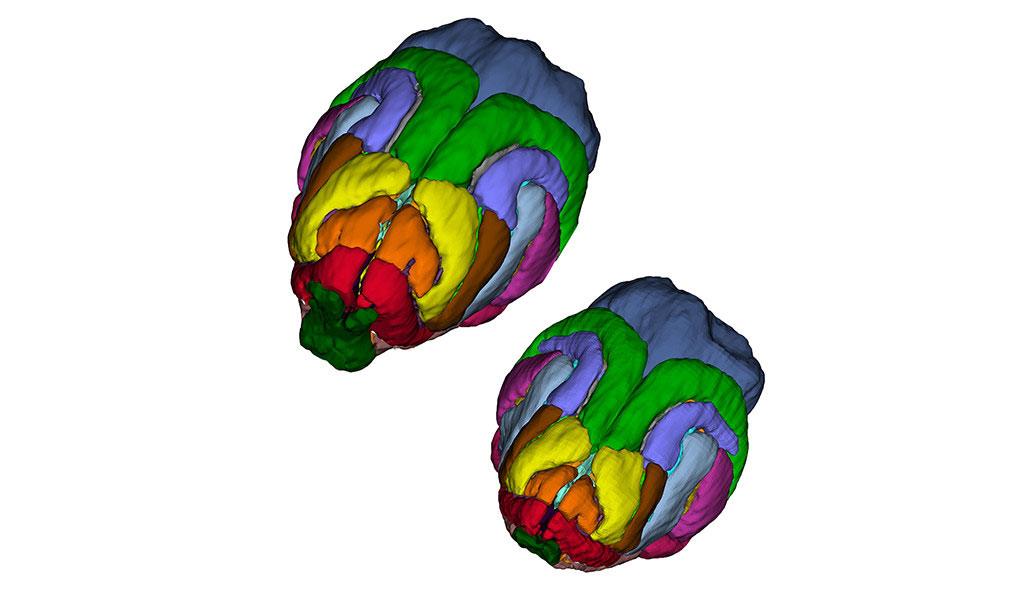
    The ferret brain is convoluted and contains diverse neural progenitor cell types during development, similar to the human brain. Loss of a gene linked to human microcephaly causes the same severe phenotype in the ferret (right) and provides an insight into cerebral cortical development and evolution. (Image via Yale Magnetic Resonance Research Center)

    Scientists have identified several genes that when mutated can cause children to be born with microcephaly, or abnormally small heads. But exactly how these genes control brain size has remained unclear. A team of researchers headed by scientists at Yale and Harvard have identified how one such gene controls the growth of the cerebral cortex, the seat of higher-order thinking in humans.

    The gene, abnormal spindle-like microcephaly-associated (ASPM), helps keep neural progenitor cells proliferating for a longer period in the developing embryo, which in turn leads to the production of more neurons and supporting glial cells, the researchers report on April 11 in the journal Nature.

    Mutations in ASPM reduce brain volume by half in human microcephaly cases.

    Previous efforts to study the function of genes involved in brain growth have been hampered by differences in species. For instance, brains of mice are 1/1000th the size of humans and lack the complex folds that dramatically expand the surface area of the brain. In the new study, the researchers tracked changes in the brains of ferrets, which share many structural and molecular similarities with higher-order mammals such as primates. Ferrets lacking the ASPM gene show strikingly similar brain abnormalities found in human microcephaly patients, such as 25%-40% reduction in brain volume, with the most severe reduction in the frontal cortex.

    Also the mutant ferret cortex shows a massive premature displacement of a specific neural progenitor cell that has been implicated in expansion of the cerebral cortex in primates.

    “ASPM seems to make neural progenitor cells linger in the germinal zone, allowing them to divide more in place,” said Yale’s Byoung-Il Bae, associate research scientist in neurosurgery and co-corresponding author of the paper.

    The evolution of the ASPM protein is significantly associated with brain size in primates, whales, and dolphins. “Perhaps the same developmental mechanism led to expanded brain size in both primates and cetaceans,” Bae said.

    Harvard’s Christopher A. Walsh of Boston’s Children Hospital is co-corresponding author of the paper.

    The research was funded by National Institutes of Health, Howard Hughes Medical Institute, and Allen Discovery Center program.

    Reference: “Aspm knockout ferret reveals an evolutionary mechanism governing cerebral cortical size” by Matthew B. Johnson, Xingshen Sun, Andrew Kodani, Rebeca Borges-Monroy, Kelly M. Girskis, Steven C. Ryu, Peter P. Wang, Komal Patel, Dilenny M. Gonzalez, Yu Mi Woo, Ziying Yan, Bo Liang, Richard S. Smith, Manavi Chatterjee, Daniel Coman, Xenophon Papademetris, Lawrence H. Staib, Fahmeed Hyder, Joseph B. Mandeville, P. Ellen Grant, Kiho Im, Hojoong Kwak, John F. Engelhardt, Christopher A. Walsh and Byoung-Il Bae, 11 April 2018, Nature.
    DOI: 10.1038/s41586-018-0035-0

    Never miss a breakthrough: Join the SciTechDaily newsletter.
    Follow us on Google and Google News.

    Genetics Neurology Neuroscience Yale University
    Share. Facebook Twitter Pinterest LinkedIn Email Reddit

    Related Articles

    Alcohol Dependence and Psychiatric Disorders Share Genetic Links

    Neurobiologists Block the Effects of Stress

    Gene Linking Brain Structure to Intelligence Identified

    Study Shows Human Brain Development is Divided into Three Major Phases

    Suppressing NgR1 Returns Brain to Adolescent Levels of Plasticity

    Neurologists Repair Neurons Associated With Traumatic Nerve Injury Pain

    GATA1 Plays a Role in the Loss of Connections Between Neurons and in Symptoms of Depression

    Imbalance Between Neuronal Excitation and Inhibition May Account for Seizure Susceptibility in Angelman Syndrome

    Evolutionary Changes Surrounding the NOS1 Gene

    Leave A Reply Cancel Reply

    • Facebook
    • Twitter
    • Pinterest
    • YouTube

    Don't Miss a Discovery

    Subscribe for the Latest in Science & Tech!

    Trending News

    Millions Take This Joint Supplement but Scientists Found a Concerning Alzheimer’s Link

    Why Evolution Stalled for Millions of Years Before Suddenly Exploding

    New Feathered Dinosaur May Have Solved a 120-Million-Year-Old Fossil Mystery

    Ozempic and Similar Drugs Linked to Dramatic Drop in Addiction Rates

    Ancient Meteorite Reveals a Forgotten Planet That Existed 4.5 Billion Years Ago

    Scientists Reveal What Happened When 12 People Were Trapped Together in Antarctica for 10 Months

    The “Impossible” Earthquake Beneath Utah Was Real After All

    A Major Update Just Hit Cholesterol Guidelines – Here’s What Every Adult Needs To Know

    Follow SciTechDaily
    • Facebook
    • Twitter
    • YouTube
    • Pinterest
    • Newsletter
    • RSS
    SciTech News
    • Biology News
    • Chemistry News
    • Earth News
    • Health News
    • Physics News
    • Science News
    • Space News
    • Technology News
    Recent Posts
    • Your Diet Could Be Missing the Key Ingredient for Heart Protection
    • New Study Reveals Unexpected Way To Destroy Pancreatic Cancer Cells
    • Researchers Warn Widely Prescribed Blood Pressure Drugs Could Be Harming Diabetic Kidneys
    • JUNO’s First Results Bring the Neutrino Mass Mystery Into Focus
    • Astronomers Confirm Dark Energy After Shock Challenge Rocked Cosmology
    Copyright © 1998 - 2026 SciTechDaily. All Rights Reserved.
    • Science News
    • About
    • Contact
    • Editorial Board
    • Privacy Policy
    • Terms of Use

    Type above and press Enter to search. Press Esc to cancel.