
Close Menu
    Facebook X (Twitter) Instagram
    SciTechDaily
    • Biology
    • Chemistry
    • Earth
    • Health
    • Physics
    • Science
    • Space
    • Technology
    Facebook X (Twitter) Pinterest YouTube RSS
    SciTechDaily
    Home»Biology»GATA1 Plays a Role in the Loss of Connections Between Neurons and in Symptoms of Depression
    Biology

    GATA1 Plays a Role in the Loss of Connections Between Neurons and in Symptoms of Depression

    By Bill Hathaway, Yale UniversityAugust 13, 2012No Comments3 Mins Read
    Facebook Twitter Pinterest Telegram LinkedIn WhatsApp Email Reddit
    Share
    Facebook Twitter LinkedIn Pinterest Telegram Email Reddit
    Brain Anatomy Disease Cancer Depression
    Researchers discovered a single genetic switch that triggers the loss of brain connections in humans and induces depression in animal models.

    A new study by Yale University scientists found that GATA1 represses the expression of several genes that are necessary for the formation of synaptic connections between brain cells and that GATA1 may play a role in symptoms of depression.

    Major depression or chronic stress can cause the loss of brain volume, a condition that contributes to both emotional and cognitive impairment. Now a team of researchers led by Yale scientists has discovered one reason why this occurs — a single genetic switch that triggers loss of brain connections in humans and depression in animal models.
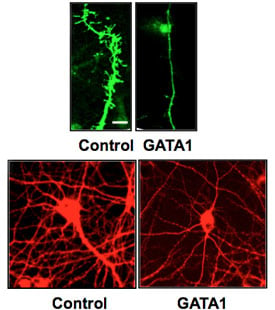
    Expression of a single gene dramatically decreases synaptic connections between brain cells
    Expression of a single gene dramatically decreases synaptic connections between brain cells. Yale scientists believe this may explain why people suffering from chronic stress and depression suffer loss of brain volume. Credit: Yale University

    The findings, reported in the August 12 issue of the journal Nature Medicine, show that the genetic switch known as a transcription factor represses the expression of several genes that are necessary for the formation of synaptic connections between brain cells, which in turn could contribute to loss of brain mass in the prefrontal cortex.

    “We wanted to test the idea that stress causes a loss of brain synapses in humans,” said senior author Ronald Duman, the Elizabeth Mears and House Jameson Professor of Psychiatry and professor of neurobiology and of pharmacology. “We show that circuits normally involved in emotion, as well as cognition, are disrupted when this single transcription factor is activated.”

    The research team analyzed tissue of depressed and non-depressed patients donated from a brain bank and looked for different patterns of gene activation. The brains of patients who had been depressed exhibited lower levels of expression in genes that are required for the function and structure of brain synapses. Lead author and postdoctoral researcher H.J. Kang discovered that at least five of these genes could be regulated by a single transcription factor called GATA1. When the transcription factor was activated, rodents exhibited depressive-like symptoms, suggesting GATA1 plays a role not only in the loss of connections between neurons but also in symptoms of depression.

    Duman theorizes that genetic variations in GATA1 may one day help identify people at high risk for major depression or sensitivity to stress.

    “We hope that by enhancing synaptic connections, either with novel medications or behavioral therapy, we can develop more effective antidepressant therapies,” Duman said.

    Reference: “Decreased expression of synapse-related genes and loss of synapses in major depressive disorder” by Hyo Jung Kang, Bhavya Voleti, Tibor Hajszan, Grazyna Rajkowska, Craig A Stockmeier, Pawel Licznerski, Ashley Lepack, Mahesh S Majik, Lak Shin Jeong, Mounira Banasr, Hyeon Son and Ronald S Duman, 12 August 2012, Nature Medicine.
    DOI: 10.1038/nm.2886

    The study was funded by the National Institutes of Health and the Connecticut Department of Mental Health and Addiction Services.

    Other Yale authors of the paper are Bhavya Voleti, Pawel Licznerski, Ashley Lepack, and Mounira Banasr.

    Never miss a breakthrough: Join the SciTechDaily newsletter.
    Follow us on Google and Google News.

    Brain Activity Depression Neurology Neuroscience Stress Response Yale University
    Share. Facebook Twitter Pinterest LinkedIn Email Reddit

    Related Articles

    Yale Researchers Examine How the Brain Weighs Value

    Laminin Alpha 5 is Crucial to Adolescent Brain Maturation

    Yale Study Shows Risk Avoidance in Older Adults is Related to Brain Anatomy, Not Age

    Yale Researchers Track How the Brain Routes Visual Signals

    New Research Shows Individual Brain Activity Is As Unique As Fingerprints

    Yale Maps Evolutionary Changes of the Human Brain

    Yale Neurobiologists Discover Surprising Trigger of New Brain Cell Growth

    Neurobiologists Block the Effects of Stress

    Study Shows Human Brain Development is Divided into Three Major Phases

    Leave A Reply Cancel Reply

    • Facebook
    • Twitter
    • Pinterest
    • YouTube

    Don't Miss a Discovery

    Subscribe for the Latest in Science & Tech!

    Trending News

    The Universe Is Expanding Too Fast and Scientists Can’t Explain Why

    “Like Liquid Metal”: Scientists Create Strange Shape-Shifting Material

    Early Warning Signals of Esophageal Cancer May Be Hiding in Plain Sight

    Common Blood Pressure Drug Shows Surprising Power Against Deadly Antibiotic-Resistant Superbug

    Scientists Uncover Dangerous Connection Between Serotonin and Heart Valve Disease

    Scientists Discover a “Protector” Protein That Could Help Reverse Hair Loss

    Bone-Strengthening Discovery Could Reverse Osteoporosis

    Scientists Uncover Hidden Trigger Behind Stem Cell Aging

    Follow SciTechDaily
    • Facebook
    • Twitter
    • YouTube
    • Pinterest
    • Newsletter
    • RSS
    SciTech News
    • Biology News
    • Chemistry News
    • Earth News
    • Health News
    • Physics News
    • Science News
    • Space News
    • Technology News
    Recent Posts
    • Scientists Overcome Major Quantum Bottleneck, Potentially Transforming Teleportation and Computing
    • Quantum Physics’ Strangest Problem May Hold the Key to Time Itself
    • Scientists Create “Liquid Gears” That Spin Without Touching
    • The Simple Habit That Could Help Prevent Cancer
    • Forgotten Medicinal Plant Shows Promise in Fighting Dangerous Superbugs
    Copyright © 1998 - 2026 SciTechDaily. All Rights Reserved.
    • Science News
    • About
    • Contact
    • Editorial Board
    • Privacy Policy
    • Terms of Use

    Type above and press Enter to search. Press Esc to cancel.