
Close Menu
    Facebook X (Twitter) Instagram
    SciTechDaily
    • Biology
    • Chemistry
    • Earth
    • Health
    • Physics
    • Science
    • Space
    • Technology
    Facebook X (Twitter) Pinterest YouTube RSS
    SciTechDaily
    Home»Science»Pacific Islanders Weapons Indicate That Three Shark Species Disappeared
    Science

    Pacific Islanders Weapons Indicate That Three Shark Species Disappeared

    By SciTechDailyAugust 13, 2012No Comments2 Mins Read
    Facebook Twitter Pinterest Telegram LinkedIn WhatsApp Email Reddit
    Share
    Facebook Twitter LinkedIn Pinterest Telegram Email Reddit
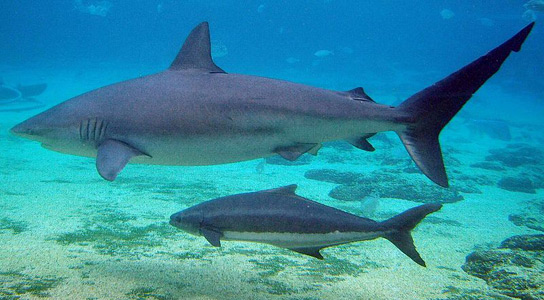
    Carcharhinus-obscurus-spottail-shark
    Carcharhinus obscurus shark

    The analysis of the weapons used by the indigenous people of the Gilbert Islands in the central Pacific Ocean, which primarily use shark teeth, indicates that at least three species of shark have disappeared from the waters near the islands. Joshua Drew, a conservation biologist at Columbia University in New York, studied the weapons housed in the collection of the Field Museum of Natural History in Chicago, Illinois, and presented his findings at the 2012 Ecological Society of America’s Annual Meeting in Portland last week.

    The people of the Gilbert Islands have been creating weapons from shark teeth for centuries. Drew used these teeth to show that the waters around these islands, which are part of the Republic of Kiribati, were once the home of three species of sharks that are no longer found in this area.
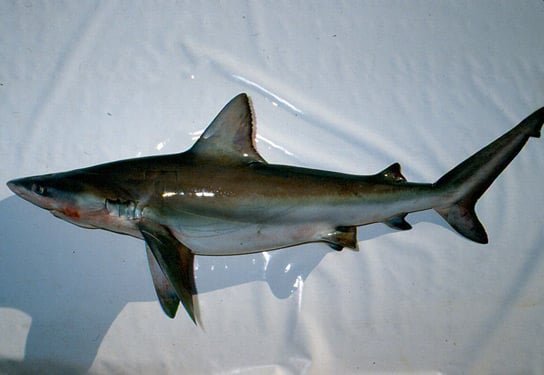
    Carcharhinus-altimus-bignose-shark

    Drew analyzed 124 shark-tooth weapons, which included swords, tridents, and a 4-meter-long (13-foot-long) lance, dating back over 120 years. All of these weapons use a similar construction technique. Holes are drilled into them and teeth are lashed onto the buttresses of wood with cords made from coconut leaves. The teeth in one weapon usually come from the same species, but Drew found several blades which belong to a rare species of blue shark (Prionace glauca). This could have been a signature of a single artisan.

    Sharks can be identified by their teeth, which allows these weapons to provide a clear record of the species that were once prevalent around the Gilbert Islands. Drew used field guides and high-resolution photos to identify the teeth. The teeth came from 19 species of shark, and three of these, the spottail shark (Carcharhinus sorrah), dusky shark (Carcharhinus obscurus), and bignose shark (Carcharhinus altimus) are no longer found in the water close to the islands.

    It is unclear why these species of sharks, which aren’t extinct, have vanished from the area, but humans may have played a role in the decline. There is a lack of good ecological data on shark populations before humans started to alter the ocean’s populations.
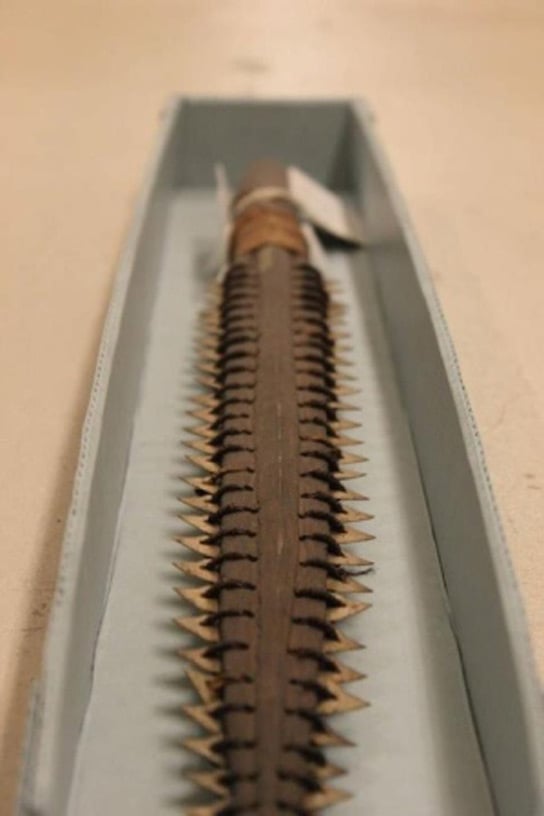
    gilbert-islands-shark-weapon

    Never miss a breakthrough: Join the SciTechDaily newsletter.
    Follow us on Google and Google News.

    Biodiversity Ecology Marine Biology Sharks
    Share. Facebook Twitter Pinterest LinkedIn Email Reddit

    Related Articles

    Conservation Paradox: The Pros and Cons of Recreational / Trophy Hunting

    New Climate Change Research: Future Too Warm for Baby Sharks

    The Great Barrier Reef Has Lost Half Its Corals – Massive Declines in Just 3 Decades

    Body Size of Extinct Gigantic Megatooth Shark – Otodus Megalodon – Indeed off the Charts in the Shark World

    Whale Shark Girls Overtake the Boys to Become World’s Largest Fish

    Reef Sharks in Decline – Already Functionally Extinct on Many of the World’s Reefs

    Rare Species of Animals and Plants Organize in Ghettos to Survive

    Biodiversity and Disease Risk for Humans

    Special Fishing Weights Could Help Save Hammerhead Sharks

    Leave A Reply Cancel Reply

    • Facebook
    • Twitter
    • Pinterest
    • YouTube

    Don't Miss a Discovery

    Subscribe for the Latest in Science & Tech!

    Trending News

    Your Blood Pressure Reading Could Be Wrong Because of One Simple Mistake

    Astronomers Stunned by Ancient Galaxy With No Spin

    Physicists May Be on the Verge of Discovering “New Physics” at CERN

    Scientists Solve 320-Million-Year Mystery of Reptile Skin Armor

    Scientists Say This Daily Walking Habit May Be the Secret to Keeping Weight Off After Dieting

    New Therapy Rewires the Brain To Restore Joy in Depression Patients

    Giant Squid Detected off Western Australia in Stunning Deep-Sea Discovery

    Popular Sugar-Free Sweetener Linked to Liver Disease, Study Warns

    Follow SciTechDaily
    • Facebook
    • Twitter
    • YouTube
    • Pinterest
    • Newsletter
    • RSS
    SciTech News
    • Biology News
    • Chemistry News
    • Earth News
    • Health News
    • Physics News
    • Science News
    • Space News
    • Technology News
    Recent Posts
    • New Stroke Study Challenges Decades-Old Medical Beliefs
    • These Simple Plant Foods Are Linked to Lower Blood Pressure
    • Common Blood Pressure Drug Supercharges Cancer Treatment in Surprising New Study
    • Key Magic Mushroom Ingredient Increases Laziness and Reduces Aggression
    • Researchers Solve 15-Year Mystery Behind Cancer-Causing Gut Toxin
    Copyright © 1998 - 2026 SciTechDaily. All Rights Reserved.
    • Science News
    • About
    • Contact
    • Editorial Board
    • Privacy Policy
    • Terms of Use

    Type above and press Enter to search. Press Esc to cancel.