
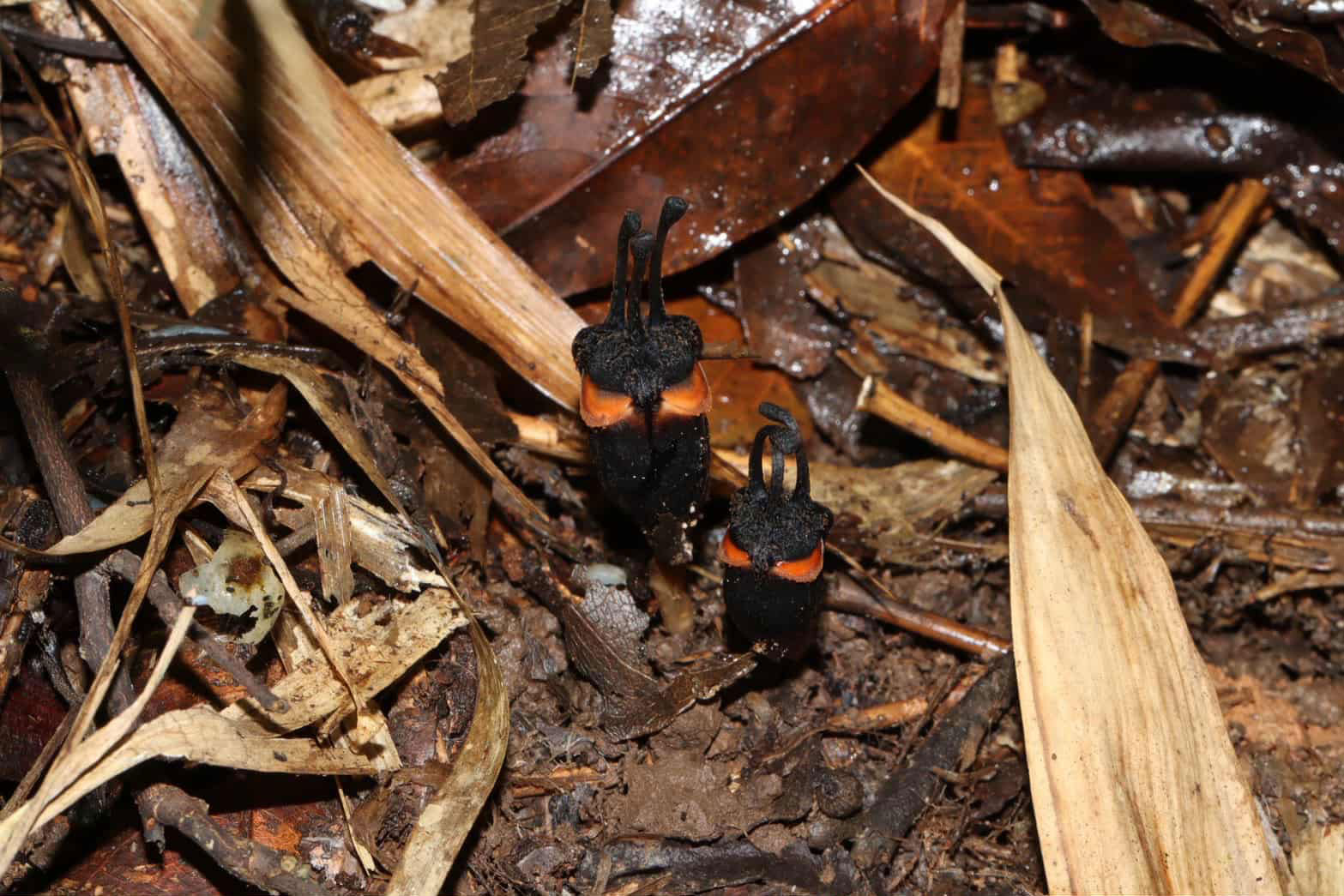
Researchers have identified a new plant species in western Thailand whose unusual appearance inspired the dramatic name Thismia daemona, or the “devil flower.”
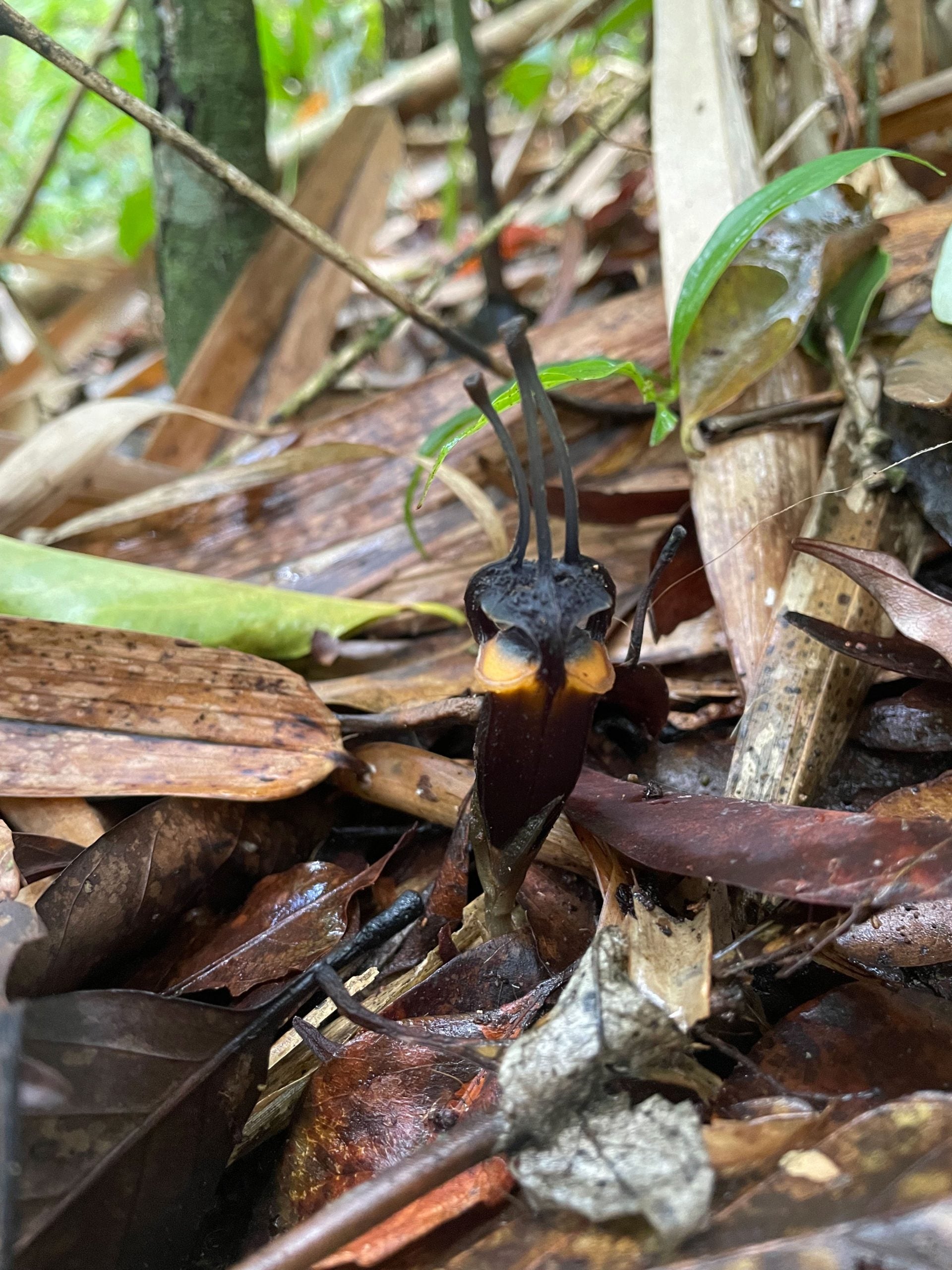
A nearly black flower with horn-like projections and flashes of reddish orange has been discovered beneath leaf litter in a mountain forest in western Thailand. The plant cannot photosynthesize, spends most of its life hidden from view, and now has a name that matches its unusual appearance: Thismia daemona, or the “devil flower.”
Its discovery is notable for more than its looks. Researchers know of fewer than 50 individuals, all growing within an area smaller than a football field, and have provisionally assessed the new species as Critically Endangered.
A plant that lives without sunlight
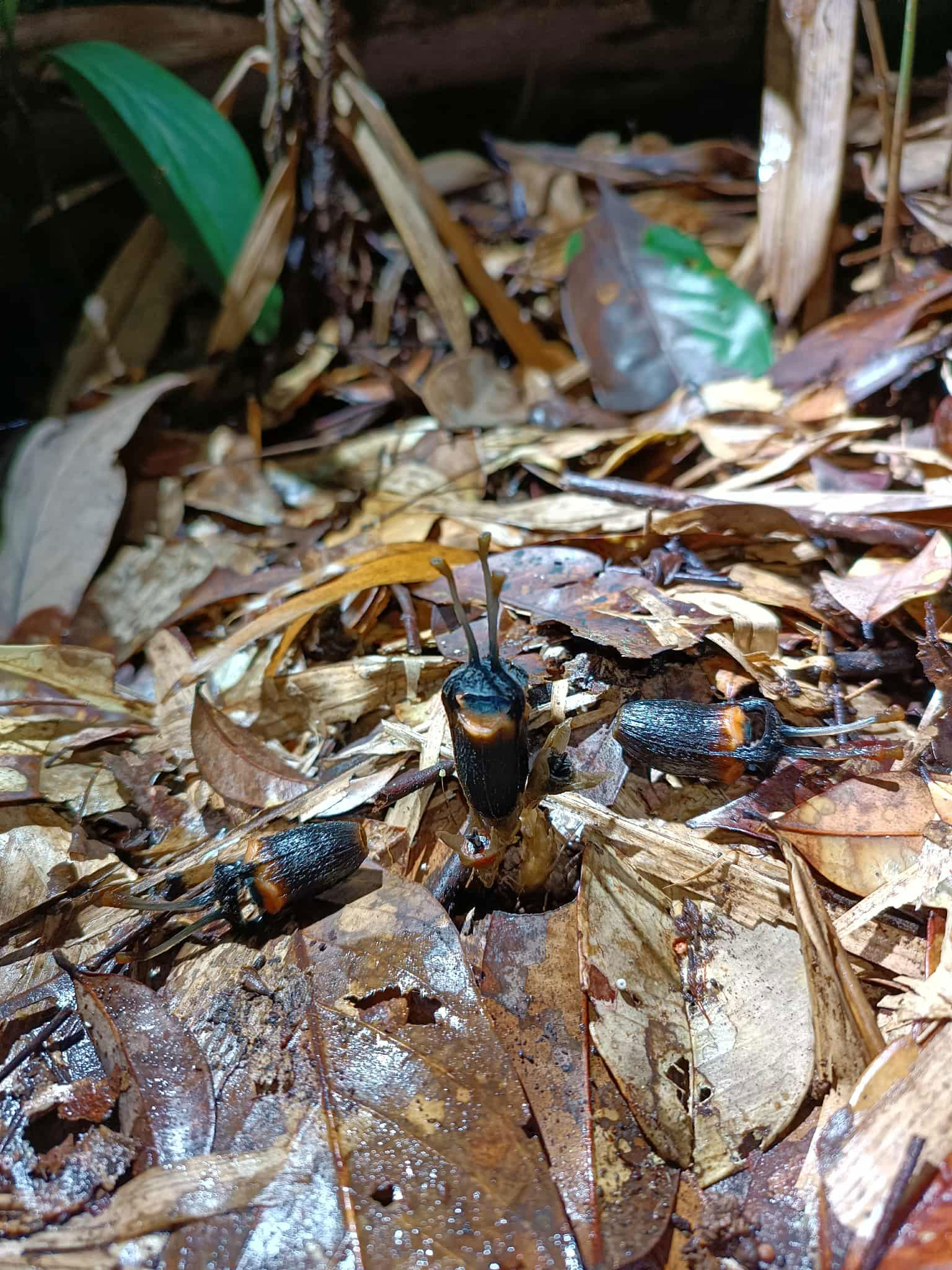
Thismia daemona belongs to Thismia, a genus of small flowering plants sometimes called “fairy lanterns.” Unlike most plants, members of this group contain no chlorophyll and cannot use sunlight to make their own food. Instead, they draw nutrients from underground fungi and spend almost their entire lives hidden beneath leaf litter.
Botanists from Chulalongkorn University and Prince of Songkla University found the species while surveying Thong Pha Phum National Park.
Its mountain habitat defied expectations
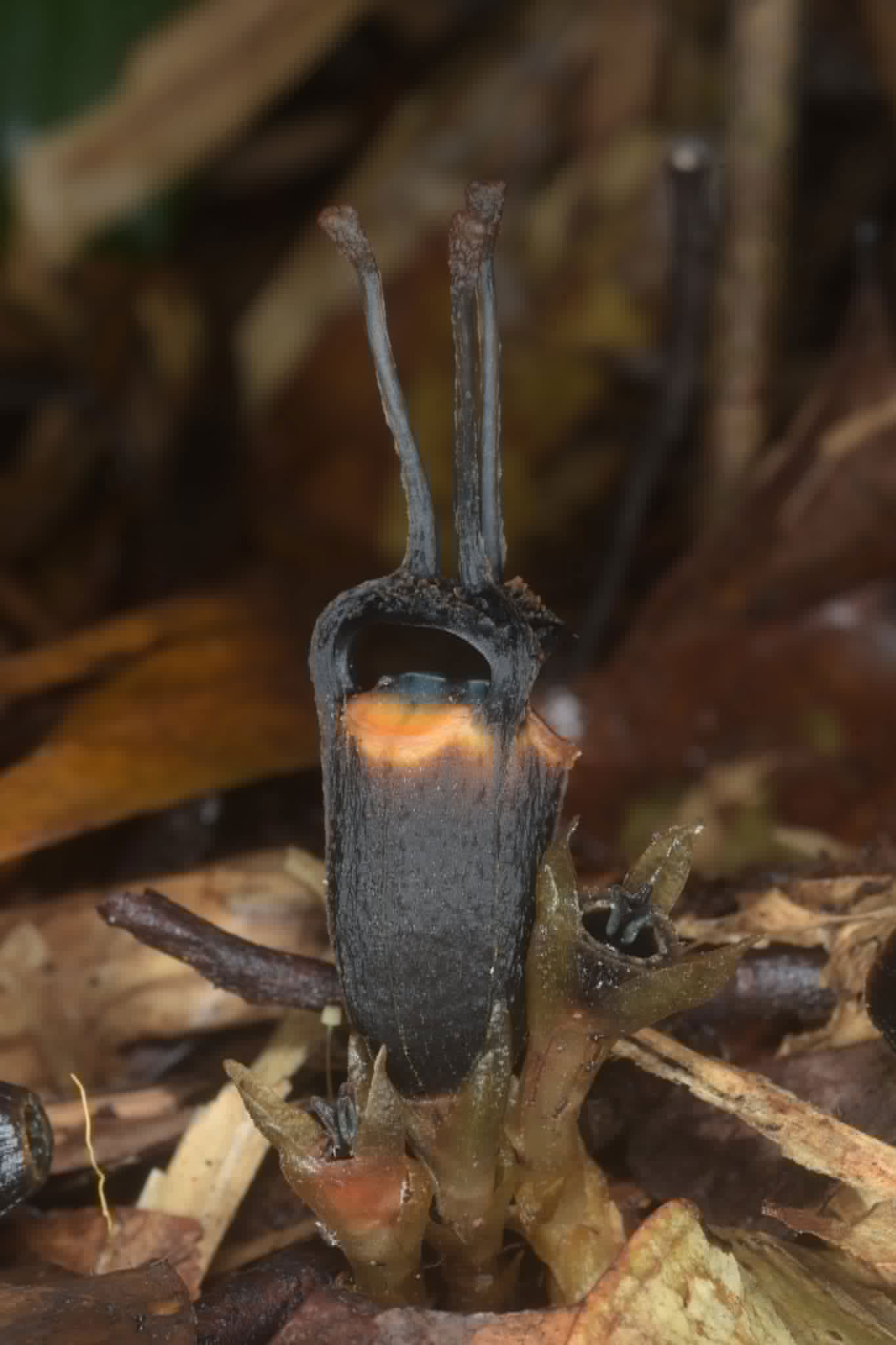
The location was unexpected. The plants were growing at nearly 1,000 meters (about 3,280 feet) above sea level in a seasonal mountain evergreen forest. Most Thismia species are known from continuously humid lowland rainforests.
“Finding Thismia daemona in Thong Pha Phum National Park was indeed a major surprise,” said Dr. Sahut Chantanaorrapint of Prince of Songkla University. “Typically, Thismia species are known to occur in perennially humid lowland rainforests, however, this population was discovered in a seasonal, montane evergreen forest at an elevation of nearly 1,000 meters above sea level.”
The discovery also expands the known range of an entire branch of the genus. T. daemona belongs to Thismia section Geomitra, a group previously known only from Peninsular Malaysia, Borneo, and Sumatra. Finding it in Thailand extends the section’s known range farther north for the first time.
The flower earns its devilish name
The flower itself is just as unusual as its habitat.
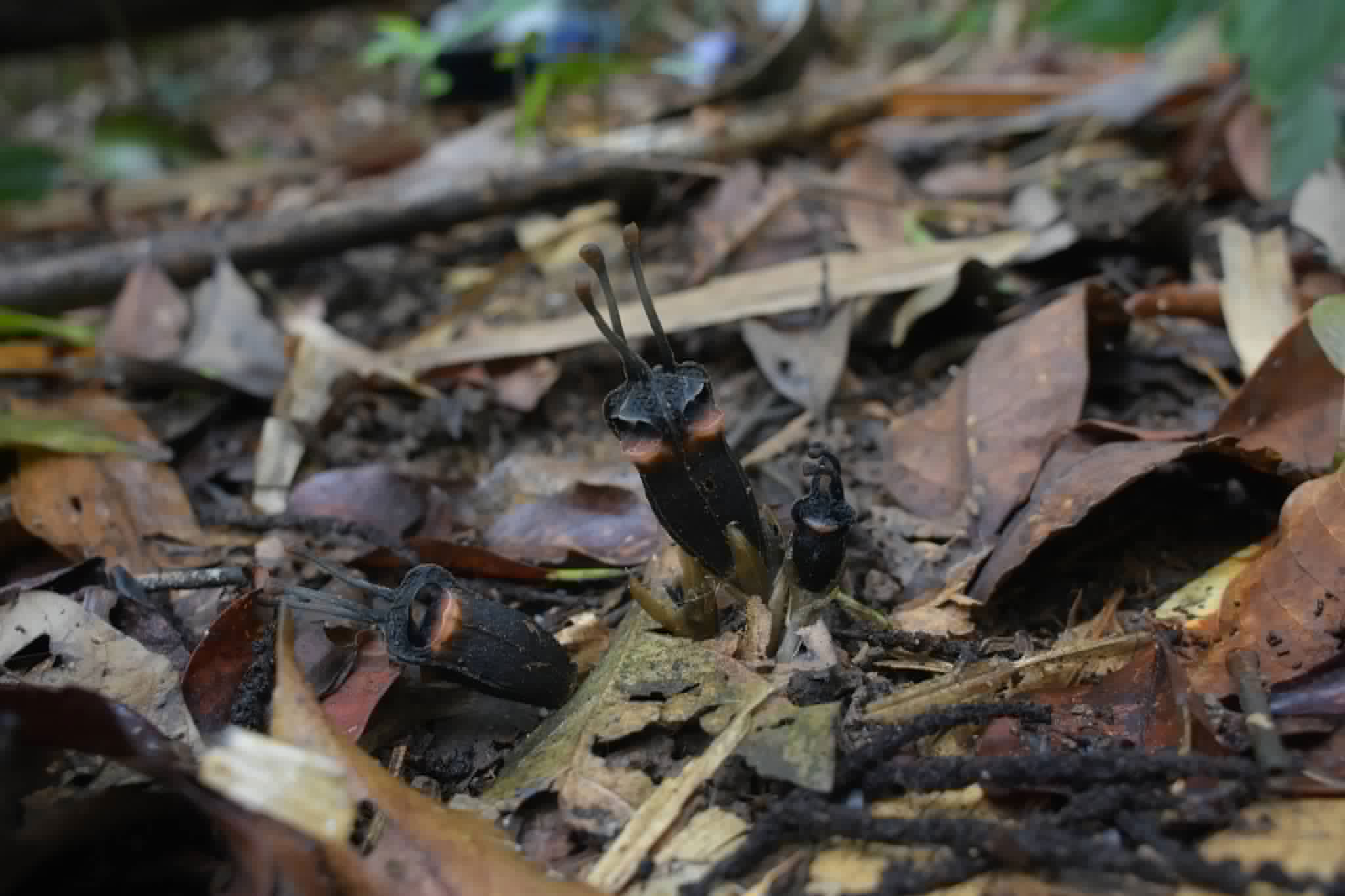
It is mostly black, with horn-like appendages rising from a dome-shaped structure called a mitre. Vivid reddish-orange patches around the base reminded the researchers of glowing eyes. Combined with the plant’s hidden, largely subterranean lifestyle, those features inspired its dramatic scientific name.
“Combined with its hidden, subterranean and mysterious lifestyle on the forest floor, our team unanimously agreed that naming it Thismia daemona perfectly captured its enigmatic and devil-like essence,” Dr. Chantanaorrapint said.
Fewer than 50 plants are known
Its rarity adds urgency to the discovery. So far, the species is known from only one population of fewer than 50 plants, occupying an area smaller than a football field.
Although the population lies within a protected national park, the area is popular with tourists. Researchers have therefore provisionally assessed the species as Critically Endangered.
Dr. Chantanaorrapint sees local involvement as an important part of protecting it.
“A key next step is adopting a sustainable conservation approach aligned with the UNESCO Man and the Biosphere concept, harmonizing biodiversity conservation with human engagement. Inspiring local people to take pride in their natural heritage not only safeguards the microhabitat, but also supports sustainable, community-led ecotourism.”
The study, published in the open-access journal PhytoKeys, brings the number of Thismia species recorded in Thailand to 16.
For a plant that spends most of its life hidden beneath the forest floor, T. daemona has revealed several surprises at once. Its unusual appearance earned it a memorable name, but its unexpected mountain habitat, expanded geographic range, and extreme rarity may be even more important for understanding where these unusual plants can survive and how best to protect them.
Reference: “Thismia daemona (Thismiaceae), a new species from Thailand supported by morphological and molecular evidence” by Tosak Seelanan, Isareyakorn Chantapram, Neeranuch Taosiri, Chanachon Chuchuea and Sahut Chantanaorrapint, 17 August 2026, PhytoKeys.
DOI: 10.3897/phytokeys.278.202868
This research was supported by National Science, Research and Innovation Fund (NSRF) and Prince of Songkla University (Ref. No. SCI6701025c), the Graduate School, Chulalongkorn University to commemorate the 72nd anniversary of His Majesty King Bhumibol Aduladej and the 90th Anniversary of Chulalongkorn University Scholarship under the Ratchadapisek Sompot Endowment Fund.
Never miss a breakthrough: Join the SciTechDaily newsletter.
Follow us on Google and Google News.