

Even scientists in the same specialty disagree about science’s purpose, a survey finds, raising concerns that AI could automate one narrow approach at others’ expense.
Is science a search for objective truth, an exercise in creative problem-solving, or both? A study published in Royal Society Open Science found that scientists disagree about the meaning and purpose of science more than the general public does.
Study leader Marina Dubova, a former Santa Fe Institute postdoctoral researcher, is now an assistant professor of psychology at the University of California, Berkeley. Working with Princeton University researcher Qiawen E. Liu, she surveyed 91 scientists and 99 members of the public. Participants evaluated 18 historical descriptions of science, including science as detective work, a search for truth, and a mirror reflecting reality.
Science seems more certain to the public
Scientists and the public generally agreed that science involves following curiosity and solving mysteries. The public tended to share an idealized picture of science as a reliable way to discover how the world works, placing less emphasis on creativity or uncertainty. That outlook could shape how people judge research and help explain their frustration when scientists cannot give firm answers or revise their conclusions as new evidence emerges.
The public’s views were closer to those of physicists and biologists than to those of researchers in psychology or the social sciences. One possible explanation, Dubova suggests, is that physics and biology feature more prominently in science education. More research is needed to test that connection.
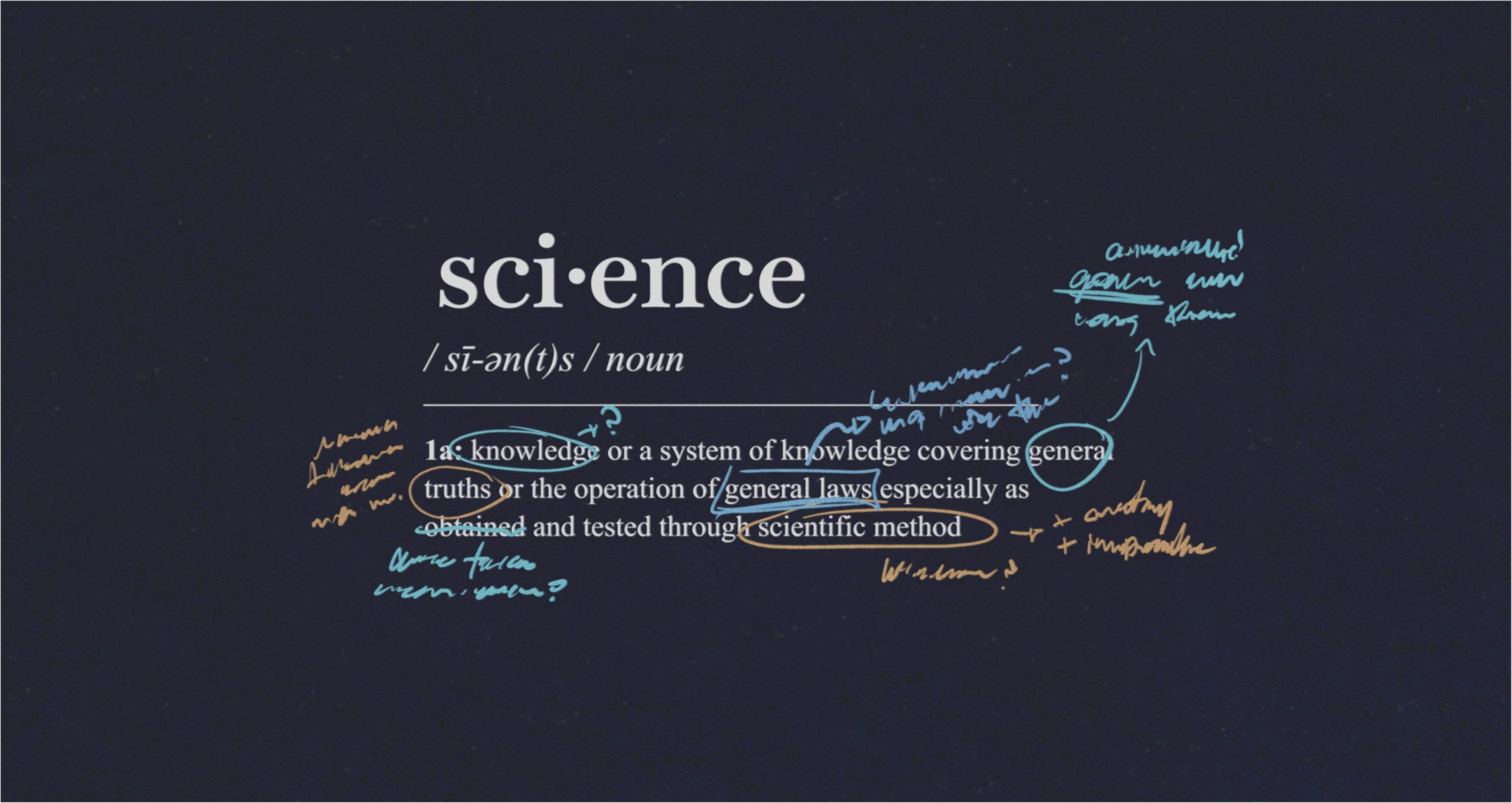
Same specialty, different ideas about science
Some scientists emphasized the search for objective truth, while others gave more weight to the judgment and creativity researchers bring to their work. They also disagreed about whether research follows established methods or requires improvisation. Few of the 18 descriptions received scientists’ full support, and they often had reservations even about ideas they generally agreed with.
“What was surprising to me was that there was quite a bit of disagreement between scientists, including scientists who are in the same subfield,” says Dubova. She suspects that researchers develop their approaches partly through experience, much as chefs develop different instincts about when to follow a recipe and when to improvise. Those differing conceptions of science could influence which discoveries researchers pursue.
AI could favor one vision of science
That diversity also raises a question for efforts to automate scientific research. As researchers develop artificial intelligence systems capable of conducting science, whose understanding of the work will those systems embody? Dubova worries that automation could reinforce one narrow conception of science at the expense of other valuable approaches.
For Dubova, the study is an early step toward understanding how these outlooks shape research itself. “Don’t take the common understanding of science for granted,” she says. “Always ask. Always be curious about what someone has in mind.”
Reference: “Everyone knows what science is…until you ask” by Marina Dubova and Qiawen E. Liu, 11 November 2026, Royal Society Open Science.
DOI: 10.1098/rsos.260933
The research was supported by SFI’s Lou Schuyler Seed Grant Fund, established in 2022 to support exploratory research by early-career scientists. Dubova used the funding to compensate study participants, helping make the research possible.
Never miss a breakthrough: Join the SciTechDaily newsletter.
Follow us on Google and Google News.