
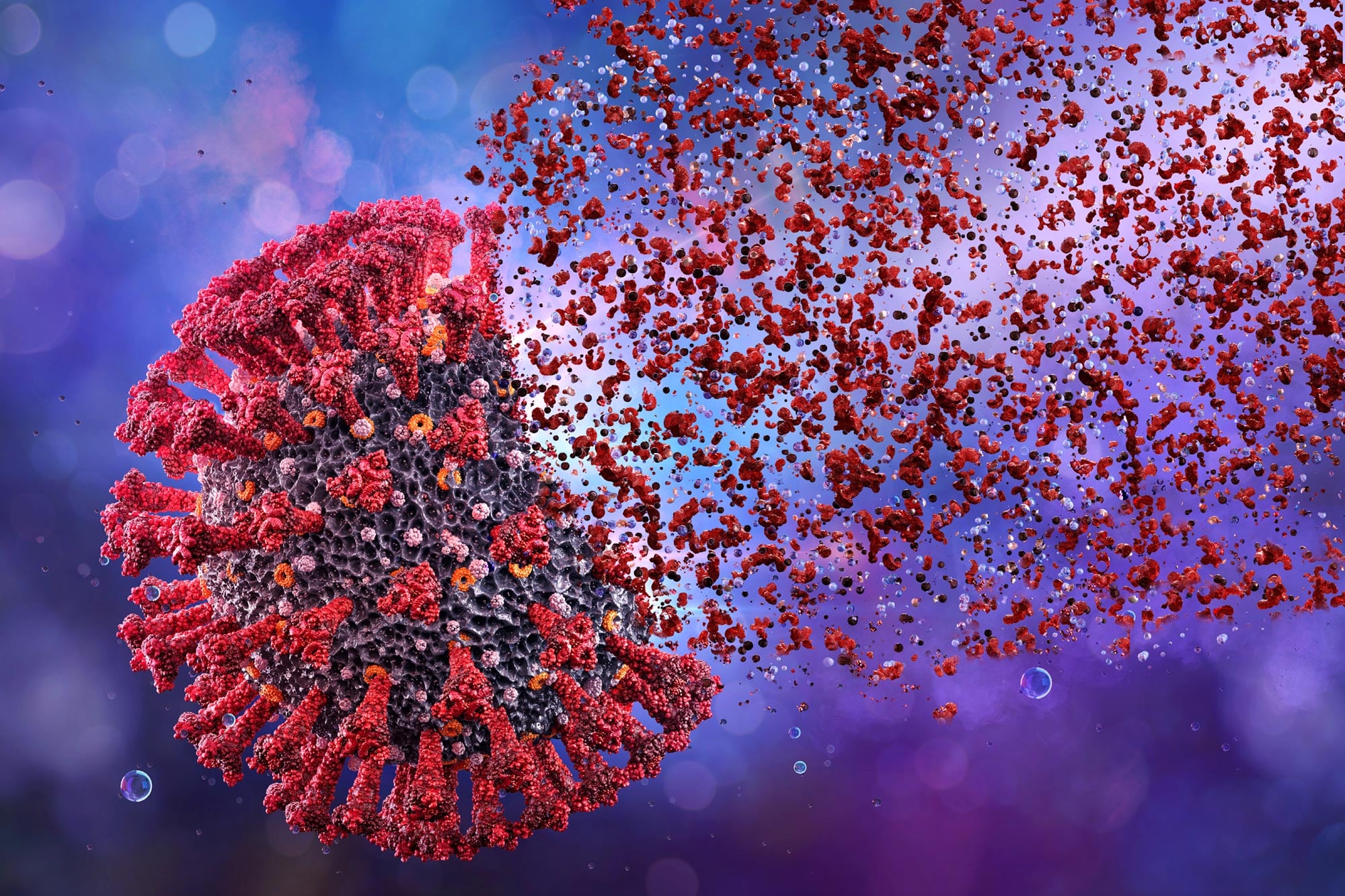
Scientists found compounds in a Brazilian tree that hit SARS-CoV-2 on multiple fronts, revealing a promising new lead in the search for COVID-19 treatments.
Researchers have found that galloylquinic acids extracted from the leaves of Copaifera lucens Dwyer, a tree native to Brazil and found mainly in the Atlantic Forest, can act against SARS-CoV-2 in several different ways. SARS-CoV-2 is the virus responsible for COVID-19.
The team selected this species because researchers led by Jairo Kenupp Bastos have extensive experience studying the chemistry and pharmacology of Copaifera plants. Bastos is a pharmacist and professor at the Ribeirão Preto School of Pharmaceutical Sciences at the University of São Paulo (FCFRP-USP) and coordinated the study.
Plant Compounds With Broad Biological Activity
Galloylquinic acids have already attracted scientific interest because of their wide range of reported biological effects. Previous research has found antifungal and anticancer activity in vitro and in vivo, along with broad-spectrum antiviral properties.
Derivatives of these compounds have also shown strong inhibitory effects against HIV-1 in biochemical tests and cell cultures, while displaying lower toxicity than some of the other molecules tested.
For the new study, which was supported by FAPESP, the researchers first prepared and characterized fractions from the plant leaves that were rich in galloylquinic acids. They then performed cytotoxicity tests to determine how safely the compounds could be introduced into host cells.
Testing the Compounds Against SARS-CoV-2
The team evaluated antiviral activity using plaque reduction assays, which measure how effectively antibodies or antiviral compounds can neutralize a virus. The tests showed strong activity against SARS-CoV-2.
The researchers also examined viral protein production and the way the compounds interacted with several important viral targets. These included the receptor-binding domain of the spike protein, which helps SARS-CoV-2 enter human cells, papain-like protease (PLpro), an enzyme involved in helping the virus evade host defenses, and RNA polymerase, an enzyme the virus needs to copy its genetic material and reproduce.
“This integrated approach allowed us to understand how the compounds work and how they act at the molecular level,” said Mohamed Abdelsalam, an assistant professor of pharmacognosy and natural product chemistry at the Faculty of Pharmacy at the Delta University of Science and Technology in Egypt.
A Multi-Target Attack on the Virus
The findings, published in the journal Scientific Reports, showed that galloylquinic acids had strong activity against the coronavirus variant tested. The compounds interfered with viral entry into cells, viral replication, and the production of viral proteins.
The substances also have anti-inflammatory and immunomodulatory properties, meaning they may influence how the immune system responds during infection. That effect could be especially relevant in severe cases of COVID-19, when an overly aggressive immune response can contribute to complications.
“An important aspect revealed by this information is the multi-target mechanism of the compound, which reduces the likelihood of resistance developing. This is because many current antivirals act on only one viral protein, which promotes this effect,” says Bastos.
More Testing Is Still Needed
The findings are promising, but the compounds are not yet ready to be developed into a COVID-19 treatment. Additional work will be required, including in vivo studies and clinical trials, before researchers can determine whether they could become safe and effective medicines.
Even so, the results highlight the potential value of biodiversity and natural-product research in the search for new therapeutic candidates. They also reinforce the idea that Brazil’s rich plant life could serve as an important source of molecules for future drug development.
Reference: “Bioactive galloylquinic acids from Copaifera lucens as dual inhibitors of SARS-CoV-2 Spike and RdRp proteins” by Rasha M. El-Morsi, Lamiaa A. Al-Madboly, Jairo K. Bastos, Shaimaa M. Aboukhatwa, Samah A. Nasr, Doaa A. Ghareeb, Heba A. Ramadan, Ivan Kushkevych and Mohamed A. Abd El-Salam, 2 February 2026, Scientific Reports.
DOI: 10.1038/s41598-025-25217-8
Never miss a breakthrough: Join the SciTechDaily newsletter.
Follow us on Google and Google News.