
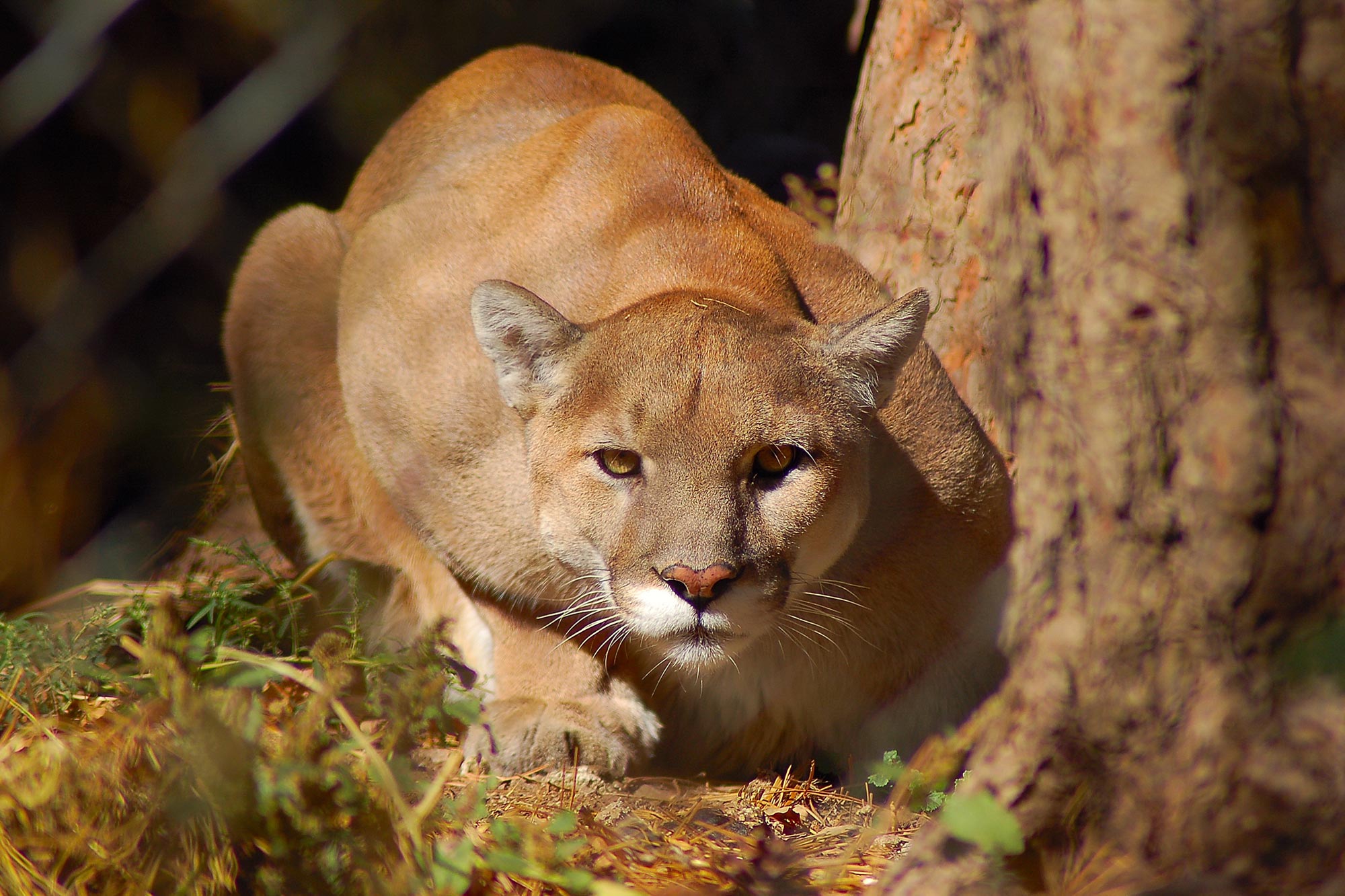
A Stanford study found that mountain lion visits to Jasper Ridge Biological Preserve set off a chain of changes affecting deer, smaller predators, and plant life.
As mountain lions began visiting Stanford’s Jasper Ridge Biological Preserve more often, deer and smaller predators became less active, while young oak trees began to thrive. A long-term study of this small suburban refuge, about 45 miles south of San Francisco, suggests that the cats’ influence may extend through the food chain to the vegetation.
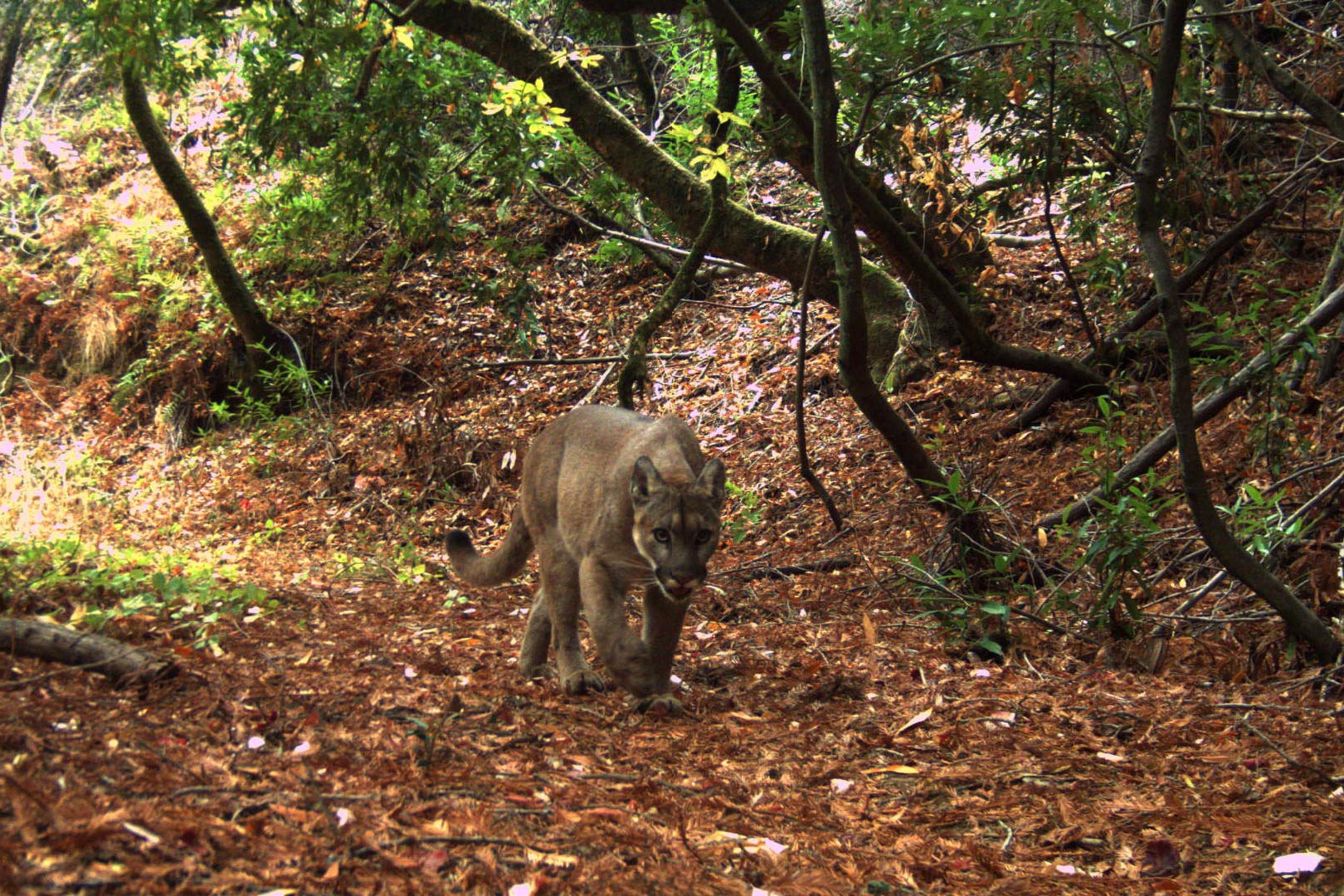
The preserve, also known as ‘Ootchamin ‘Ooyakma, is too small to support its own mountain lion population. These cats (Puma concolor) range across 20 to 170 square kilometers, about 8 to 66 square miles, in the Santa Cruz Mountains. Researchers do not know why they started visiting Jasper Ridge more often. A mother with kittens appeared on camera during the study, raising the possibility that females found it a safe place to raise their young.
Less deer activity as young oaks thrive
The visits offered researchers a chance to examine how a large predator influences a small patch of protected habitat. For the long-term study, published in Ecology and Evolution, the team combined records from motion-activated cameras with vegetation surveys. Mountain lions appeared increasingly often on the cameras from 2015 to 2020, allowing comparisons with earlier years when puma activity was lower or absent.
The researchers identified two chains of effects linking the cats to other parts of the ecosystem. Such connections are called trophic cascades, in which a predator’s influence extends through feeding relationships to organisms further down the food chain.
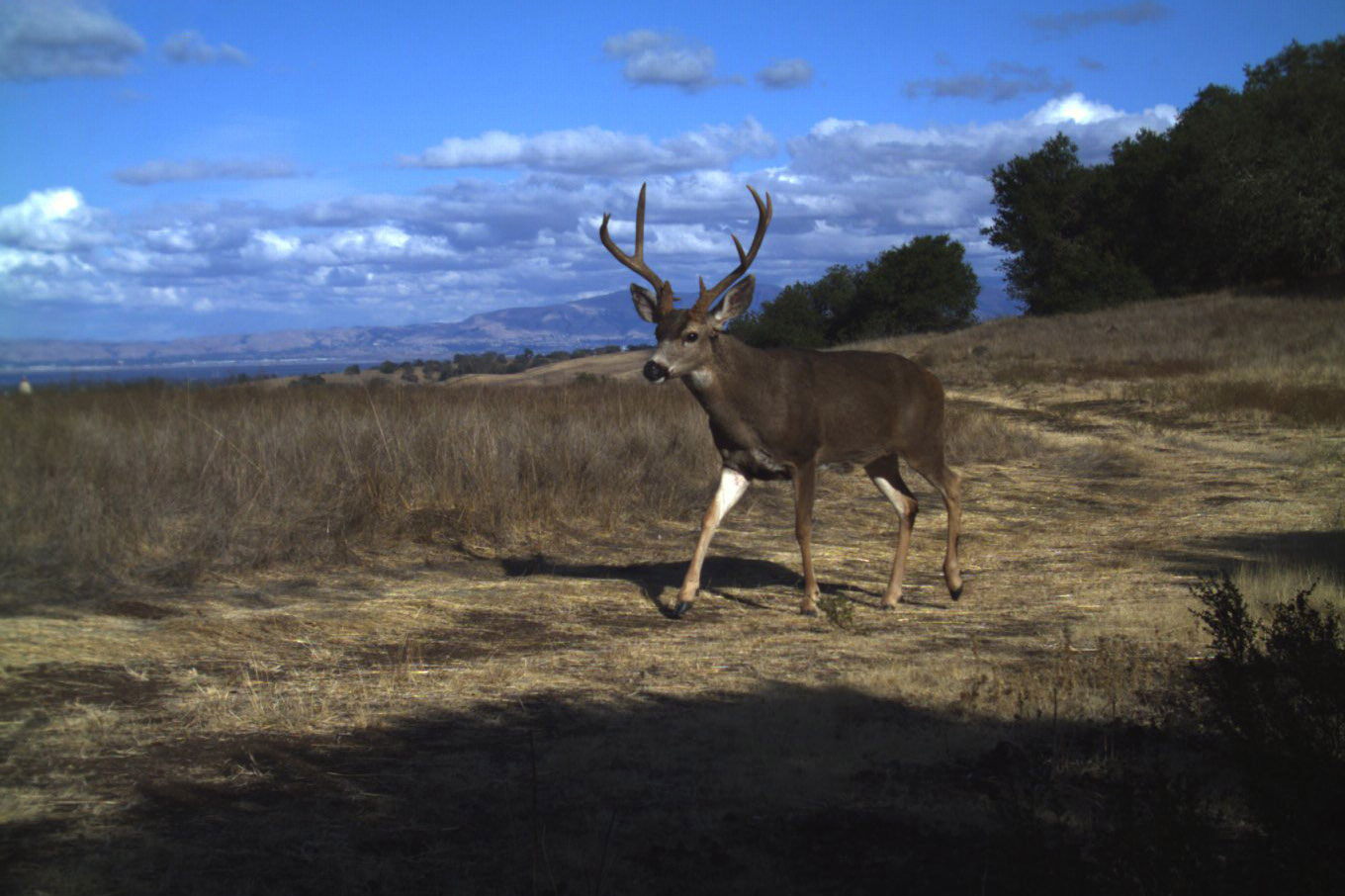
One chain linked mountain lions, deer, and vegetation. Camera records showed a drop in deer activity as puma visits increased, while surveys found that many woody plants deer eat or trample were flourishing, including young oaks. Reduced deer activity could help explain that growth. This three-level relationship is called a tri-trophic cascade.
A mountain lion and her cubs at night in Stanford’s Jasper Ridge Biological Preserve. Credit: Trevor Hébert/Stanford University
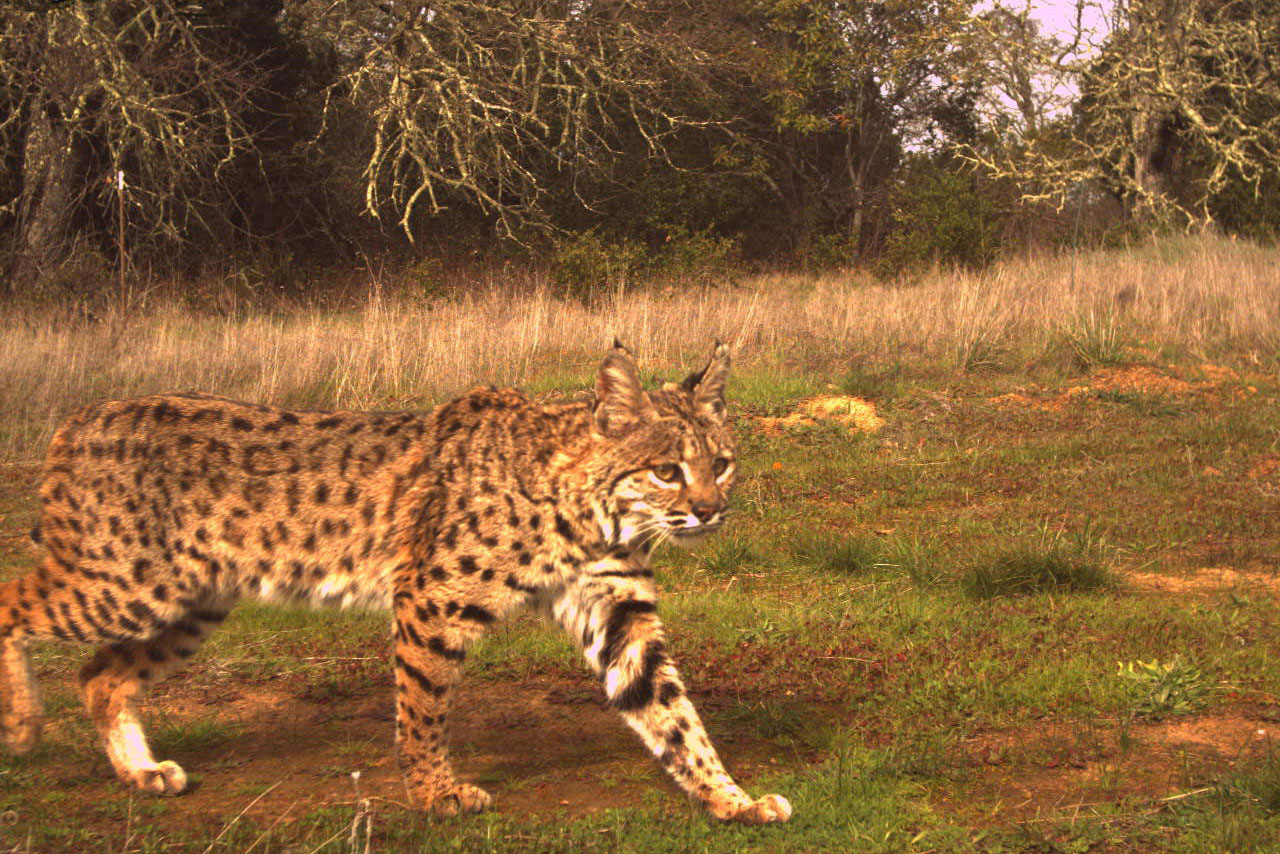
The other chain involved smaller predators. As mountain lion activity increased, coyote and bobcat activity declined. Those animals may have left the area or shifted the times they were active to avoid the larger cats. Foxes, meanwhile, appeared more often, perhaps taking advantage of reduced activity by coyotes and bobcats. The increased fox activity may then have suppressed activity among rabbits, their main prey.
The indirect effects on plants, foxes, and rabbits remain provisional. Changes in fog, temperature, or other conditions could also have contributed to those patterns. The researchers found a clearer impact of mountain lion presence on deer, coyotes, and bobcats.
Mountain lions fear people, too
Behavioral shifts in response to predators are often described as the “ecology of fear.” An animal’s perception that a large predator is nearby can change its behavior, with consequences for the organisms it eats.
Mountain lions face their own version of that pressure from people. Although sightings occasionally draw attention in San Francisco and nearby suburbs, the cats generally stay far from humans. They are also nocturnal, so their activity often occurs when people are less active.
“Pumas are afraid of our smell and our sounds; they don’t like to see us moving,” said Elizabeth Hadly, the study’s senior author, a Stanford professor emerita of biology in the School of Humanities and Sciences (H&S), and former faculty director at Jasper Ridge. “Pumas use all of their senses to avoid humans.”
Humans are the leading cause of mountain lion deaths, through hunting and car accidents, Hadly noted.
“Clearly, we exert our own ecology of fear,” she said. “Humans are the ultimate predator on almost every landscape.”
Small preserves can support trophic cascades
That sensitivity to people makes the setting at Jasper Ridge particularly relevant. Research on trophic cascades has largely focused on extensive wilderness areas, including the effects of reintroducing wolves to Yellowstone National Park. The Jasper Ridge findings indicate that these ecological relationships can also persist in much smaller preserves near cities.
“In the past, small preserves like Jasper Ridge have often been dismissed for holding very little ecological value, but this study shows that when these small preserves are connected to large wilderness like the Santa Cruz Mountains, you can still see magnificent ecological phenomena like trophic cascades,” said Chinmay Sonawane, the study’s first author and a doctoral student in biology in Stanford’s H&S. “They are not just things that happen in places like Yellowstone far away from the city and people. They can happen in these places that are quite small and more urban as well.”
Small preserves make up a substantial share of protected land sites in the United States. About 82% of protected areas are smaller than 5 square kilometers, or about 2 square miles. As urbanization accelerates, these places will likely be critical for wildlife and plants, said Rodolfo Dirzo, a study co-author and Stanford professor of biology in H&S.
“Maintaining sites where there is an entire community of animals, from predators to prey to the prey’s resource base, is very important,” he said. “When one piece is missing – and it’s typically the top predators that require larger areas and are more sensitive to human impact – we will no longer have fully functioning ecosystems.”
Reference: “Mammal Community Responses to Increasing Puma Activity in a Suburban Preserve” by Chinmay Sonawane, Kevin Leempoel, Nicole Nova, Jordana M. Meyer, Trevor Hébert, Amelia Zuckerwise, Rodolfo Dirzo and Elizabeth A. Hadly, 17 June 2026, Ecology and Evolution.
DOI: 10.1002/ece3.73775
This research received support from the National Science Foundation.
Never miss a breakthrough: Join the SciTechDaily newsletter.
Follow us on Google and Google News.