
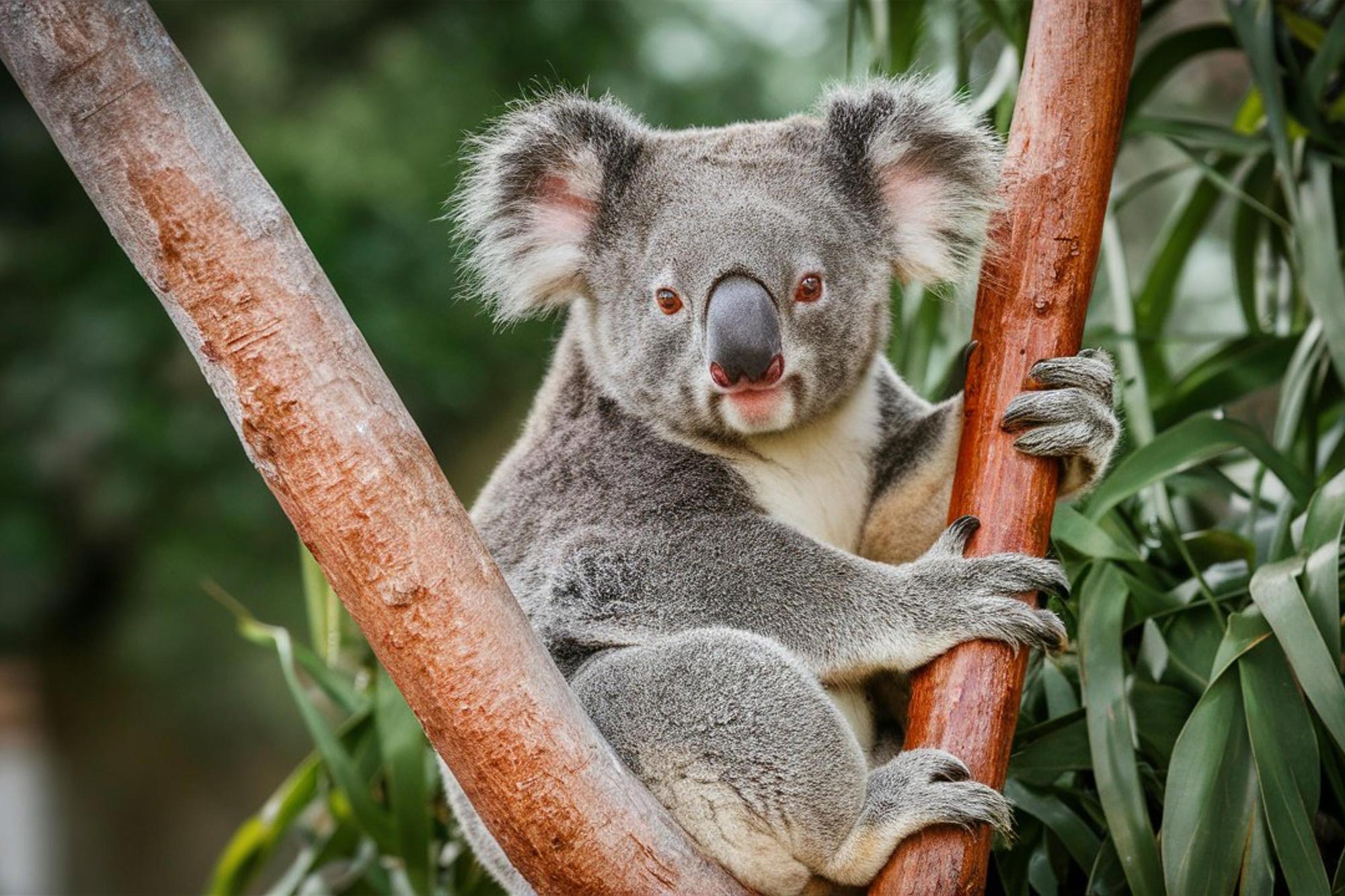
A booming koala population in South Australia is creating an urgent conservation dilemma, prompting scientists to test innovative, humane solutions to prevent long-term ecological harm.
Research led by Dr. Frédérik Saltré of the Australian Museum and the University of Technology Sydney (UTS) has delivered the first detailed estimate of koala numbers in South Australia. The work also points to a practical and humane approach for managing populations that have grown beyond sustainable levels.
The study, published in Ecology and Evolution, was conducted under Dr. Saltré’s joint role as a Research Scientist at the Australian Museum and a Senior Lecturer in Ecology and Biogeography at UTS.
Rising Numbers and Ecological Risks
Supported by Flinders University and the University of Wollongong, the research reveals that koalas in the Mount Lofty Ranges now make up about 10% of Australia’s total koala population. This unusually high concentration is placing increasing strain on the region and could undermine the population’s long-term stability. If no management action is taken, researchers project an additional increase of 17–25% over the next 25 years, intensifying pressure on food resources, vegetation, and surrounding ecosystems.
“Koalas are in steep decline across much of eastern Australia, but in South Australia’s Mount Lofty Ranges, the opposite problem is happening: a booming koala population. This should be good news, but these numbers are concerning.
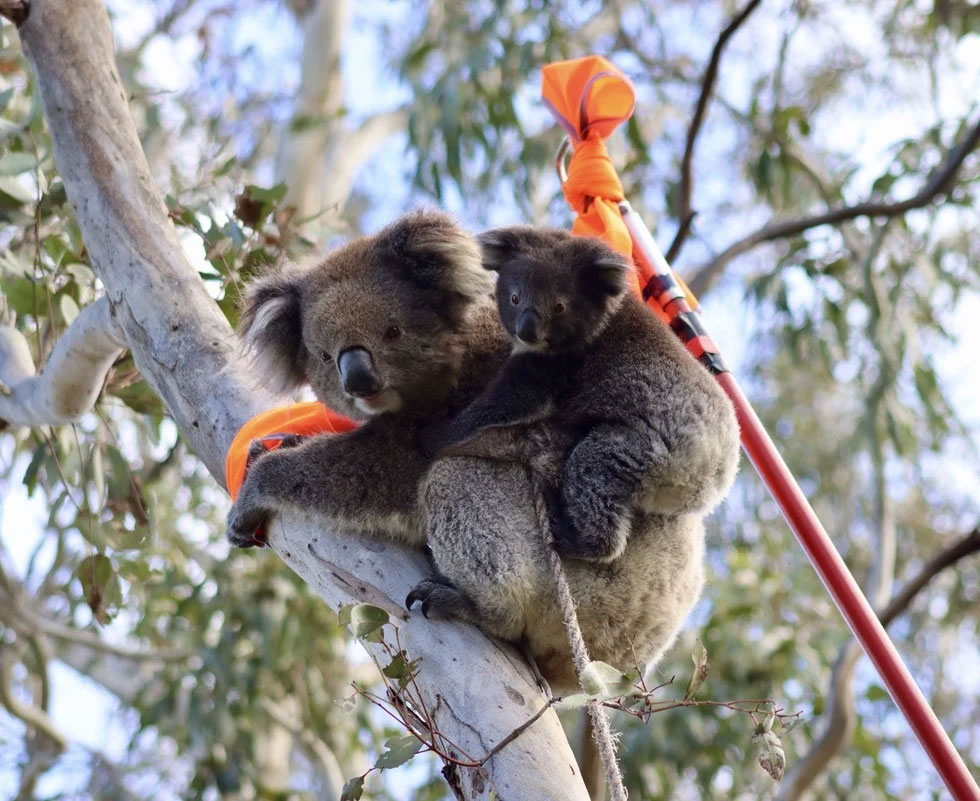
“Many areas now have koala densities far beyond what the ecosystem can sustain, creating a growing risk of severe over browsing that could rapidly damage the very forests koalas rely on for food. In the next few decades, following this trajectory, there will almost certainly be a terrible situation of mass koala starvation and death,” Dr. Saltré said.
By combining advanced spatial modelling with thousands of observations submitted through citizen science programs, the researchers determined that koala densities in many parts of the region already exceed sustainable limits.
A Conservation Dilemma for an Iconic Species
“We are faced with a difficult conservation dilemma, because traditional methods of population management, like culling or relocation, either raise ethical concerns from the public or are not appropriate for such an iconic native animal. How do we manage a species that is now threatened by its own abundance, and do so in a way that protects both animal welfare and long-term ecosystem health?” Dr. Katharina Peters, co-author of the study at the University of Wollongong said.
Dr. Frédérik Saltré and his colleagues evaluated several fertility control options to address the problem. Their analysis showed that treating about 22% of adult female koalas each year would be enough to keep population growth in check. By concentrating these efforts in areas where koalas are most densely clustered, rather than applying them across the entire region, the population could be stabilised at an estimated cost of $34 million over a 25-year period.
“The novelty lies in the proactivity of the approach: instead of spending money on a conservation plan without knowing whether it will succeed, we use computer simulations to identify in advance which strategies are most likely to work — optimizing both costs and taxpayer investment,” Dr. Saltré said.
Preparing for Future Conservation Challenges
As climate change continues to reshape habitats and species distributions, the researchers say such evidence-based and anticipatory approaches will become increasingly essential for managing high-profile species where public values and ecological needs collide.
This research builds on the previous work carried out at the Australian Museum in sequencing the approximately 20,000 genes in the koala to open up opportunities for medical treatments, provide knowledge about how koalas evolved, and indicate how best to conserve the species.
Reference: “Balancing High Densities and Conservation Targets to Optimise Koala Management Strategies” by Frédérik Saltré, Katharina J. Peters, Daniel J. Rogers, Joël Chadoeuf, Vera Weisbecker and Corey J. A. Bradshaw, 12 January 2026, Ecology and Evolution.
DOI: 10.1002/ece3.72470
Never miss a breakthrough: Join the SciTechDaily newsletter.
Follow us on Google and Google News.
3 Comments
If you want a humane approach, stop thinking – and stop doing stuff you are, empirically, only capable of harming. That is the inevitable result of nearly all such human efforts and interventions – We only learn – after we find out what we did wrong.
That is always because we don’t sit down and think it all out at the beginning; – which proves we are not the smart apes of which we like to think of ourselves
Here is a novel thought…. Do nothing.
Leave the situation alone and let nature take its course.
Humans only create problems when we interfere.
That issue reminds me of us. We invented antibiotics in 1944 and in 1948 international healthcare via the UN via vaccination programmes and other good works such as education and clean water, and our population went exponential. 3 billion to 8.6 billion in a mere 80 years. As did our use of hydrocarbons for energy to power light bulbs and motor vehicles.