
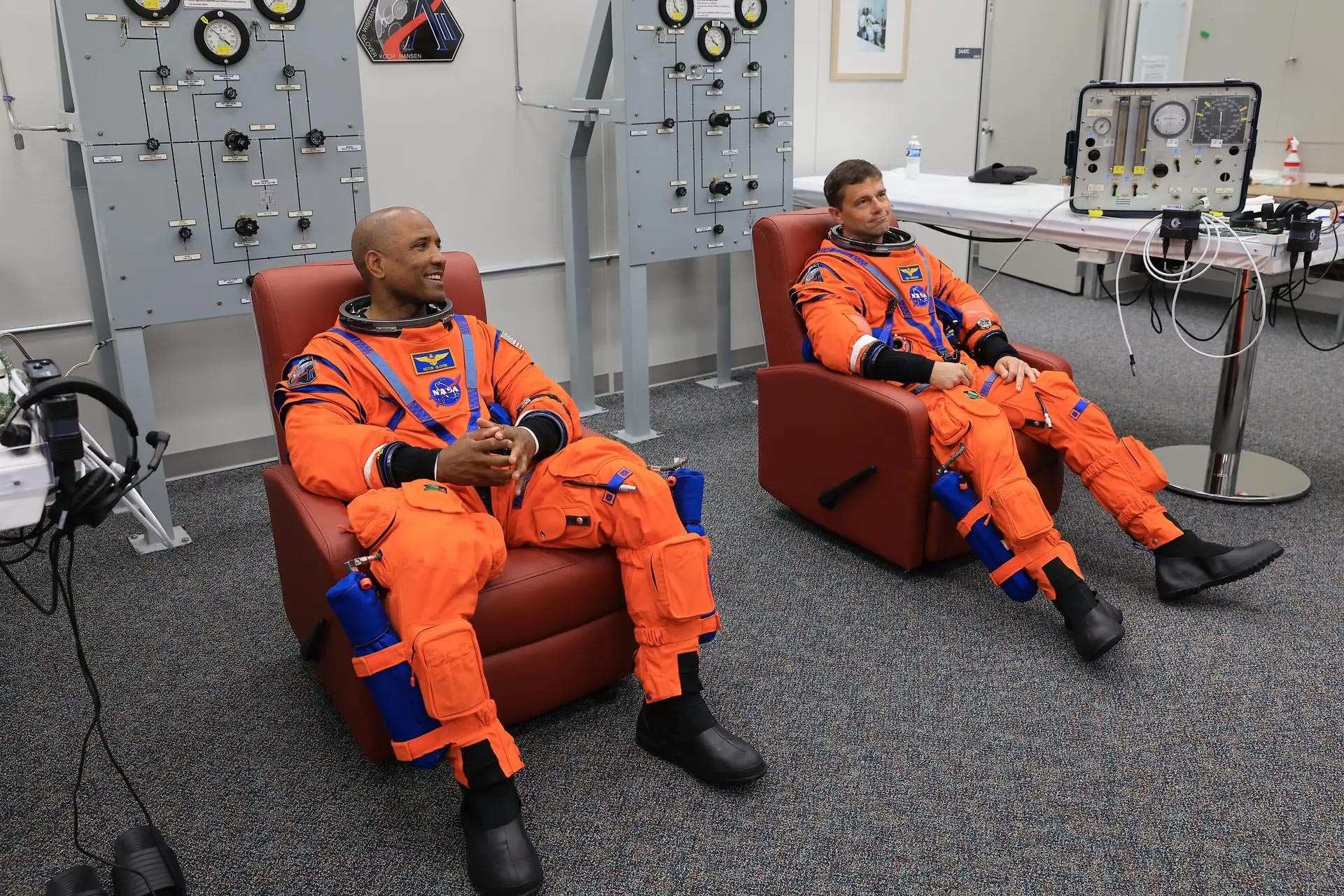
After making history around the Moon, Victor Glover and Reid Wiseman are beginning a new chapter while helping NASA prepare for what comes next.
NASA astronauts Victor Glover and Reid Wiseman are moving into emeritus roles at Johnson Space Center in Houston this September, months after completing the historic Artemis II mission.
The emeritus program allows highly experienced NASA personnel to continue contributing their expertise after leaving their previous full-time roles. Participants volunteer their time to train and mentor current employees, giving NASA continued access to specialized knowledge while allowing the individuals greater freedom to pursue opportunities inside and outside the agency.
Artemis II Veterans Move Into New NASA Roles
“I’ve had the privilege of knowing Reid and Victor for years, and both exemplify the leadership, character, and commitment that define NASA at its best,” said NASA Administrator Jared Isaacman. “Reid commanded Artemis II after previously spending 165 days aboard the International Space Station, while Victor brought his experience as a naval aviator, test pilot, and Crew-1 astronaut to his role as pilot. Together, they took on one of the most challenging missions in human spaceflight and helped return America to the lunar environment. As Reid and Victor transition to emeritus status, I’m grateful they will continue sharing what they learned with our astronauts, flight controllers, and engineers as we prepare for Artemis III in 2027 and the missions that follow.”
As Glover moves into his new role, he plans to remain involved in aerospace, leadership, and public service work both within NASA and beyond the agency. He will also pass along his knowledge of Orion and its spacecraft systems, along with other technical expertise that could benefit upcoming Artemis missions.
“As I grow into this new role, NASA and spaceflight remain a meaningful part of my journey of service,” said Glover. “I’m excited to keep uplifting my friends and cheering them on as they reach for the Moon. Together, we’ll keep pushing boundaries and inspiring the next giant leap.”
Preparing for Artemis III
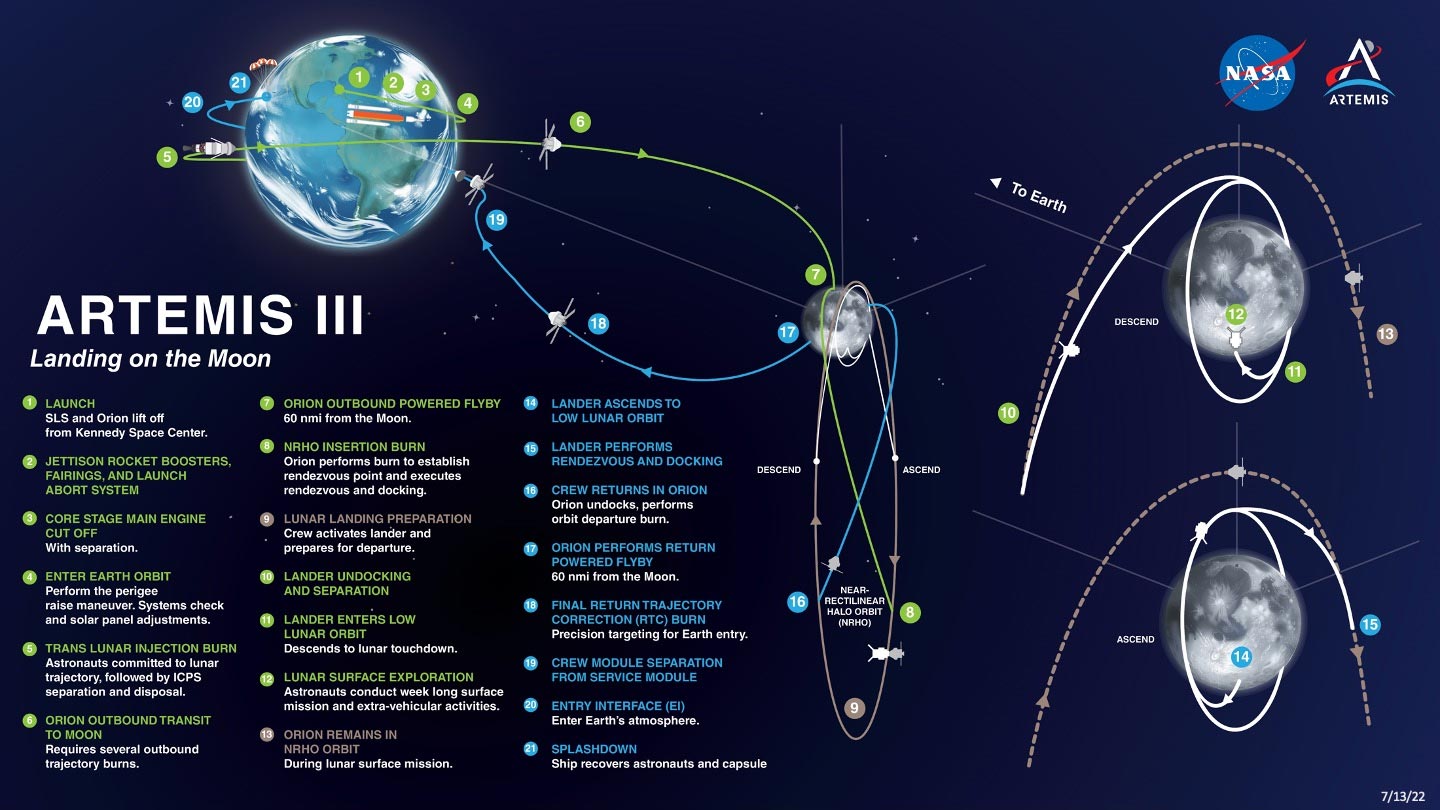
Wiseman will also continue sharing what he learned from his spaceflight career as NASA prepares for Artemis III. That mission will take place in low Earth orbit and is designed to test rendezvous and docking capabilities between Orion and commercial human landing systems.
“There is no better place to work, and there are no better people to work with, than those in this agency,” said Wiseman. “NASA gave me tremendous responsibility, supported me through two space missions, and my time as chief astronaut, and was always there for my family when we needed it most. I’m thrilled to continue serving future missions and programs through the emeritus program.”
NASA leaders emphasized that both astronauts have made lasting contributions to the agency and will remain valuable resources as human spaceflight efforts continue to expand.
“Reid and Victor’s commitment to exploration, steady leadership, and service to our astronaut corps and our nation have made a lasting impact,” said Vanessa Wyche, director of NASA’s Johnson Space Center in Houston. “Throughout their careers, they have each brought excellence, humility, and purpose to every role they have held at NASA. Their contributions have helped advance our mission and inspire those around them, leaving a legacy that will continue to shape the future of human spaceflight. We are immeasurably grateful for all they have given to NASA and are glad that this is not the end of their journey with the agency.”
“Reid and Victor are trusted teammates whose professionalism, calm leadership, and unwavering commitment to NASA have strengthened our office and inspired everyone around them,” said Scott Tingle, chief of the Astronaut Office at Johnson. “As they transition into their emeritus roles, they leave a legacy of operational excellence that will continue shaping the astronaut corps for years to come. We’re grateful that they will still be part of our community, sharing their experience and insight as they begin this next chapter.”
A Historic Journey Around the Moon
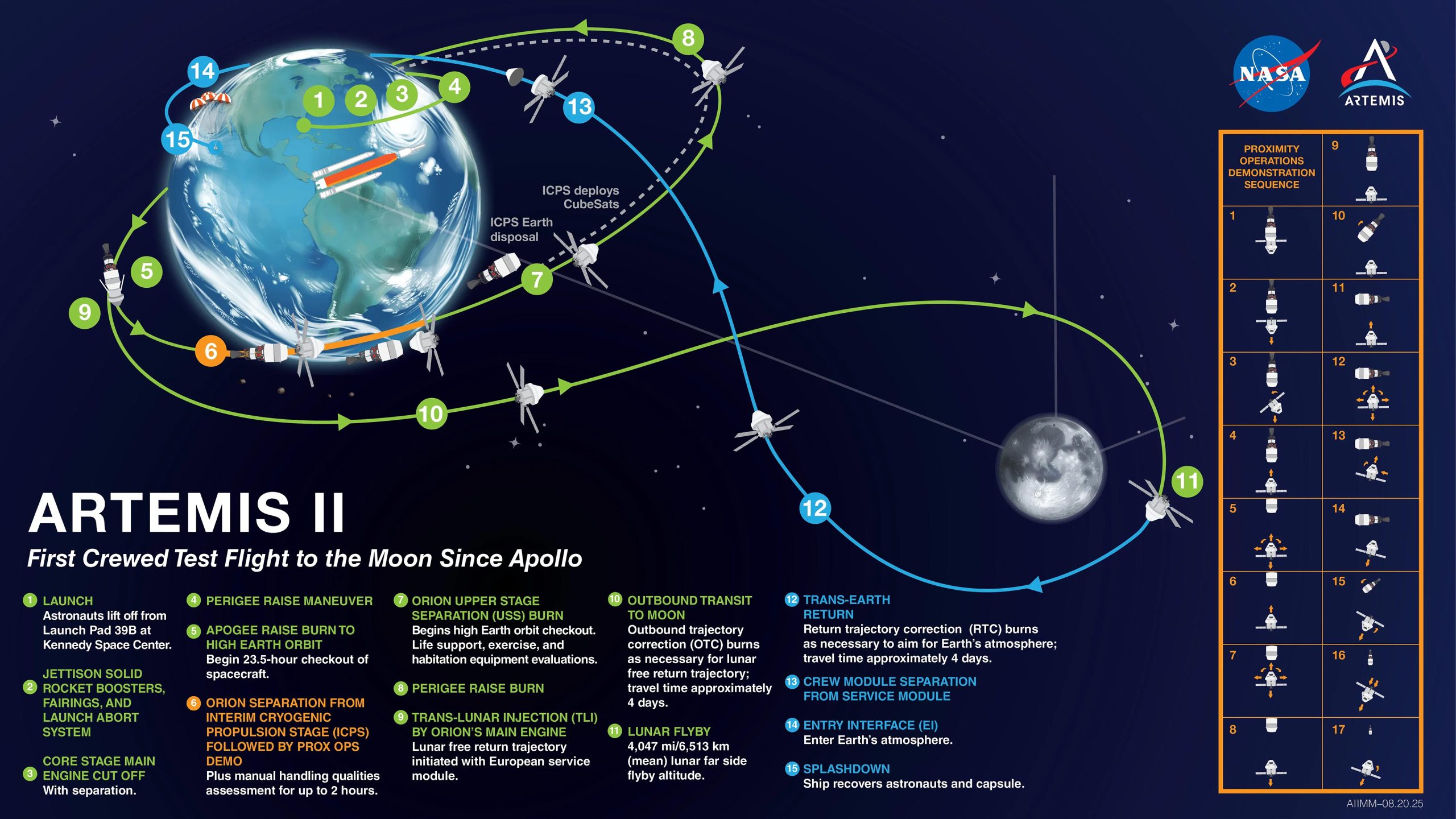
Glover and Wiseman were two members of the four-person Artemis II crew and became among the first astronauts to launch aboard NASA’s SLS (Space Launch System) rocket inside the Orion spacecraft on a mission around the Moon.
They flew alongside NASA astronaut Christina Koch and CSA (Canadian Space Agency) astronaut Jeremy Hansen on the 10-day mission. The crew safely splashed down on April 10 after becoming the first humans in more than 50 years to travel to lunar orbit. During the journey, they also flew farther into space than any people had before.
The experience Glover and Wiseman gained on Artemis II will now help NASA prepare for the missions ahead. Their continued support and knowledge transfer will be particularly important for Artemis III as the agency works toward returning American astronauts to the lunar surface during Artemis IV in 2028.
Never miss a breakthrough: Join the SciTechDaily newsletter.
Follow us on Google and Google News.