
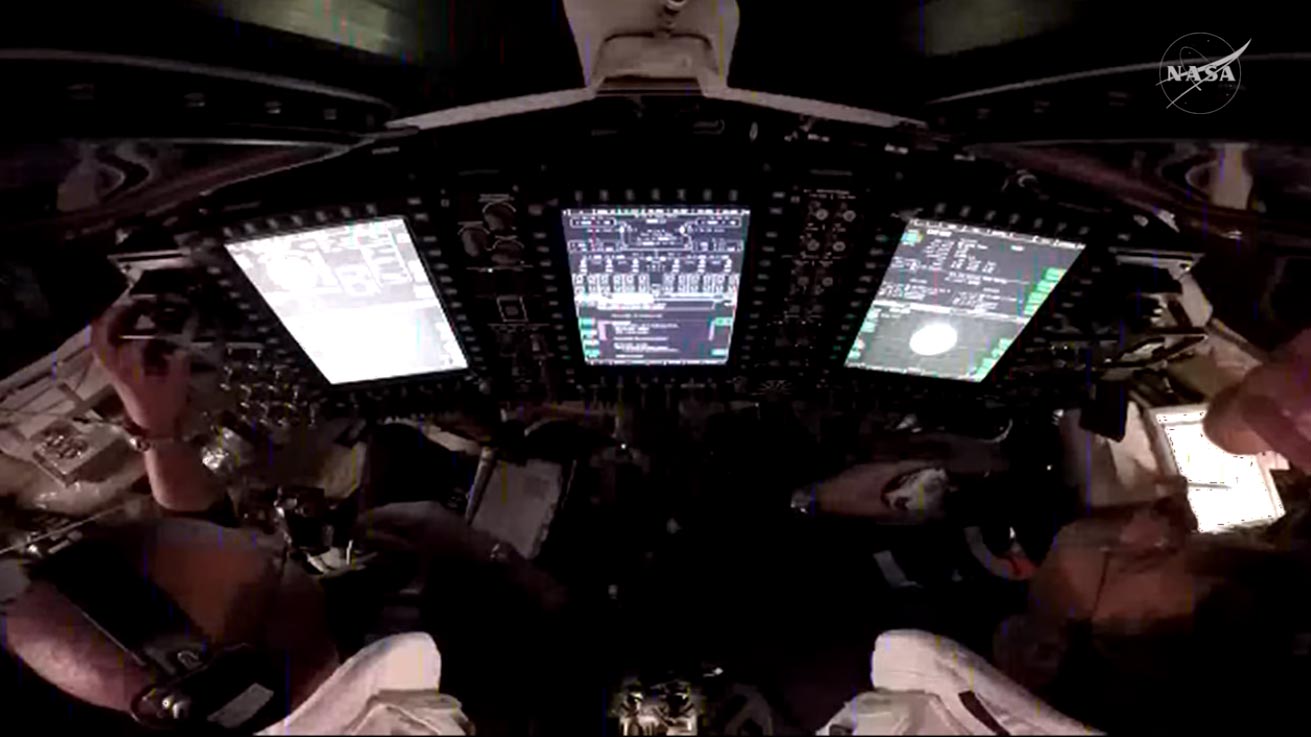
A surprise toilet malfunction tested Artemis II—but the crew fixed it fast and is back on track for the Moon.
NASA’s Artemis II astronauts recently dealt with an unexpected but important issue aboard the Orion spacecraft. After completing a proximity operations demonstration, which involves carefully maneuvering the spacecraft near another object to test navigation and control systems, the crew discovered a problem with Orion’s onboard toilet system.
Working closely with mission control in Houston, the astronauts were able to restore the system to normal operation. While it may sound minor, maintaining essential life support systems, such as waste management, is critical during spaceflight, where even small malfunctions can affect crew comfort and mission performance.
Fault Light Signals Problem Before Key Orbital Maneuver
The issue first appeared on April 1, just before a planned engine firing known as an apogee raise burn. This type of burn increases the highest point of a spacecraft’s orbit around Earth, helping shape its overall path.
Before the maneuver, the crew noticed a blinking fault light, a warning that something was not functioning correctly. Engineers on the ground quickly reviewed incoming spacecraft data and worked step by step with the astronauts to diagnose the issue. Through this coordinated effort, they identified the problem and successfully resolved it.
Understanding Orion’s Orbit and Upcoming Burns
With the situation under control, the mission continues as planned. The crew is preparing for another key maneuver called the perigee raise burn. Unlike the earlier burn, this one will raise the lowest point of Orion’s orbit around Earth.
Together, the apogee and perigee burns are used to fine-tune the spacecraft’s trajectory. By carefully adjusting both the highest and lowest points of the orbit, mission planners can shape Orion’s path to ensure it is ready for future phases of the mission. These include translunar operations, which refer to the journey from Earth’s orbit toward the Moon.
Crew Rest Schedule Supports Mission Readiness
After resolving the issue and completing earlier tasks, the Artemis II crew took time to rest. They had a four-hour sleep period before being awakened at 7 a.m. EDT on Thursday, April 2, to prepare for the next burn.
Following that activity, the astronauts will return to sleep again at approximately 9:40 a.m. This structured rest schedule helps ensure the crew remains alert and ready for the demanding sequence of operations required during the mission.
Despite the brief technical hiccup, the Artemis II mission remains on track. The quick response from both the crew and mission control highlights the importance of teamwork and preparation as NASA moves closer to returning humans to the Moon.
Never miss a breakthrough: Join the SciTechDaily newsletter.
Follow us on Google and Google News.
2 Comments
Wow, what an incredibly insightful and informative article!
Blinking light means bad. Big surprise. Astronauts somehow fix bad. Light stop blinking. Good job doing whatever thing you did, astronauts.
So what WAS the problem with it? Big headline, lots of info on other stuff but writing “they fixed it” doesn’t tell your readership (skewing more engineering, I bet) what went wrong.