
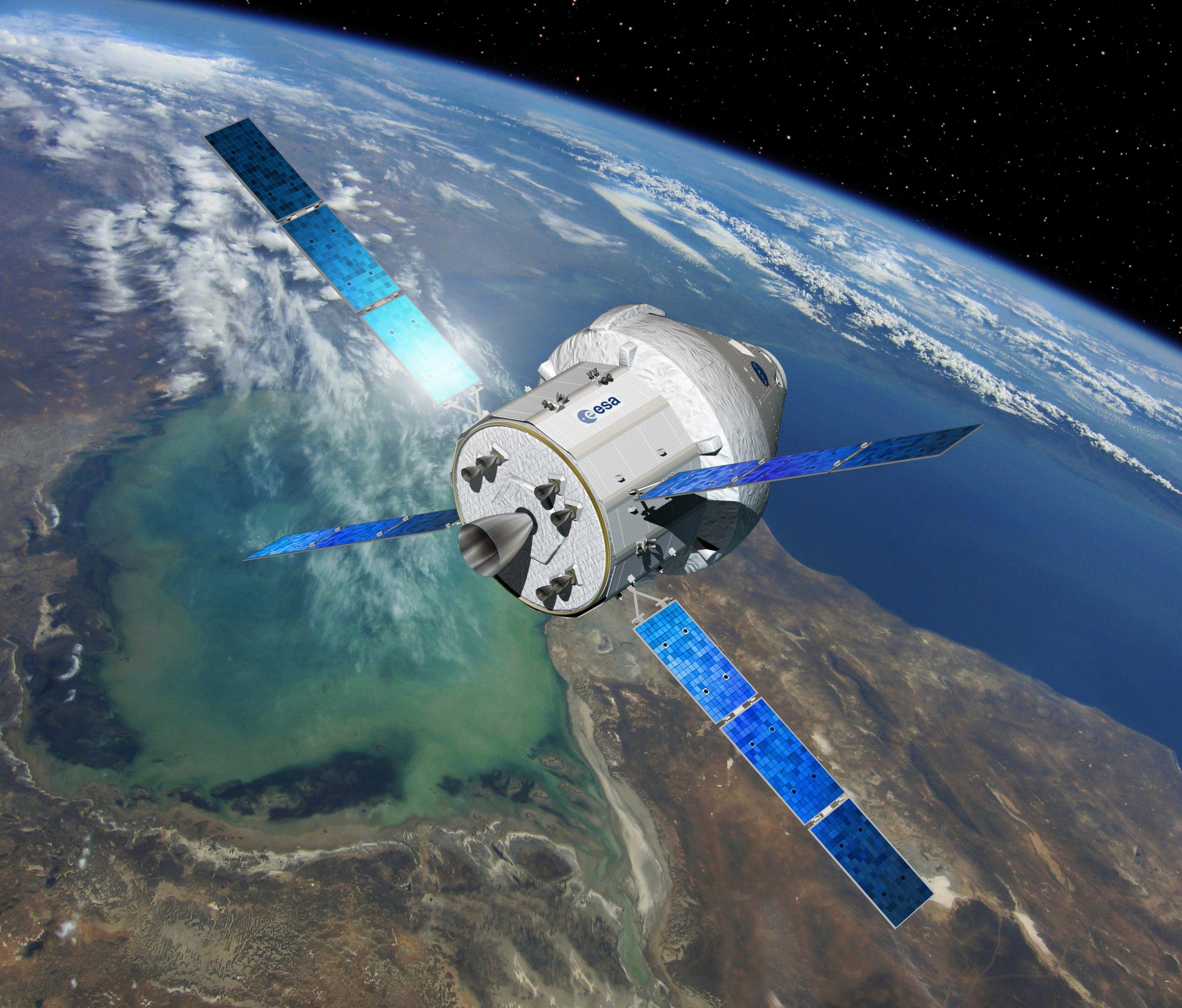
NASA’s Artemis II crew is go for the Moon—launching humanity back into lunar orbit after more than 50 years.
NASA has officially given the “Go” for a critical maneuver that will send astronauts on a path toward the Moon, marking the first time humans will travel around it since Apollo 17 in 1972. This step, known as a translunar injection burn, is a powerful engine firing that pushes a spacecraft out of Earth’s orbit and onto a trajectory toward the Moon.
The Artemis II mission is using NASA’s Orion spacecraft, which is designed to carry astronauts farther into space than previous generations of vehicles. With this milestone decision, the crew is now set to leave Earth’s immediate surroundings and begin their journey around Earth’s closest celestial neighbor.
What Is a Translunar Injection Burn?
A translunar injection burn is one of the most important moments in any Moon mission. It involves firing the spacecraft’s engine at just the right time and speed so that it can escape Earth’s gravitational pull and head toward the Moon. Without this precise maneuver, the spacecraft would remain in orbit around Earth.
For Artemis II, this burn will begin at 7:49 p.m. EDT and last for five minutes and 49 seconds. During that time, Orion’s main engine, located on its service module, will provide the force needed to send the spacecraft on its lunar trajectory.
Orion’s Engine Power and Performance
The Orion spacecraft relies on a powerful engine capable of producing up to 6,000 pounds of thrust. To help put that into perspective, that level of force is comparable to accelerating a car from 0 to 60 miles per hour in just about 2.7 seconds.
This burst of power is what allows Orion to break free from Earth’s orbit and begin its journey into deep space. The timing and duration of the burn are carefully calculated to ensure the spacecraft reaches the correct path toward the Moon.
Meet the Artemis II Crew
The four astronauts aboard Artemis II include NASA astronauts Reid Wiseman, Victor Glover, and Christina Koch, along with CSA (Canadian Space Agency) astronaut Jeremy Hansen. Together, they represent an international team preparing for a mission that signals a new era of human space exploration.
Their day began at 2:35 p.m. with a wake-up call from mission control, which played “Green Light,” by John Legend and Andre 3000. This tradition, carried over from earlier space missions, is meant to energize the crew and mark the start of a new day in orbit.
Preparing for Life Beyond Earth Orbit
As they move through their first full day in space, the astronauts are focusing on preparations for the upcoming burn while also adapting to the challenges of microgravity. One important part of their routine is exercise.
The crew will use a flywheel exercise device onboard Orion, which helps them maintain muscle strength and overall fitness during the mission. Regular physical activity is essential in space, especially for longer missions, because the lack of gravity can lead to muscle and bone loss over time.
With the translunar injection burn approaching, Artemis II is entering a decisive phase that will send humans back around the Moon for the first time in more than half a century.
Never miss a breakthrough: Join the SciTechDaily newsletter.
Follow us on Google and Google News.
1 Comment
thanks