
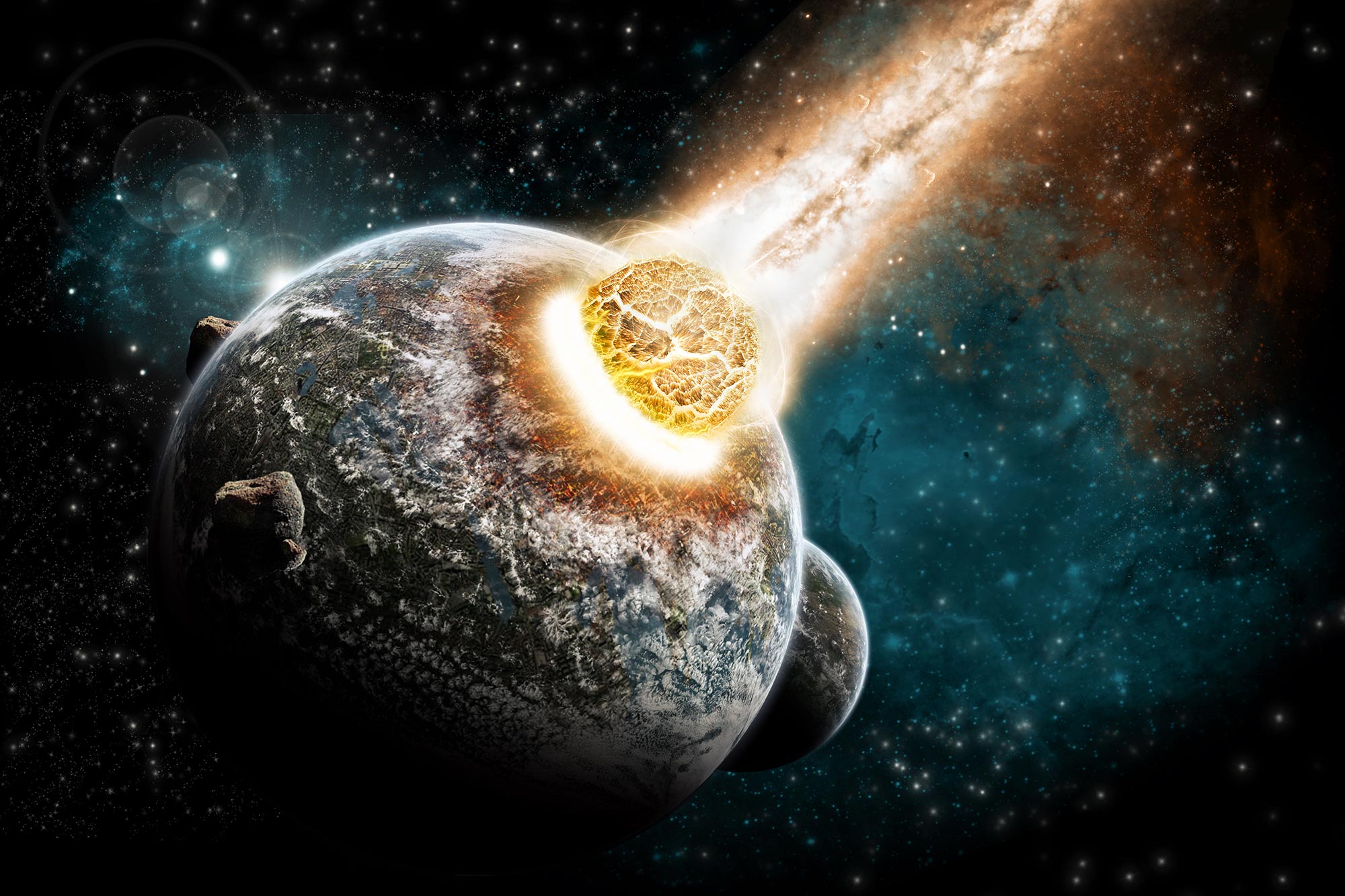
A study suggests that icy moons can still harbor oceans after catastrophic collisions, a finding that could help guide the search for life beyond Earth.
Many moons orbiting Saturn, Uranus, and Neptune are thought to conceal liquid water beneath miles of icy shell. These buried oceans hold a basic ingredient for life as we know it, making them promising places to search for extraterrestrial organisms in a region shaped by violent collisions.
Scientists suspect some of today’s moons are reassembled remnants that were repeatedly shattered by space debris and pulled back together. This cosmic demolition derby raises a critical question for astrobiologists: Do massive collisions destroy a moon’s ocean and extinguish any chance for life?
A University of Maryland-led study, published in Nature Astronomy, investigated that question by following simulated moons through destruction, reassembly, and billions of years of subsequent evolution.
“The big question we asked was whether these destructions help moons have oceans afterward or whether they delete the ocean and reset the moon into a cold, dead world,” explained lead author Marc Neveu, an astronomy associate research scientist at the University of Maryland. “What we found was that those big collisions don’t really matter as far as oceans are concerned. If there was an ocean before, there’s likely to be an ocean after and vice versa.”
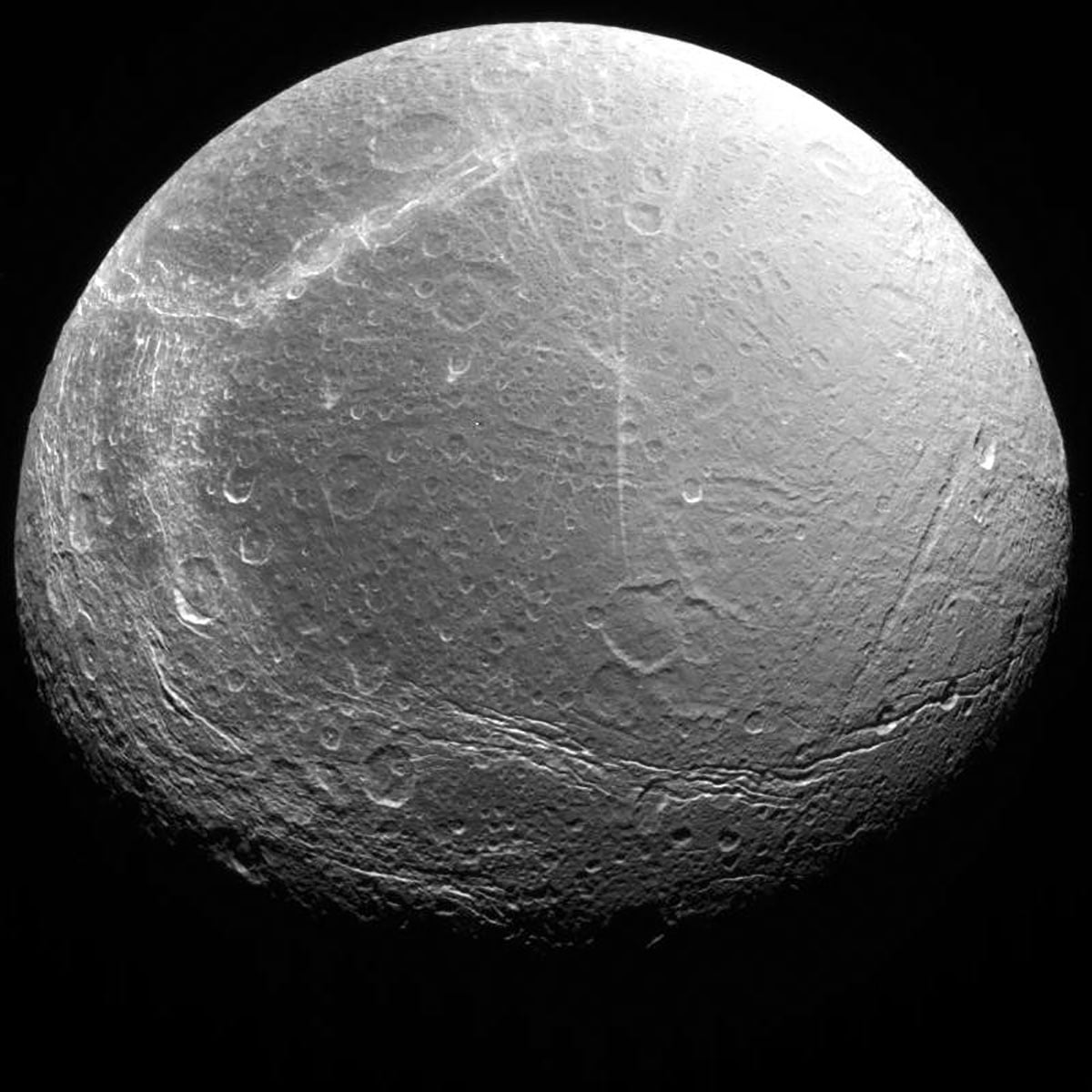
Did a collision soften Rhea’s craters?
Although a collision might not determine whether an ocean exists, the heat it delivers could still leave visible traces on a moon’s surface. On Saturn’s moon Rhea, ancient craters look unusually smooth and softened. The researchers see those features as a possible opportunity to test whether an impact warmed an existing ocean enough to alter the ice above it.
“It’s like building a snowman in the winter, and then a week later, there’s been warming and sunlight so the snowman is melting away,” Neveu explained. “Rhea’s craters look smoothed out like that, but it wasn’t the sun. The heat came from below. A long-ago collision that boosted an interior ocean could help explain why the moon appears that way.”
Shattered moons can remain ocean worlds
Following a collision’s effects over such long periods required more than a model of the crash itself. Neveu and his colleagues at the Southwest Research Institute in Colorado and the Weizmann Institute of Science in Israel connected simulations of impacts with a separate model of how a moon’s interior evolves. Together, the models could show both what happened when a moon broke apart and whether the rebuilt world retained enough heat to sustain liquid water.
The impact simulations tracked millions of rock and ice fragments as they shattered, heated up, and clumped back together. The team modeled moons with radii of roughly 500 and 1,000 kilometers, or about 310 and 620 miles, struck by smaller space rocks with enough force to blow them apart.
“These simulations were pretty much the biggest collisions we could come up with,” Neveu said. “If those didn’t make a difference, it’s unlikely smaller ones would either.”
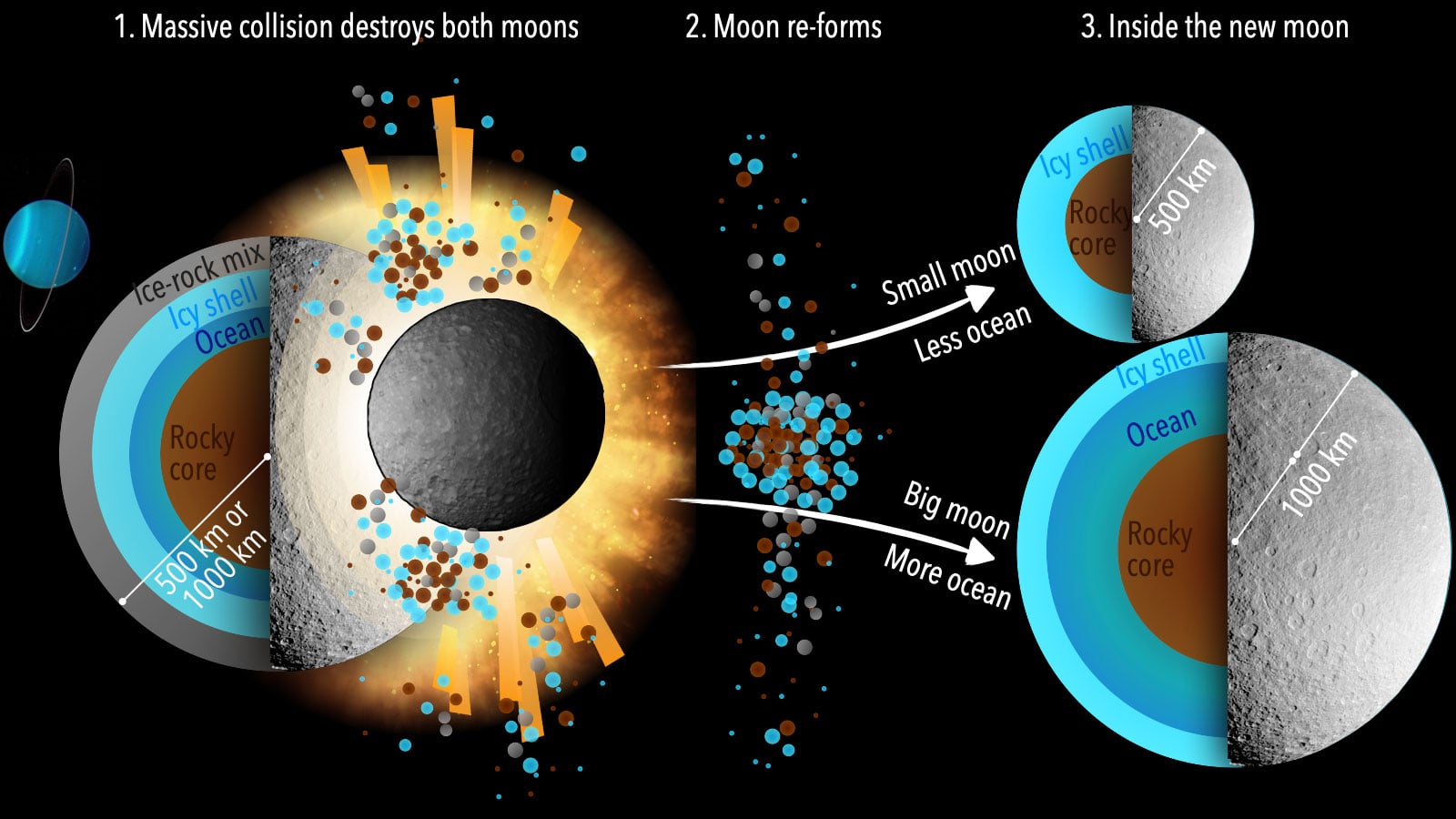
The interior model then followed the reassembled moons for 4.5 billion years, calculating how heat built up and escaped from their cores and whether ice could melt into an ocean. This longer view revealed why an impact’s effects depended on the moon’s size. The crash supplied heat, but it also rearranged the rock and ice, changing how effectively the rebuilt moon could hold on to its warmth.
“In larger moons, the energy of the crash converts into extra heat that can actually thicken up an existing ocean for a couple billion years. In smaller moons, the story flips,” Neveu said. “Before a collision, these small moons keep a jumbled outer layer of mixed ice and rock that acts like an insulating blanket, helping trap the warmth that sustains an ocean. The impact shakes everything apart, and when the moon re-forms, the rock sinks to the center and the ice floats to the top. It gets harder for the smaller moon to keep an ocean because the blanket’s gone, but in neither case did a collision create an ocean that would’ve otherwise stayed frozen.”
Heat from tides also influences whether water stays liquid beneath the ice. As gravity deforms a moon, it can generate warmth inside, and Neveu cautioned that this process matters at least as much as collision history when considering a moon’s potential to support life. Changes in moons’ orbits can also set them on collision courses, so reconstructing their past requires connecting their movements with what happens beneath their surfaces.
“Down the line, I would love to press play on a moon system and watch how the moons move, how they smash into each other and how their interiors change as a result,” Neveu said. “Maybe then we can reconstruct what happened around Saturn, Uranus and Neptune.”
Hunting for life inside rebuilt moons
The findings apply to numerous worlds that NASA and other space agencies plan to investigate, including Saturn’s mid-sized moons Mimas, Enceladus, Tethys, Dione, and Rhea. They also apply to Uranus’s moons Miranda, Ariel, Umbriel, Titania, and Oberon, and Neptune’s large moon Triton.
Knowing which of these worlds are most likely to harbor water could help NASA and the planetary science community choose spacecraft destinations and decide what instruments should look for. A buried ocean might reveal itself through its gravitational effects, while salty deposits or icy volcanoes called cryovolcanoes could provide clues at the surface. Expectations about the life an ocean might support would also shape the sensitivity needed to detect it.
“If there’s only a handful of microbes, you won’t be designing the same kind of search mission as you would if the ocean were full of whales,” Neveu said. “The type of life we’re looking for will determine what kind of tools we need to develop.”
Reference: “The role of disruptive impacts on ocean generation and longevity in icy moons” by Marc Neveu, Raluca Rufu, Alyssa Rhoden, Kevin J. Walsh and Yuval Steinberg, 20 August 2026, Nature Astronomy.
DOI: 10.1038/s41550-026-02955-x
This research was funded by NASA’s Habitable Worlds program (Award No. 80NSSC22K0403) with additional support from a NASA Hubble Fellowship (Award No. HST-HF2-51491) and NASA’s Goddard Space Flight Center (Award No. 80GSFC24M0006).
Never miss a breakthrough: Join the SciTechDaily newsletter.
Follow us on Google and Google News.