
Close Menu
    Facebook X (Twitter) Instagram
    SciTechDaily
    • Biology
    • Chemistry
    • Earth
    • Health
    • Physics
    • Science
    • Space
    • Technology
    Facebook X (Twitter) Pinterest YouTube RSS
    SciTechDaily
    Home»Space»Scientists Rank Most Livable Alien Worlds
    Space

    Scientists Rank Most Livable Alien Worlds

    By SciTechDailyNovember 27, 2011No Comments2 Mins Read
    Facebook Twitter Pinterest Telegram LinkedIn WhatsApp Email Reddit
    Share
    Facebook Twitter LinkedIn Pinterest Telegram Email Reddit
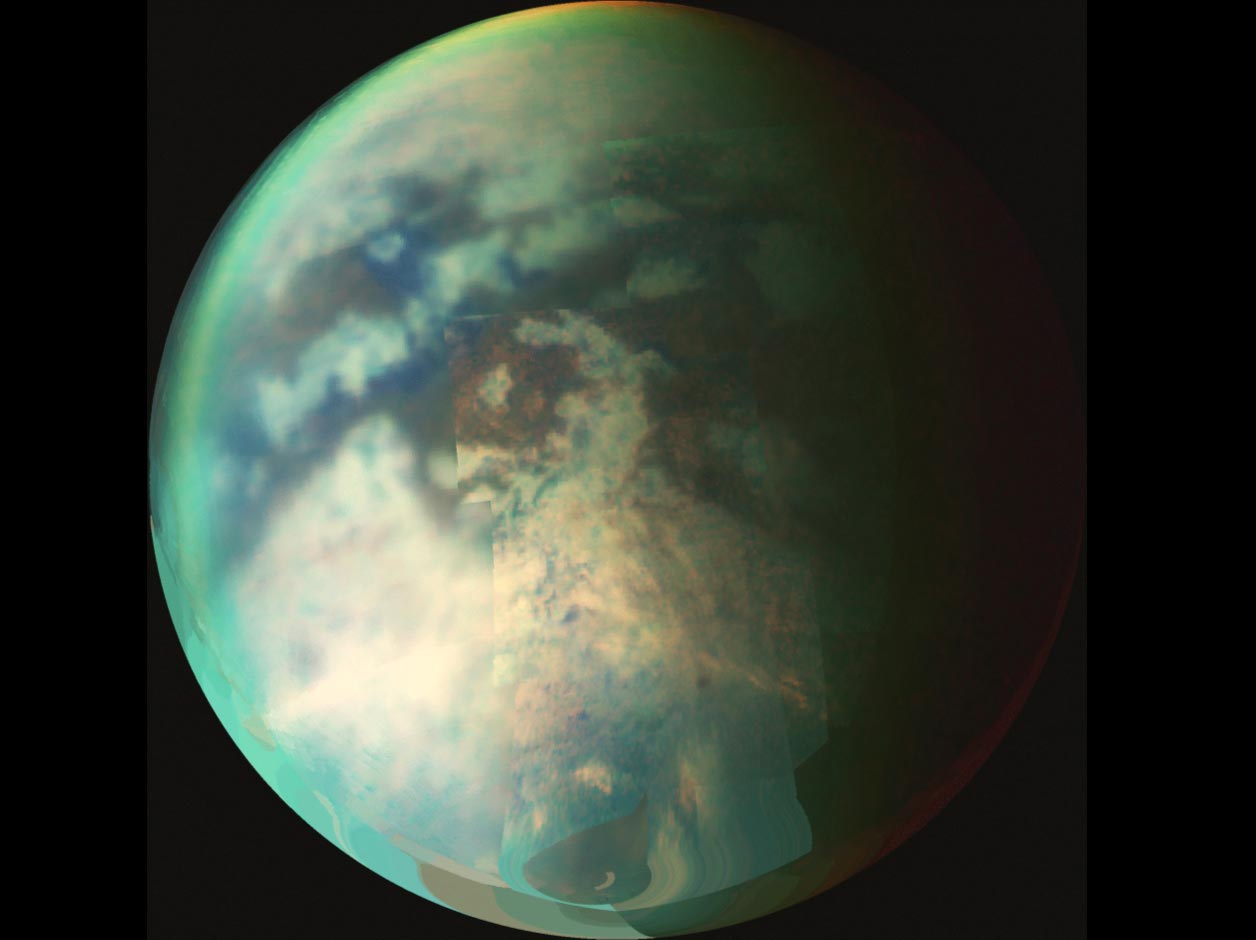
    Titan’s Full Disk
    Composite view of Titan built thanks to Cassini’s images taken on October 9 and October 25, 2006. Credit: NASA/JPL/University of Arizona

    In the old days it used to be largely guess-work when determining which alien worlds might be most livable, but not anymore. These days we can be pretty sure which planets and moons are most likely to have life thriving on their surface or in their oceans.

    An international team has now come up with two ratings systems for the probability of alien life and the results were published in the journal Astrobiology. The two ratings systems are an Earth Similarity Index (ESI) and a Planetary Habitability Index (PHI). The ESI rates how Earth-like planets are, while the PHI examines whether conditions exist on exoplanets that suggest the possibility of other forms of life.

    The maximum value for the ESI was 1.00 for Earth, so the idea is that we are ideally looking for anything close to 1.00. In our solar system, only Mars and Mercury came close, with a value of 0.70 for Mars and 0.60 for Mercury. The closest scores for ESI beyond our home solar system were for Gliese 581g, which had 0.89, and Gliese 581d, which scored 0.74.

    The PHI top scorer was Saturn’s moon Titan, with 0.64, then Mars with 0.59 and Europa at 0.47. Interestingly the highest scoring exoplanets were the same as for ESI: Gliese 581g at 0.49 and Gliese 581d at 0.43.

    Perhaps we should be looking deeper into the Gliese 581 system, which has four or five planets orbiting a red dwarf star. These indexes should help us zero in on life out there, if it exists and the data can be amended as technology moves forward and we learn more about any given moon or planet.

    Never miss a breakthrough: Join the SciTechDaily newsletter.
    Follow us on Google and Google News.

    Astrobiology Habitable Life Moon Planets Saturn Solar System Titan
    Share. Facebook Twitter Pinterest LinkedIn Email Reddit

    Related Articles

    Saturn’s Moon Titan Has Ingredients for Life

    NASA Dragonfly Launch Delayed – Revolutionary Mission to Saturn’s Moon Titan

    Simulation May Explain Saturnian System

    Tidal Heating Suggests Less Habitable Planets

    Saturn’s Moon Phoebe Has Planet-Like Qualities

    A Closer Look at Titan’s Chemical Production

    Cassini Explores Titan’s Lake, Similarities to Etosha Salt Pan

    Saturn’s Largest Moon Titan Seen in Unprecedented Detail

    Astronomers Discover 18 New Planets

    Leave A Reply Cancel Reply

    • Facebook
    • Twitter
    • Pinterest
    • YouTube

    Don't Miss a Discovery

    Subscribe for the Latest in Science & Tech!

    Trending News

    Your Blood Pressure Reading Could Be Wrong Because of One Simple Mistake

    Astronomers Stunned by Ancient Galaxy With No Spin

    Physicists May Be on the Verge of Discovering “New Physics” at CERN

    Scientists Solve 320-Million-Year Mystery of Reptile Skin Armor

    Scientists Say This Daily Walking Habit May Be the Secret to Keeping Weight Off After Dieting

    New Therapy Rewires the Brain To Restore Joy in Depression Patients

    Giant Squid Detected off Western Australia in Stunning Deep-Sea Discovery

    Popular Sugar-Free Sweetener Linked to Liver Disease, Study Warns

    Follow SciTechDaily
    • Facebook
    • Twitter
    • YouTube
    • Pinterest
    • Newsletter
    • RSS
    SciTech News
    • Biology News
    • Chemistry News
    • Earth News
    • Health News
    • Physics News
    • Science News
    • Space News
    • Technology News
    Recent Posts
    • Scientists Revive Ancient Chemistry Trick To Engineer Next-Generation Glass
    • Scientists Use AI To Supercharge Ultrafast Laser Simulations by More Than 250x
    • Scientists Just Found a Surprising Way To Destroy “Forever Chemicals”
    • Popular Supplement Ingredient Linked to Shorter Lifespan in Men
    • Scientists May Have Found a Way To Repair Nerve Damage in Multiple Sclerosis
    Copyright © 1998 - 2026 SciTechDaily. All Rights Reserved.
    • Science News
    • About
    • Contact
    • Editorial Board
    • Privacy Policy
    • Terms of Use

    Type above and press Enter to search. Press Esc to cancel.