
A Rocky Planet Discovered in the Virgo Constellation Is an Astronomer’s Dream
A newly discovered planet could be our best chance yet of studying rocky planet atmospheres outside the solar system, a new international study involving UNSW Sydney shows.
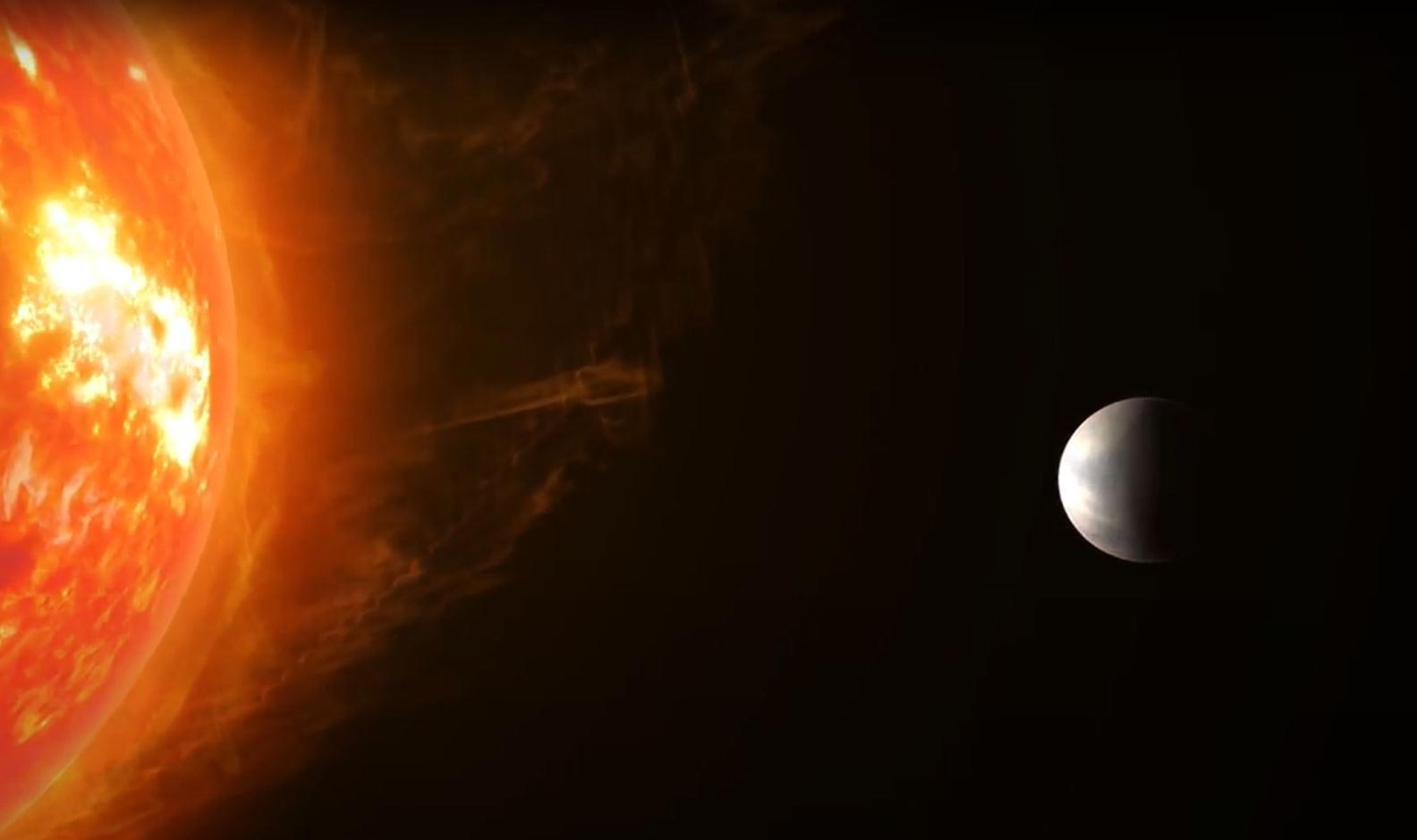
The exoplanet, called Gliese 486b (pronounced Glee-seh), is a ‘super-Earth’: that is, a rocky planet bigger than Earth but smaller than ice giants like Neptune and Uranus. It orbits a red dwarf star around 26 light-years away, making it a close neighbor – galactically speaking.
With a piping-hot surface temperature of 430 degrees Celsius (800 degrees Fahrenheit), Gliese 486b is too hot to support human life. But studying its atmosphere could help us learn whether similar planets might be habitable for humans – or if they’re likely to hold other signs of life.
The findings were published on March 4, 2021, in Science.
“This is the kind of planet we’ve been dreaming about for decades,” says Dr. Ben Montet, an astronomer and Scientia Lecturer at UNSW Science and co-author of the study.
“We’ve known for a long time that rocky super-Earths must exist around the nearby stars, but we haven’t had the technology to search for them until recently. This finding has the potential to transform our understanding of planetary atmospheres.”
Like Earth, Gliese 486b is a rocky planet – but that’s where the similarities end.
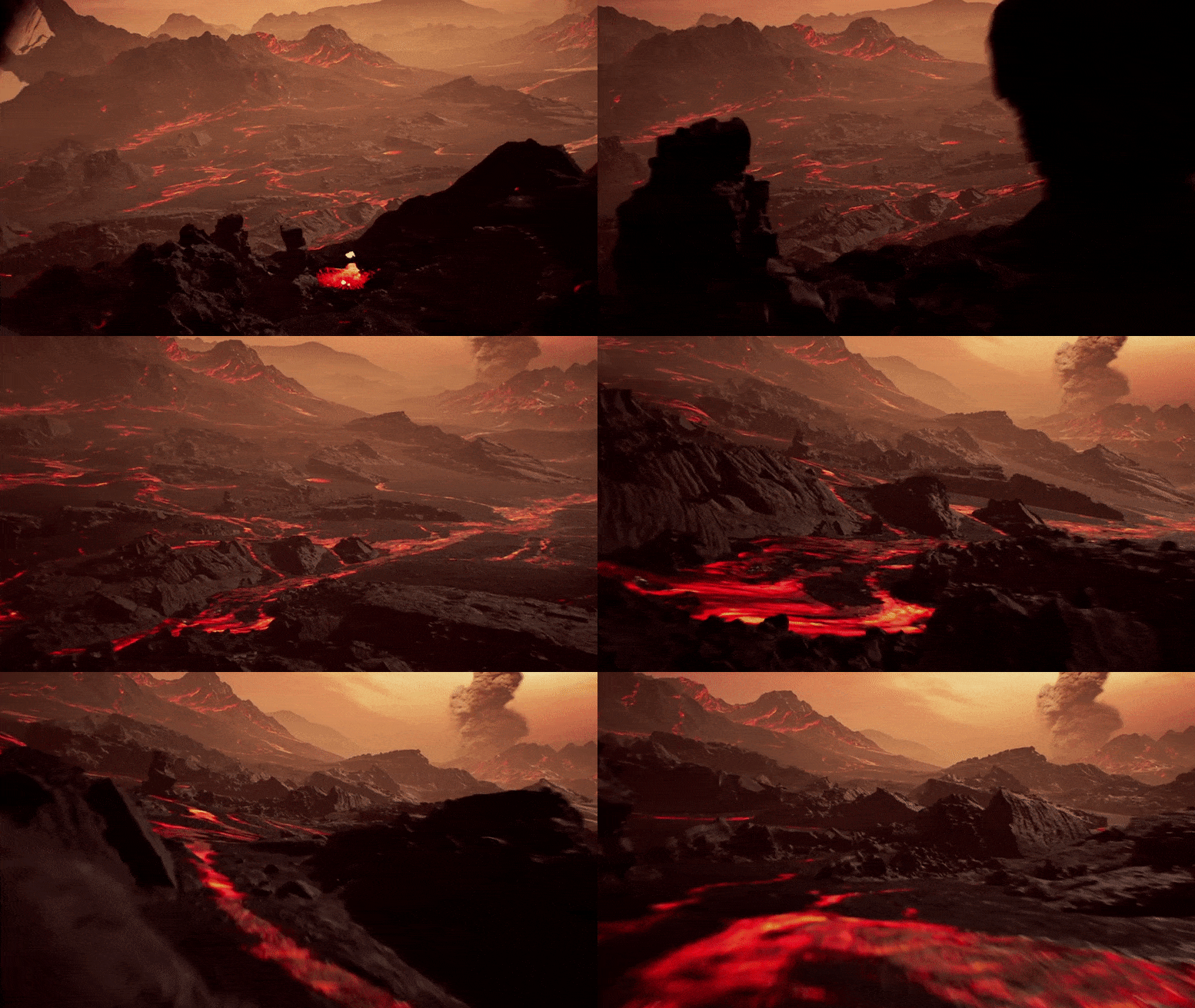
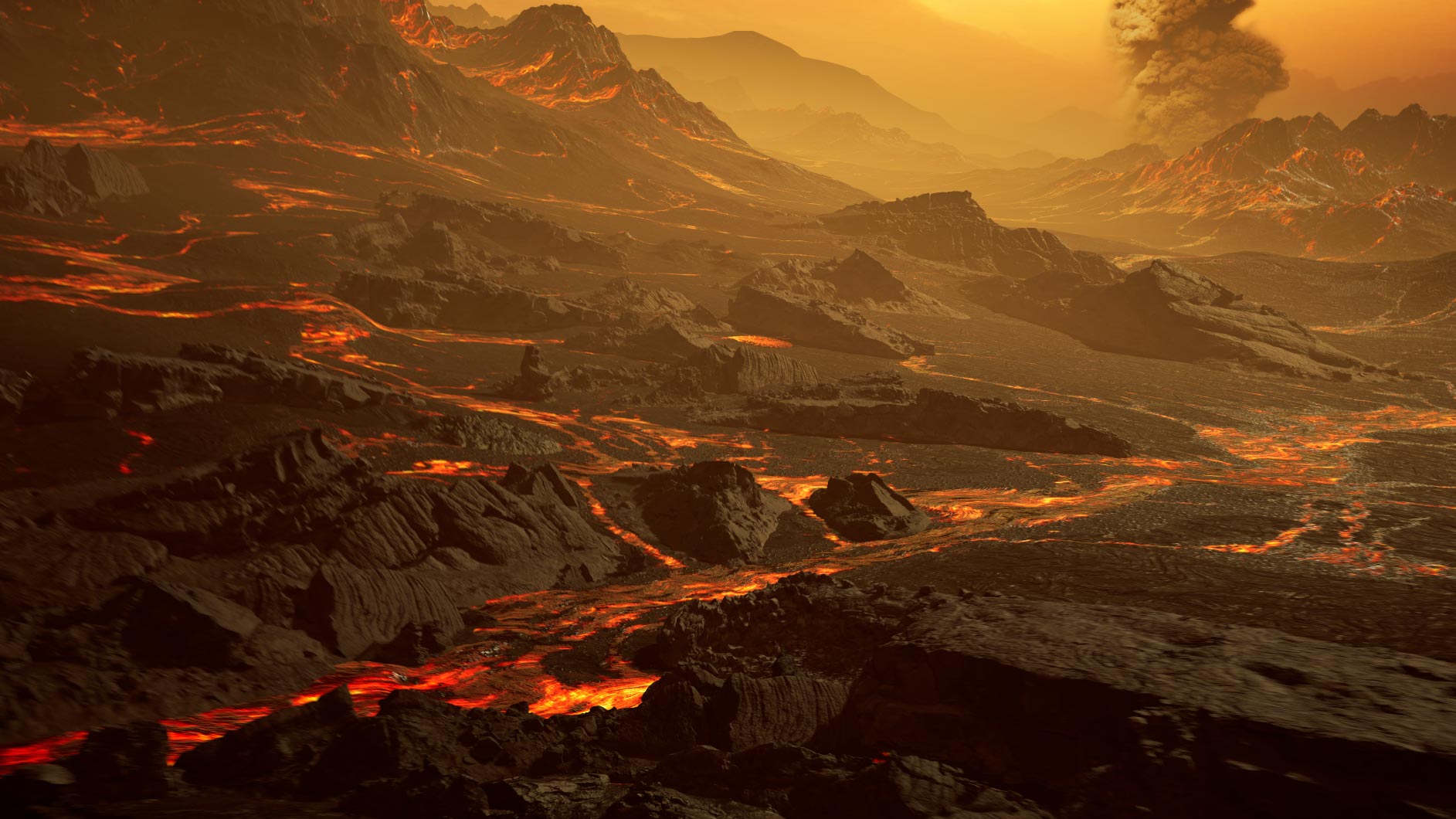
Our neighbor is 30 percent bigger and almost three times heavier than Earth. It’s possible that its surface – which is hot enough to melt lead – is scattered with glowing lava rivers.
“Gliese 486b is the type of planet we’ll be studying for the next 20 years.”
Super-Earths themselves aren’t rare, but Gliese 486b special for two key reasons: firstly, its heat ‘puffs up’ the atmosphere, helping astronomers take atmospheric measurements; and secondly, it’s a transiting planet, which means it crosses over its star from Earth’s perspective – making it possible for scientists to conduct an in-depth analysis of its atmosphere.
“Understanding super-Earths is challenging because we don’t have any examples in our backyard,” says Dr. Montet. “Gliese 486b is the type of planet we’ll be studying for the next 20 years.”
Lessons From the Atmosphere
A planet’s atmosphere can reveal a lot about its ability to support life.
For example, a lack of atmosphere might suggest the planet’s nearby star is volatile and prone to high stellar activity – making it unlikely that life will have a chance to develop. On the other hand, a healthy, long-lived atmosphere could suggest conditions are stable enough to support life.
Both options help astronomers solve a piece of the planetary formation puzzle.
“We think Gliese 486b could have kept a part of its original atmosphere, despite being so close to its red dwarf star,” says Dr. Montet. “Whatever we learn about the atmosphere will help us better understand how rocky planets form.”
As a transiting planet, Gliese 486b gives scientists two unique opportunities to study its atmosphere: first when the planet passes in front of its star and a fraction of starlight shines through its atmospheric layer (a technique called ‘transmission spectroscopy’); and then when starlight illuminates the surface of the planet as it orbits around and behind the star (called ‘emission spectroscopy’).
In both cases, scientists use a spectrograph – a tool that splits light according to its wavelengths – to decode the chemical makeup of the atmosphere.
“This is the single best planet for studying emission spectroscopy of all the rocky planets we know,” says Dr. Montet.
“It’s also the second-best planet to study transmission spectroscopy.”
Life on Gliese 486b
Gliese 486b is a great catch for astronomers – but you wouldn’t want to live there, says Dr. Montet.
“With a surface of 430 degrees Celsius, you wouldn’t be able to go outside without some kind of spacesuit,” he says.
“The gravity is also 70 percent stronger than on Earth, making it harder to walk and jump. Someone who weighed 50 kilograms (110 pounds) on Earth would feel like they weighed 85 kilograms (197 pounds) on Gliese 486b.”
On the plus side, the quick transition of the planet around its star means that interstellar visitors would have a birthday every 36 hours.
They would just need to expect the party to be interrupted.
“If humans are able to travel to other star systems in the future, this is one of the planets that would be on our list,” says Dr. Montet.
“The planet is really close to its star, which means you’d really have to watch out for stellar storms,” says Dr. Montet.
“The impacts could be as innocuous as beautiful aurorae covering the sky, or they could completely wipe out electromagnetic systems.”
But despite these dangers of living on Gliese 486b, Dr. Montet says it’s too valuable a planet to cross off our interstellar bucket list just yet.
“If humans are able to travel to other star systems in the future, this is one of the planets that would be on our list,” he says.
“It’s so nearby and so different than the planets in our own solar system.”
This virtual journey to Gliese 486b begins with its position in the night sky. After focusing on the parent star Gliese 486b, the film depicts the measurements. Finally, we fly to the exoplanet Gliese 486b and explore its possible surface, which probably resembles Venus, with a hot and dry landscape interspersed with glowing lava flows. Credit: RenderArea
Narrowing the Search for Habitable Planets
The study was part of the CARMENES project, a consortium of eleven Spanish and German research institutions that look for signs of low-mass planets around red dwarf stars.
Red dwarfs are the most common type of star, making up around 70 percent of all stars in the universe. They are also much more likely to have rocky planets than Sun-like stars.
Based on these numbers, the best chance for finding life in the universe may be looking around red dwarfs, says Dr. Montet – but this comes with a catch.
“Red dwarfs are known to have a lot of stellar activity, like flares and coronal mass ejections,” says Dr. Montet. “This kind of activity threatens to destroy a planet’s atmosphere.
“Measuring Gliese 486b’s atmosphere will go a long way towards deciding if we should consider looking for signs of life around red dwarfs.”
From an Aussie Backyard to NASA
The findings were made possible using data from NASA’s all-sky survey called the Transiting Exoplanet Survey Satellite (TESS) mission and telescopes in Spain, USA, Chile, and Hawaii.
Almost 70 people were involved in the study, including two Australians: Dr. Montet from UNSW Science, and Thiam-Guan (TG) Tan, a citizen astronomer who built an observatory in his own backyard in Perth. Mr. Tan helped confirm the planet by observing a transit of Gliese 486b.
“I built my observatory more than 10 years ago to see if I could participate in the search for planets,” says Mr. Tan. “It has been very satisfying to be able to confirm that a bloke in a backyard can contribute to significant discoveries, such as Gliese 486b.”
In addition to Gliese 486b, Mr. Tan has helped discover more than 70 planets using his observatory.
“It’s an interesting time in astronomy,” says Dr. Montet. “TESS is producing all of this data, but it’s more information than any person or group can look at.
“Citizen scientists have an opportunity to get involved in testing astronomical data, whether it’s confirming a planet sighting or looking for transiting planets.
“These kind of collaborations between professional and amateur astronomers are really helping advance the scientific field.”
People interested in getting involved in astronomical research can look at the Planet Hunters website, says Dr. Montet. TESS data is made available to the community only two months after its collected.
“The easiest way to get involved is to create an account and start looking at TESS data,” he says. “You don’t even need a fancy telescope.
“Who knows – you might even be able to find the next Earth-sized planet.”
For more on this discovery, read Alien Super-Earth Planet Discovered Just 26 Light Years Away – Probably Has an Atmosphere.
Reference: “A nearby transiting rocky exoplanet that is suitable for atmospheric investigation” by T. Trifonov, J. A. Caballero, J. C. Morales, A. Seifahrt, I. Ribas, A. Reiners, J. L. Bean, R. Luque, H. Parviainen, E. Pallé, S. Stock, M. Zechmeister, P. J. Amado, G. Anglada-Escudé, M. Azzaro, T. Barclay, V. J. S. Béjar, P. Bluhm, N. Casasayas-Barris, C. Cifuentes, K. A. Collins, K. I. Collins, M. Cortés-Contreras, J. de Leon, S. Dreizler, C. D. Dressing, E. Esparza-Borges, N. Espinoza, M. Fausnaugh, A. Fukui, A. P. Hatzes, C. Hellier, Th. Henning, C. E. Henze, E. Herrero, S. V. Jeffers, J. M. Jenkins, E. L. N. Jensen, A. Kaminski, D. Kasper, D. Kossakowski, M. Kürster, M. Lafarga, D. W. Latham, A. W. Mann, K. Molaverdikhani, D. Montes, B. T. Montet, F. Murgas, N. Narita, M. Oshagh, V. M. Passegger, D. Pollacco, S. N. Quinn, A. Quirrenbach, G. R. Ricker, C. Rodríguez López, J. Sanz-Forcada, R. P. Schwarz, A. Schweitzer, S. Seager, A. Shporer, M. Stangret, J. Stürmer, T. G. Tan, P. Tenenbaum, J. D. Twicken, R. Vanderspek and J. N. Winn, 5 March 2021, Science.
DOI: 10.1126/science.abd7645
Never miss a breakthrough: Join the SciTechDaily newsletter.
Follow us on Google and Google News.