
Close Menu
    Facebook X (Twitter) Instagram
    SciTechDaily
    • Biology
    • Chemistry
    • Earth
    • Health
    • Physics
    • Science
    • Space
    • Technology
    Facebook X (Twitter) Pinterest YouTube RSS
    SciTechDaily
    Home»Technology»Electronic Contact Lenses Put Data on Your Eye
    Technology

    Electronic Contact Lenses Put Data on Your Eye

    By SciTechDailyNovember 26, 20112 Comments2 Mins Read
    Facebook Twitter Pinterest Telegram LinkedIn WhatsApp Email Reddit
    Share
    Facebook Twitter LinkedIn Pinterest Telegram Email Reddit
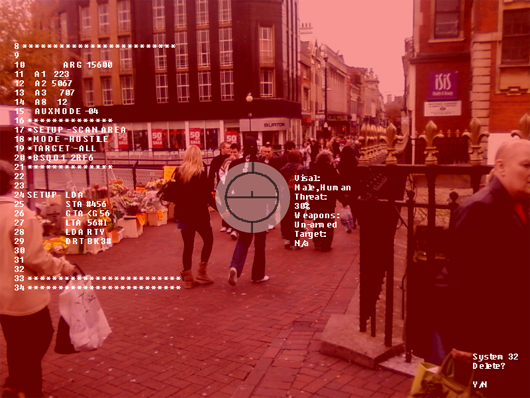
    Terminator View
    Electronic contact lenses, capable of displaying data on the eye, show promise with successful trials on rabbits.

    We’ve seen it thousands of times in movies; massive amounts of information unspooling right before someone’s eyes, without the need for any type of monitor. Now, fiction is closer to becoming fact as a working model of electronic contact lenses proves to be successful with rabbits.

    The current incarnation of the lens isn’t something that would excite anyone with those Hollywood movies in mind because the device only displays one pixel, but it’s the concept behind that one pixel that’s the real attention-getter; because where one pixel can go, others can follow. According to PopSci, Professor Babak Parviz says the next step is to “incorporate some predetermined text in the contact lens.”

    However, in addition to going beyond one pixel, there are a few other hurdles to overcome. The first problem is power. The current version of the contact lens draws energy from an external source using an antenna that has a range of one meter in free space and only two centimeters when the lens is placed on the eye. The other issue concerns the eye itself. The minimal focal distance of the human eye is a few centimeters so information that would be displayed on a contact lens would be blurry. To take care of this particular problem, researchers used thin Fresnel lenses to magnify the display. There’s no information at this time on if the process will be refined at some point or how exactly a magnified display might affect vision when not reading text on a contact lens.

    When it comes to limitless amounts of data being streamed directly to the eye, the future is closer but it still has some traveling to do before it gets here.

    Never miss a breakthrough: Join the SciTechDaily newsletter.
    Follow us on Google and Google News.

    Contact Lenses Eyes
    Share. Facebook Twitter Pinterest LinkedIn Email Reddit

    Related Articles

    From Sci-Fi to Superpower: These Contacts Let You See in the Dark With Your Eyes Closed

    Scientists Have Developed Contact Lenses That Help Prevent Dry Eye Syndrome

    New Technology Gives AI Human-Like Eyes

    Smart LED Contact Lenses for Treating and Preventing Eye Disease

    Engineers Develop a Telescopic Contact Lens

    Researchers Designing Eye-Enhancing Virtual Reality Contact Lenses for Soldiers

    Police Can Now Identify Your Eye Color from DNA

    2 Comments

    1. David Beach on November 27, 2011 1:00 pm

      As an optical designer, I am more than somewhat puzzled by the description given here. It is an axiom of geometrical optics that an object close to the aperture stop of a lens – which here is the pupil of the eye – cannot be imaged at the focal surface of the normally operating lens – ie: viewing objects between (say) half a metre and infinity distant from the eye.
      Here the object is only a few millimetres from the pupil. The presence of Fresnel lenses at the object position would have no useful effect whatever – in fact they would seriously detract from normal vision.

      Reply
    2. GearPQ on July 6, 2016 6:31 pm

      Looking at this and all I can think about is the MI 4 Movie starring Tom Cruz! Great Read though!
      Thank you.

      Reply
    Leave A Reply Cancel Reply

    • Facebook
    • Twitter
    • Pinterest
    • YouTube

    Don't Miss a Discovery

    Subscribe for the Latest in Science & Tech!

    Trending News

    Walking for Just 20 Minutes Caused an Immediate Change in the Gut

    Scientists Have Uncovered Previously Hidden Microbial Activity on Human Skin

    Stacked Mummies Reveal 700 Years of Changing Burial Rituals in Ancient Egypt

    Scientists Discover a Butterfly That Barely Seems To Age

    Astronomers Detect a Faint Hydrogen Signal From Billions of Light-Years Away

    Fighting Fire With Fire Could Save Giant Sequoias

    Scientists Just Found a Hidden Factor That Could Trigger an Atlantic Ocean Collapse

    Scientists Find a Berry Compound That Helps Muscle Cells Burn Fat

    Follow SciTechDaily
    • Facebook
    • Twitter
    • YouTube
    • Pinterest
    • Newsletter
    • RSS
    SciTech News
    • Biology News
    • Chemistry News
    • Earth News
    • Health News
    • Physics News
    • Science News
    • Space News
    • Technology News
    Recent Posts
    • A Pompeii-Like Volcanic Disaster Preserved a 22-Million-Year-Old Landscape
    • One of Earth’s Oldest Animal Fossils Found in a Norwegian Sheep Field
    • Ancient DNA Rewrites the Story of the “American Cheetah”
    • Biggest Supernova Dataset Yet Challenges Dark Energy Theory
    • 1,000x Speedup: Scientists Just Broke Through a Major Quantum Computing Bottleneck
    Copyright © 1998 - 2026 SciTechDaily. All Rights Reserved.
    • Science News
    • About
    • Contact
    • Editorial Board
    • Privacy Policy
    • Terms of Use

    Type above and press Enter to search. Press Esc to cancel.