
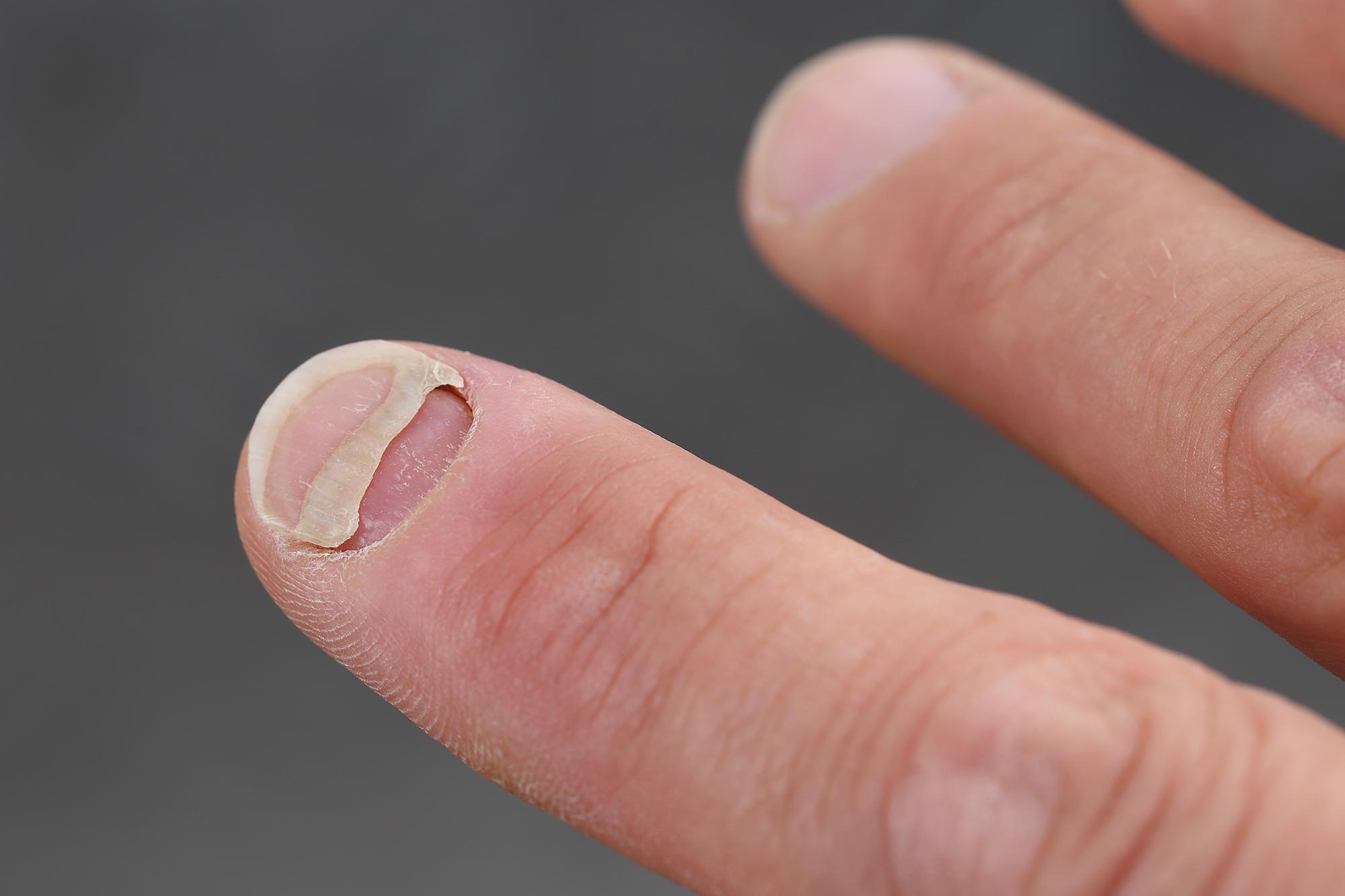
A large multinational study has linked GLP-1 receptor agonist use with a notably higher prevalence of nail disorders, including detachment and discoloration.
People taking GLP-1 receptor agonists reported substantially more nail, hair, and scalp problems than comparable adults with obesity or type 2 diabetes who had never used the drugs, according to two multinational studies presented at the European Academy of Dermatology and Venereology (EADV) Congress 2026.
Nail detachment showed one of the largest differences. It affected 39% of GLP-1 users compared with 9% of controls. Overall, two-thirds (66%) of people taking the medications reported at least one nail disorder, and a companion analysis found higher rates of hair loss, reduced hair density, scalp redness, itching, and scaling.
Nail Problems Were More Common Among GLP-1 Users
The nail study compared 575 people using GLP-1 receptor agonists with 1,329 people in France, the United States, Brazil, and Mexico who had type 2 diabetes and/or obesity but had never taken the drugs. GLP-1 receptor agonists are widely used to treat type 2 diabetes and obesity, but their possible effects on nails have received little systematic study.
Among GLP-1 users, 66% reported at least one nail disorder compared with 53% of controls. Nail discoloration affected 46% of users and 17% of controls, while nail detachment was more than four times as common in the treatment group.
When researchers restricted their analysis to participants who had lost weight, nail problems remained significantly more common among people taking GLP-1 drugs.
The Study Found an Association, Not Proof of Cause
The study does not establish that GLP-1 receptor agonists directly caused the nail changes. About half of users said they had experienced nail problems before beginning treatment, and accounting for dermatological conditions and nutritional deficiencies weakened some of the observed associations. Even after those adjustments, however, nail detachment and discoloration remained roughly two to three times more frequent among users.
“Until now, nail changes associated with GLP-1 therapies had essentially been anecdotal,” said study author Dr Charles Taïeb. “Our findings show a clear association, but they also underline an important point: not everything that happens during GLP-1 treatment is necessarily caused by the treatment itself.”
Hair Loss Often Came With Scalp Symptoms
A companion study involving the same participants found a similar pattern involving hair and the scalp. Unusual hair loss was reported by 50% of GLP-1 users compared with 34% of controls, while loss of hair volume or density affected 42% versus 19%.
Hair loss that began after treatment initiation was also more than twice as common among GLP-1 users (26% vs 12%). Scalp redness occurred at roughly three times the rate seen among controls. In most affected users, hair loss did not occur by itself. It was accompanied by symptoms such as itching, redness, or scaling.
“This suggests that what is happening on the scalp may go beyond the classical shedding seen after rapid weight loss and involve an inflammatory component,” explained study author Dr Bruno Halioua. “Scalp inflammation was the rule rather than the exception, which clinicians do not currently look for and which may be treatable. Taken together, our findings suggest that factors beyond weight loss alone may contribute to the hair, scalp and nail changes observed among GLP-1 users.”
Researchers Want to Know What Happens After Treatment Begins
Rapid weight loss can itself contribute to temporary hair shedding, while nutritional deficiencies and existing skin conditions can affect both hair and nails.
For patients already taking the drugs, the researchers said the findings should not prompt them to stop treatment without medical guidance. “These changes are frequent, usually benign, and are not a reason to stop an effective treatment on one’s own initiative,” said Dr Halioua. “Anyone who notices hair shedding, an itchy or red scalp or nail changes should mention it to their doctor rather than discontinue therapy.”
The research team now plans prospective studies that will follow people from the beginning of GLP-1 treatment using standardized dermatological examinations and biological monitoring.
Meeting: EADV Congress
Never miss a breakthrough: Join the SciTechDaily newsletter.
Follow us on Google and Google News.