
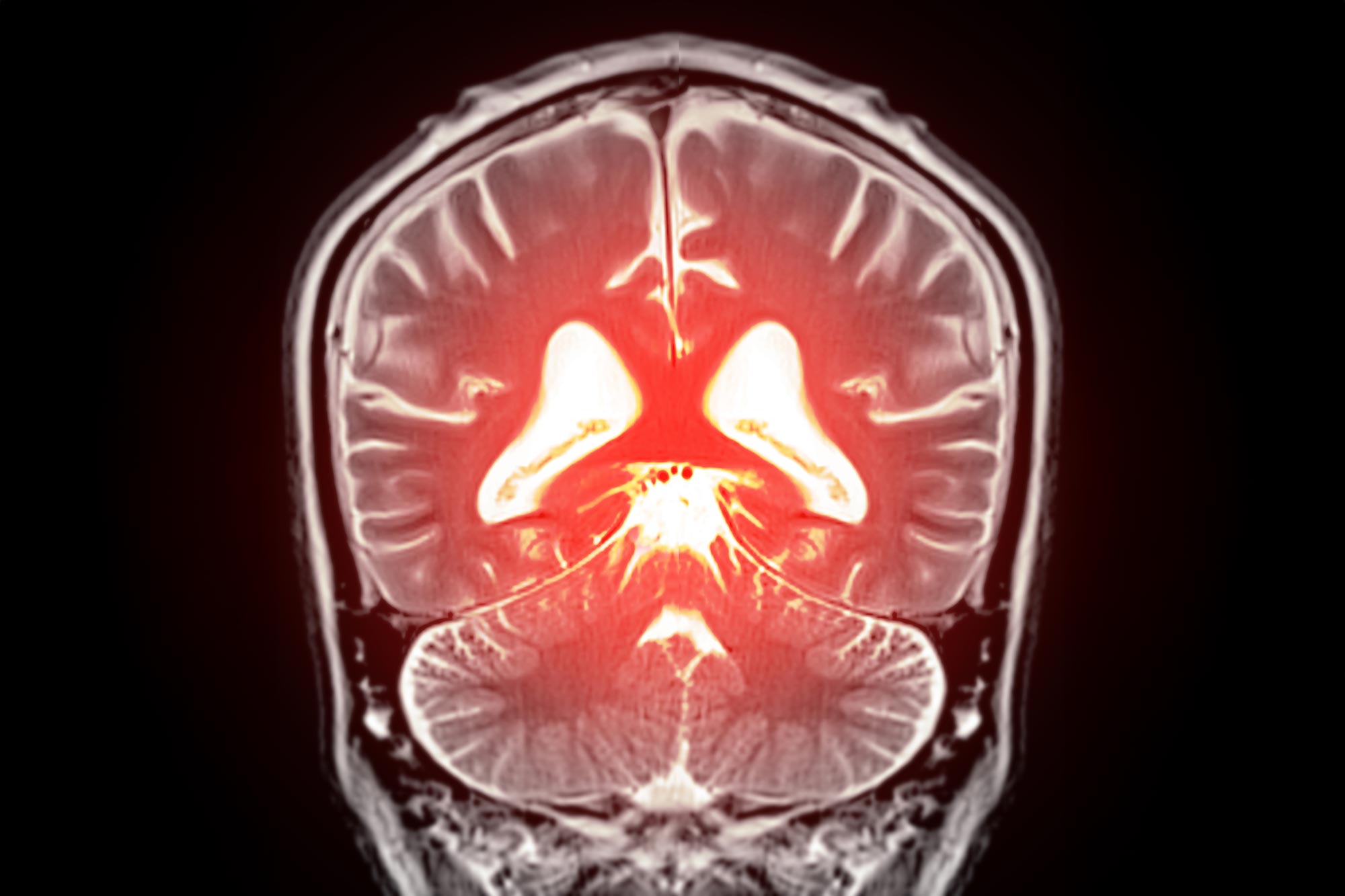
A large study found that people who are overweight or obese when diagnosed with dementia have a significantly lower risk of death than those at a normal weight.
A higher body weight at the time of a dementia diagnosis may be linked to longer survival, according to a large study of older Americans. Researchers found that people who were overweight or obese when diagnosed had a significantly lower risk of death than those in the normal weight range, even after accounting for other health conditions and lifestyle factors.
The findings, published in the Journal of Alzheimer’s Disease, contrast with evidence that obesity during midlife increases the likelihood of developing dementia. Although the researchers could not determine why higher weight was associated with better survival, their analysis suggests that the relationship cannot easily be explained by several common sources of statistical bias.
Higher Body Weight Linked to Lower Mortality
The survival differences varied by weight category. People who were overweight (body mass index of 25 to 29.9) had a 16% lower risk of death than those at a normal weight. Those with class 1 obesity (BMI of 30 to 34.9) had a 27% lower risk, while individuals with class 2 or 3 obesity (BMI equal to or greater than 35) had a 22% lower risk.
To investigate the relationship, researchers analyzed 4,523 participants in the Health and Retirement Study, a nationally representative study of U.S. adults ages 51 and older conducted by the University of Michigan. All participants were free of dementia when they entered the study but developed the condition later. Data collected between 1998 and 2022 allowed the team to examine weight changes before diagnosis and track survival afterward.
Could Weight Loss Before Diagnosis Explain the Results?
One complication in dementia research is that weight loss often begins long before the condition is formally identified. Earlier research by Virginia Chang and Yuan Zhang found that weight loss can begin up to a decade before diagnosis and accelerate in the years immediately preceding it. As a result, some people classified as normal weight when diagnosed may have previously been heavier and experienced substantial weight loss as their disease progressed.
Other potential biases could also distort the relationship. Studying only people who develop dementia can introduce misleading statistical associations between weight and mortality. Survivor bias is another concern. Obesity increases the risk of dying from conditions such as cardiovascular disease; people with obesity who survive long enough to develop dementia may be healthier than others who were initially in the same weight category.
The researchers conducted additional analyses to examine these possible distortions but found little evidence that the major biases they evaluated accounted for the observed survival differences.
“Because this finding is somewhat counterintuitive, an important question is whether it could simply be an artifact of bias. Our analyses suggest that the major sources of bias we examined do not explain the survival advantage associated with higher weight,” said Yuan Zhang, assistant professor of sociomedical sciences at Columbia University’s Mailman School of Public Health.
How Energy Reserves May Affect Dementia Survival
One possible biological explanation involves the body’s ability to withstand nutritional decline. Dementia can disrupt brain processes that regulate hunger and eating behavior, while also making it increasingly difficult for people to prepare food or feed themselves. Some individuals experience higher energy expenditure, reduced appetite, and progressive loss of muscle and body tissue.
People with greater fat stores or muscle mass may have more reserves to draw upon when eating becomes difficult. These reserves could potentially help them tolerate periods of inadequate nutrition, although the study did not establish that this mechanism explains the survival advantage.
“Nutrition can be a big problem for people with dementia,” said Chang. “They may experience wasting and an inability to eat, which can be due to changes in the brain’s central drive, leading to loss of appetite and initiative, increased energy expenditure, and difficulties feeding themselves.”
What the Findings Mean for Dementia Care
Despite the association between higher weight and longer survival, the findings do not establish that gaining weight improves outcomes for people with dementia. The observational study examined existing differences in body weight and mortality rather than testing whether deliberate weight changes could influence survival.
“This doesn’t mean that patients with dementia should attempt to become overweight or obese, as our study was not designed to test that question. But our findings do suggest that weight status may serve as a useful prognostic signal for survival at the time of dementia diagnosis. They also support the notion that nutrition is a key factor in the health and survival of people with dementia,” said Chang, associate professor of social and behavioral sciences at NYU School of Global Public Health and the study’s lead author.
Determining whether fat stores, muscle mass, nutritional status, or other physiological differences account for the association will require further research. Body weight may nevertheless provide useful information about survival prospects when dementia is first diagnosed.
“While our analysis examined several forms of bias, and there are very plausible physiological reasons for the potential benefits of a little extra weight in this context, we still don’t know exactly why people who were overweight or obese had a lower risk of death. Regardless of the underlying mechanism, however, weight status at the time of a dementia diagnosis can still serve as a meaningful prognostic signal,” noted Chang.
Reference: “Body mass index and mortality in incident dementia” by Virginia W. Chang, Eleanor Hayes-Larson, Hui Zheng and Yuan S. Zhang, 25 March 2026, Journal of Alzheimer’s Disease.
DOI: 10.1177/13872877261491694
This work was supported by the National Institutes of Health (grant numbers R00AG070274, R00AG075317).
Never miss a breakthrough: Join the SciTechDaily newsletter.
Follow us on Google and Google News.