
Recent research indicates that brain size has been progressively enlarging in individuals born post-1930s.
A recent study conducted by researchers at UC Davis Health has revealed that human brains are increasing in size. According to the study, individuals born in the 1970s exhibited brain volumes that were 6.6% larger and brain surface areas nearly 15% greater than those of people born in the 1930s.
The researchers hypothesize the increased brain size may lead to an increased brain reserve, potentially reducing the overall risk of age-related dementias.
The findings were published in JAMA Neurology.

“The decade someone is born appears to impact brain size and potentially long-term brain health,” said Charles DeCarli, first author of the study. DeCarli is a distinguished professor of neurology and director of the UC Davis Alzheimer’s Disease Research Center. “Genetics plays a major role in determining brain size, but our findings indicate external influences — such as health, social, cultural, and educational factors — may also play a role.”
75-year study reveals brain changes between generations
The researchers used brain magnetic resonance imaging (MRIs) from participants in the Framingham Heart Study (FHS). The community-based study was launched in 1948 in Framingham, Massachusetts, to analyze patterns of cardiovascular and other diseases. The original cohort consisted of 5,209 men and women between the ages of 30 and 62. The research has continued for 75 years and now includes second and third generations of participants.
The MRIs were conducted between 1999 and 2019 with FHS participants born during the 1930s through the 1970s. The brain study consisted of 3,226 participants (53% female, 47% male) with an average age of about 57 at the time of the MRI.
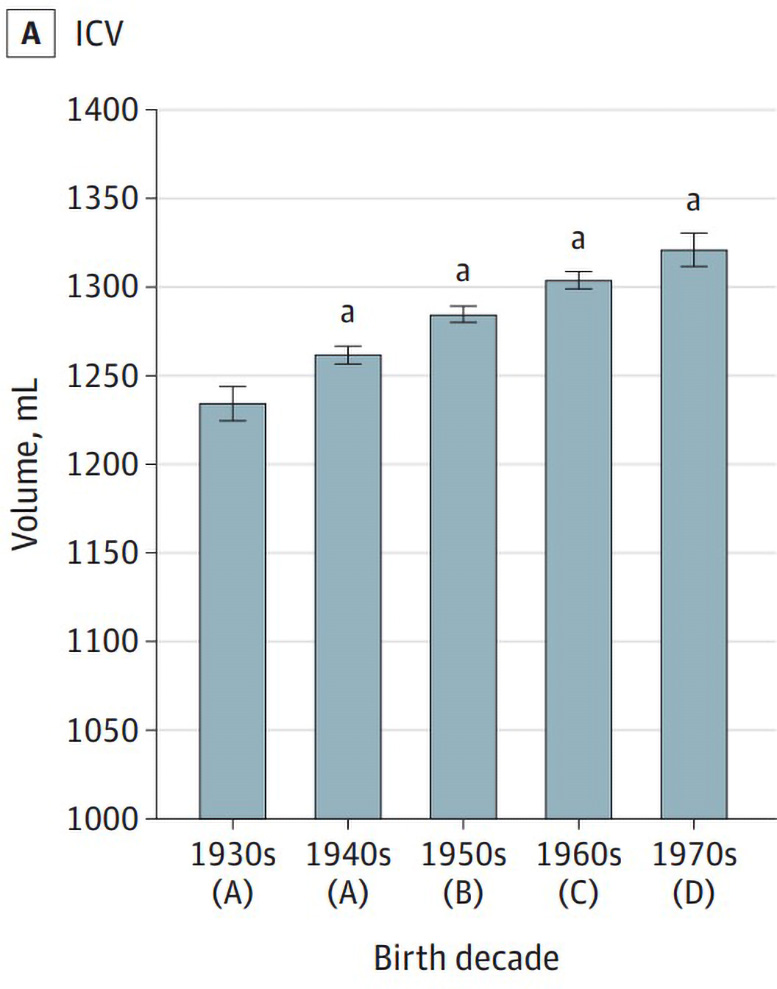
The research led by UC Davis compared the MRIs of people born in the 1930s to those born in the 1970s. It found gradual but consistent increases in several brain structures. For example, a measure that looked at brain volume (intracranial volume) showed steady increases decade by decade. For participants born in the 1930s, the average volume was 1,234 milliliters, but for those born in the 1970s, the volume was 1,321 milliliters, or about 6.6% greater volume.
Cortical surface area — a measure of the brain’s surface — showed an even greater increase decade by decade. Participants born in the 1970s had an average surface area of 2,104 square centimeters compared to 2,056 square centimeters for participants born in the 1930s — almost a 15% increase in volume.
The researchers found brain structures such as white matter, gray matter and hippocampus (a brain region involved in learning and memory) also increased in size when comparing participants born in the 1930s to those born in the 1970s.
Larger brains may mean a lower incidence of dementia
According to the Alzheimer’s Association, approximately 7 million Americans are currently living with Alzheimer’s disease. That number is expected to rise to 11.2 million by 2040.
Although the numbers are rising with America’s aging population, the incidence of Alzheimer’s — the percentage of the population affected by the disease — is decreasing. A previous study found a 20 percent reduction in the incidence of dementia per decade since the 1970s.
Improved brain health and size may be one reason why.
“Larger brain structures like those observed in our study may reflect improved brain development and improved brain health,” DeCarli said. “A larger brain structure represents a larger brain reserve and may buffer the late-life effects of age-related brain diseases like Alzheimer’s and related dementias.”
One of the study’s strengths is the design of the FHS study, which allows the researchers to examine brain imaging of three generations of participants with birthdates spanning almost 80 years. A limitation is that non-Hispanic white participants make up the majority of the FHS cohort, which is not representative of the U.S. population.
Reference: “Trends in Intracranial and Cerebral Volumes of Framingham Heart Study Participants Born 1930 to 1970” by Charles DeCarli, Pauline Maillard, Matthew P. Pase, Alexa S. Beiser, Daniel Kojis, Claudia L. Satizabal, Jayandra J. Himali, Hugo J. Aparicio, Evan Fletcher and Sudha Seshadri, 25 March 2024, JAMA Neurology.
DOI: 10.1001/jamaneurol.2024.0469
The study was funded by the National Institute on Aging and the National Institutes of Health.
Never miss a breakthrough: Join the SciTechDaily newsletter.
Follow us on Google and Google News.
7 Comments
Remember why big brains in the first place.
Humans are both highly cooperative AND fiercely competitive.
Gains from cooperation are balanced against thefts from defection/competition.
So we enjoy gains, whilst keeping a wary eye on the partner.
Big brains let us evaluate when the other will cooperate OR defect.
We evolved to know when to keep playing or quit.
This is much too fast for evolution to be a likely cause. It’s only three or four generations. The likely cause is improved diet and nutrition, and possibly improved sanitation and other health measures. It’s consistent with the broad increase in IQs and height observed over the last 150 years or so, which is likewise thought to be primarily due to improved diet and nutrition.
Having brains get larger in order to store more Ads and and other worthless information is hardly evolving. The human mind peaked around the era of Socrates. Humans these days are stunted mental midgets.
That % increase in brain size is almost exactly the same as the increase in body size in the same period. Ergo, identical brain/body ratio!
One of the constraints on the larger brain is the head size tht a birth canal can accommodate without endangering the mother & baby during birth. There could be a link btwn the brain size w increasing number of cesarean born babies due to availability of timely diagnosis & safer procedures.
One of the constraints on the larger brain is the head size tht a birth canal can accommodate without endangering the mother & baby during birth. There could be a link btwn the brain size w increasing number of cesarean born babies due to availability of timely diagnosis & safer procedures.
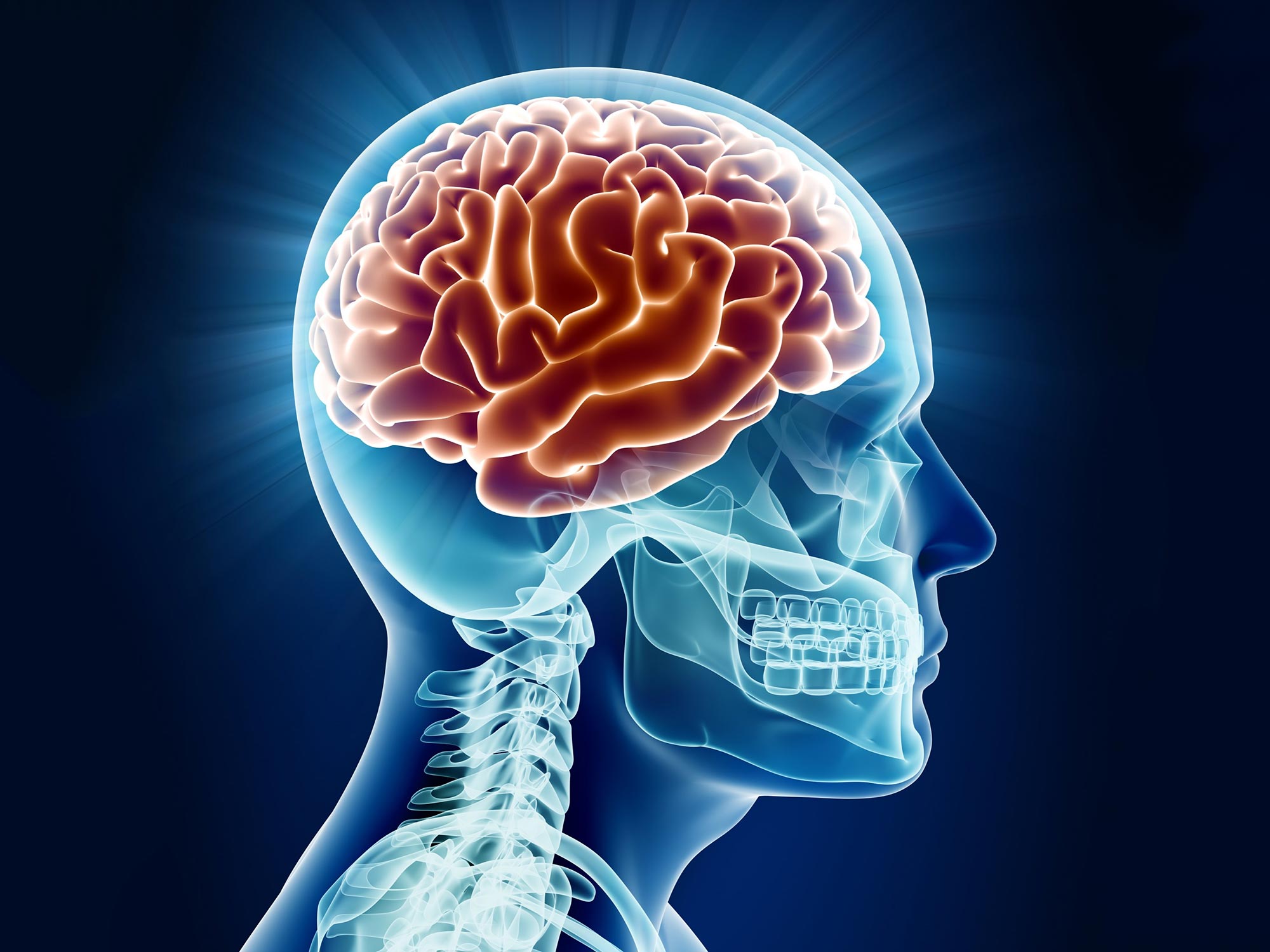
The brain in this image is facing backwards in the skull.