
Close Menu
    Facebook X (Twitter) Instagram
    SciTechDaily
    • Biology
    • Chemistry
    • Earth
    • Health
    • Physics
    • Science
    • Space
    • Technology
    Facebook X (Twitter) Pinterest YouTube RSS
    SciTechDaily
    Home»Space»Chasing Martian Mysteries: Perseverance Pays Off When Studying the Red Planet’s Atmosphere
    Space

    Chasing Martian Mysteries: Perseverance Pays Off When Studying the Red Planet’s Atmosphere

    By Claire Newman, Aeolis ResearchApril 22, 2024No Comments3 Mins Read
    Facebook Twitter Pinterest Telegram LinkedIn WhatsApp Email Reddit
    Share
    Facebook Twitter LinkedIn Pinterest Telegram Email Reddit
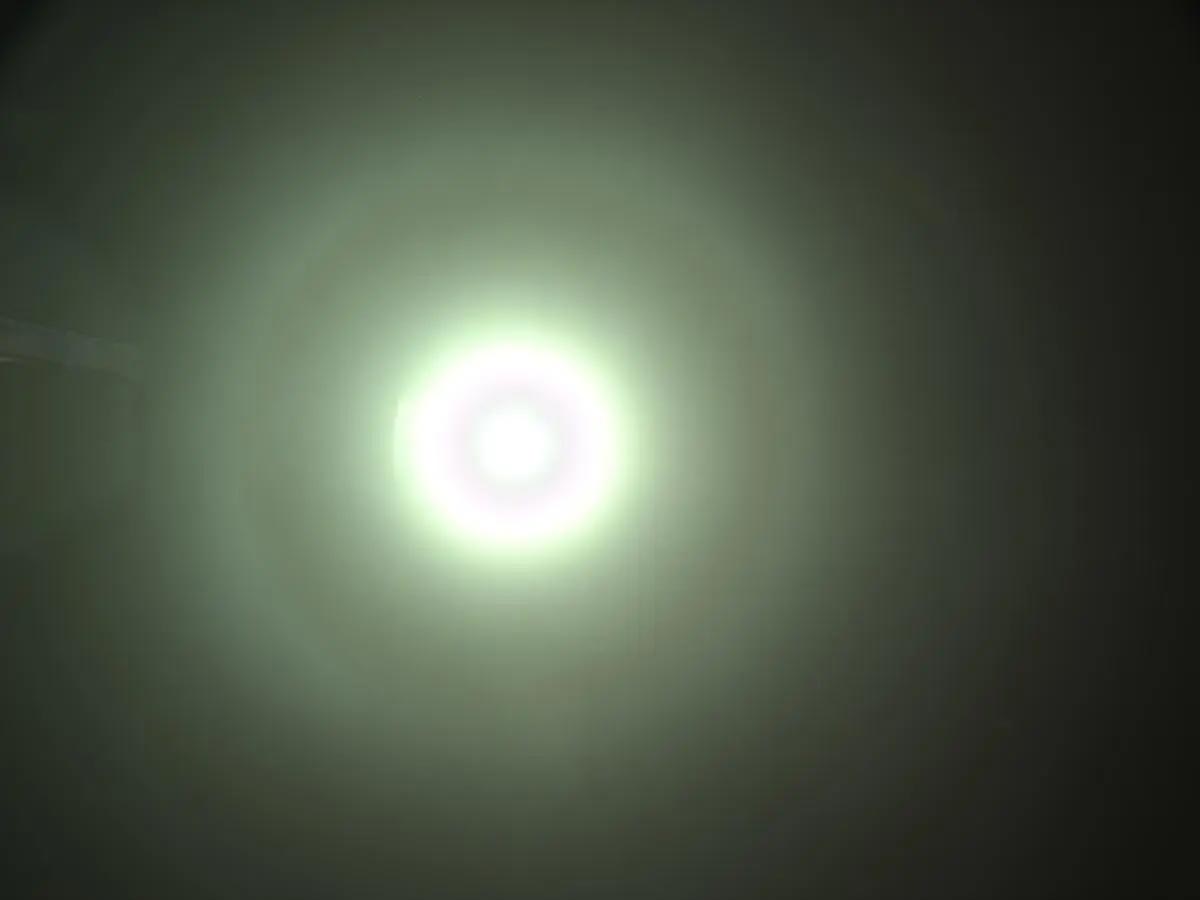
    Mars Perseverance Sol 965
    Mars Perseverance Sol 965 – Left Navigation Camera: A halo imaged on sol 965, in the final image taken by Perseverance’s Navigation cameras before conjunction and the end of the cloudy season. Credit: NASA/JPL-Caltech.

    On Mars, the Perseverance rover faces challenges in studying the atmosphere, such as capturing transient phenomena like clouds and dust devils.

    Studying the atmosphere with NASA’s Perseverance Mars rover can be challenging! Imagine spotting an interesting cloud in a photo taken yesterday; unlike something interesting on the surface, more observations just aren’t possible, as it’s long gone by now. Or imagine trying to take a movie of a dust devil zooming across Jezero crater, when the rover’s daily activities are all planned out before the rover even wakes up.

    The fact that many atmospheric phenomena are short-lived and/or hard to predict, and often only occur during certain time periods, means that atmospheric scientists on the Mars 2020 team must use different strategies to observe them.

    Observation Strategies and Tools

    Firstly, the sensors that make up the primary atmospheric instrument (the Mars Environmental Dynamics Analyzer, MEDA) make meteorological and related observations continuously at least every other hour of every sol. This gives us a very good chance of capturing transient and hard-to-predict phenomena.

    Secondly, for sensors that can’t measure as often — like the cameras and microphone — we take measurements over multiple sols at different times and (for imaging) directions, to build up statistics on when and where interesting phenomena occur.

    NASA’s Perseverance Rover Operating on the Surface of Mars
    This illustration depicts NASA’s Perseverance rover operating on the surface of Mars. Credit: NASA

    Adapting to Environmental Changes

    Thirdly, when we expect to see something unusual based on the time of year or location, we increase the cadence of measurements to make sure we capture that event. In Perseverance’s first year on Mars we observed a scattering halo toward the end of Mars’s cloudy season. This bright ring around the Sun is caused by large hexagonal ice crystals that only form when lots of water vapor is present. Despite dozens of attempts to image another in the second Mars year, it wasn’t until our last attempt — right before the cloudy season ended — that we saw one (see figure at top of article)!

    And finally, when a longer-lived rare event is underway, we react by adding in more measurements. There are currently lots of dust storms happening on Mars, and with some passing right over Jezero we’ve recently measured the largest dust opacities of the entire mission to date! So we’ve been taking additional observations to tell us about how the atmospheric state, dustiness, and local dust lifting have been changing due to this storm activity.

    Insights and Discoveries

    For many of these observations, we don’t know if we’ll even ‘catch’ the atmospheric phenomena we’re trying to study until we get the results back on Earth. But even knowing when, where, and under what conditions something doesn’t occur is very useful. And by persevering, we’ve been able to obtain fantastic observations of everything from clouds and halos to dust devils and the onset of dust storms.

    Never miss a breakthrough: Join the SciTechDaily newsletter.
    Follow us on Google and Google News.

    Mars Mars 2020 Perseverance Rover NASA
    Share. Facebook Twitter Pinterest LinkedIn Email Reddit

    Related Articles

    How Mars Is Shredding Spacesuits: NASA’s Perseverance Tests the Future of Astronaut Gear

    NASA’s Perseverance Rover Just Smooshed a Rock on Mars and Uncovered Hidden Clues

    Evidence of Life on Mars? NASA’s Bold Strategy to Recover the Proof

    NASA’s Perseverance Rover Conquers Jezero Crater Rim Revealing Mars’ Hidden History

    Eerie Eclipse on the Red Planet: NASA’s Perseverance Spots “Googly Eye” in Mars Sky [Video]

    Breathtaking Views: NASA’s Perseverance Rover Battles Slippery Terrain To Reach Mars’ Summit

    NASA’s Perseverance Mars Rover Navigates Jezero’s Steep Crater Rim

    NASA’s Perseverance Rover Discovers Mysterious Striped Rock on Mars

    NASA’s Perseverance Rover Begins Ambitious Ascent of Jezero Crater Rim

    Leave A Reply Cancel Reply

    • Facebook
    • Twitter
    • Pinterest
    • YouTube

    Don't Miss a Discovery

    Subscribe for the Latest in Science & Tech!

    Trending News

    Millions of People Have Osteopenia Without Realizing It – Here’s What You Need To Know

    Researchers Discover Boosting a Single Protein Helps the Brain Fight Alzheimer’s

    World-First Study Reveals Human Hearts Can Regenerate After a Heart Attack

    Why Your Dreams Feel So Real Sometimes and So Strange Other Times

    This Simple Home Device May Boost Brain Power in Adults Over 40

    Enormous Prehistoric Insects Puzzle Scientists

    Scientists Develop Bioengineered Chewing Gum That Could Help Fight Oral Cancer

    After 37 Years, the World’s Longest-Running Soil Warming Experiment Uncovers a Startling Climate Secret

    Follow SciTechDaily
    • Facebook
    • Twitter
    • YouTube
    • Pinterest
    • Newsletter
    • RSS
    SciTech News
    • Biology News
    • Chemistry News
    • Earth News
    • Health News
    • Physics News
    • Science News
    • Space News
    • Technology News
    Recent Posts
    • After 100 Years, Scientists Uncover Hidden Rule Governing Cosmic Rays
    • The Milky Way Has a Hidden Edge and Scientists Finally Mapped It
    • Scientists Stunned by New Organic Molecules Found on Mars
    • Scientists Discover Evolution’s 120-Million-Year-Old “Cheat Sheet”
    • This New “Sound Laser” Could Measure Gravity With Stunning Precision
    Copyright © 1998 - 2026 SciTechDaily. All Rights Reserved.
    • Science News
    • About
    • Contact
    • Editorial Board
    • Privacy Policy
    • Terms of Use

    Type above and press Enter to search. Press Esc to cancel.