
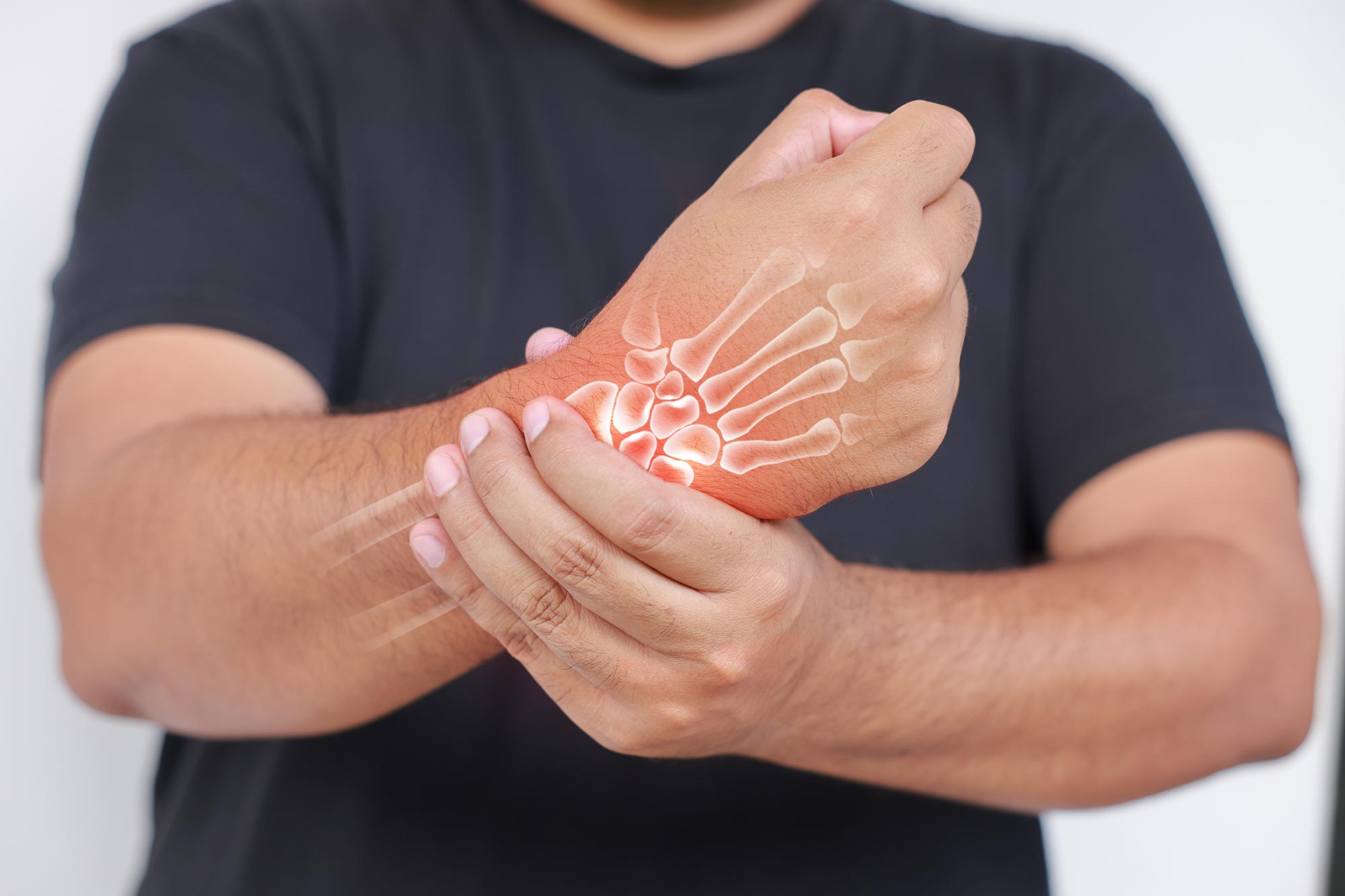
Arthritis may leave a memory in the joints, and mouse experiments suggest stress can reawaken it with help from the body’s heat-producing fat.
Rheumatoid arthritis (RA) can flare in previously affected joints even after the disease has gone into remission. Psychological stress has long been associated with worsening symptoms, but how it might help inflammation return to those joints has remained unclear.
A study in mice now points to a chain of signals linking the nervous system, heat-producing fat, and cells in the joints. Blocking parts of that chain reduced stress-triggered arthritis in the animals, suggesting a possible direction for future treatments.
The study was led by Assistant Professor Shigeru Tanaka and Professor Hiroshi Nakajima at Chiba University in Japan, in collaboration with two Japanese hospitals. The findings were published in Science Advances on October 16, 2026.
Brown fat helps reignite joint inflammation
The researchers used a mouse model in which arthritis entered a remission-like state before the animals were exposed to restraint stress. Joint inflammation returned after that exposure. To trace the signals responsible, the team analyzed tissues, profiled immune cells, and measured molecular changes.
Stress activated the sympathetic nervous system, which helps coordinate the body’s stress response, and brown adipose tissue (BAT), a type of fat that produces heat. This activation prompted the brown fat to release interleukin-6 (IL-6), an inflammatory signaling protein. Circulating IL-6 then acted on fibroblast-like synoviocytes, specialized cells in the synovial tissue surrounding the joints.
In response, these joint cells produced CXCL1, a chemokine that attracts immune cells. CXCL1 drew in neutrophils, a type of white blood cell involved in inflammation, contributing to the return of arthritis.
“Our findings suggest that the effects of psychological stress on arthritis extend beyond the immune cells traditionally associated with autoimmune disease. Instead, stress can activate processes within other tissues that contribute to the return of joint inflammation,” Tanaka explains.
Blocking the pathway reduced arthritis flares
The team tested whether interrupting this sequence could reduce the flares by blocking key receptors and monitoring inflammatory markers, joint swelling, and immune-cell accumulation. Treating the mice with a β3-adrenergic receptor antagonist, a substance that blocks that receptor, reduced IL-6 levels in blood plasma, joint swelling, CXCL1 expression, and the accumulation of neutrophils in the joints. Blocking CXCR2, the receptor that responds to CXCL1, also significantly reduced stress-triggered arthritis in the mouse model.
The findings suggest that previously affected joint tissue may retain a form of inflammatory memory that stress can reactivate independently of lymphocytes, a group of immune cells. This offers a possible biological explanation for how inflammation can return to joints after arthritis has subsided.
A genetic clue in patients with RA
To examine whether the pathway might also be relevant to people, the researchers compared perceived stress and disease activity in patients with RA. Patients carrying Trp64Arg, a specific variant of the ADRB3 gene that makes cells less responsive to stress-related hormones, showed a weaker relationship between perceived stress and arthritis activity than patients without the variant. The human analysis was observational, however, so it does not establish that stress directly caused changes in disease activity.
Understanding this pathway could eventually help researchers develop strategies to improve disease management and quality of life for people with RA. Its potential as a treatment target remains to be explored.
“Our findings suggest that targeting the stress-responsive pathways may offer a future therapeutic strategy that acts without broadly suppressing the immune system,” Nakajima notes.
Reference: “Fibroblast-like synoviocytes exacerbate autoimmune arthritis upon psychological stress in an IL-6–dependent manner” by Jun Tamura, Shigeru Tanaka, Keishi Etori, Daisuke Hashiba, Shuhei Kameda, Atsuko Tomikawa, Ryo Kikuchi, Tatsuro Takahashi, Aiko Saku, Hirotoshi Kawashima, Junichi Nakamura, Seiji Ohtori, Shin-Ichiro Kagami, Koichi Hirose and Hiroshi Nakajima, 16 October 2026, Science Advances.
DOI: 10.1126/sciadv.aec9257
This work was supported by JSPS KAKENHI grant 23K07890 (Shigeru Tanaka), the Japan Science and Technology Agency (Moonshot R&D) grant JPMJMS2025 (Hiroshi Nakajima), and the Agency for Medical Research and Development (AMED)-SCARDA 223fa627003h0002 (Japan Initiative for World-leading Vaccine Research and Development Center, Chiba University, Synergy Institute for Futuristic Mucosal Vaccine Research and Development (cSIMVa)) (Hiroshi Nakajima).
Never miss a breakthrough: Join the SciTechDaily newsletter.
Follow us on Google and Google News.