
Close Menu
    Facebook X (Twitter) Instagram
    SciTechDaily
    • Biology
    • Chemistry
    • Earth
    • Health
    • Physics
    • Science
    • Space
    • Technology
    Facebook X (Twitter) Pinterest YouTube RSS
    SciTechDaily
    Home»Health»A Natural Compound Found in Everyday Foods Shows Surprising Power Against Lung Cancer
    Health

    A Natural Compound Found in Everyday Foods Shows Surprising Power Against Lung Cancer

    By Friedrich–Alexander University Erlangen–NurnbergOctober 31, 2026No Comments3 Mins Read
    Facebook Twitter Pinterest Telegram LinkedIn WhatsApp Email Reddit
    Share
    Facebook Twitter LinkedIn Pinterest Telegram Email Reddit
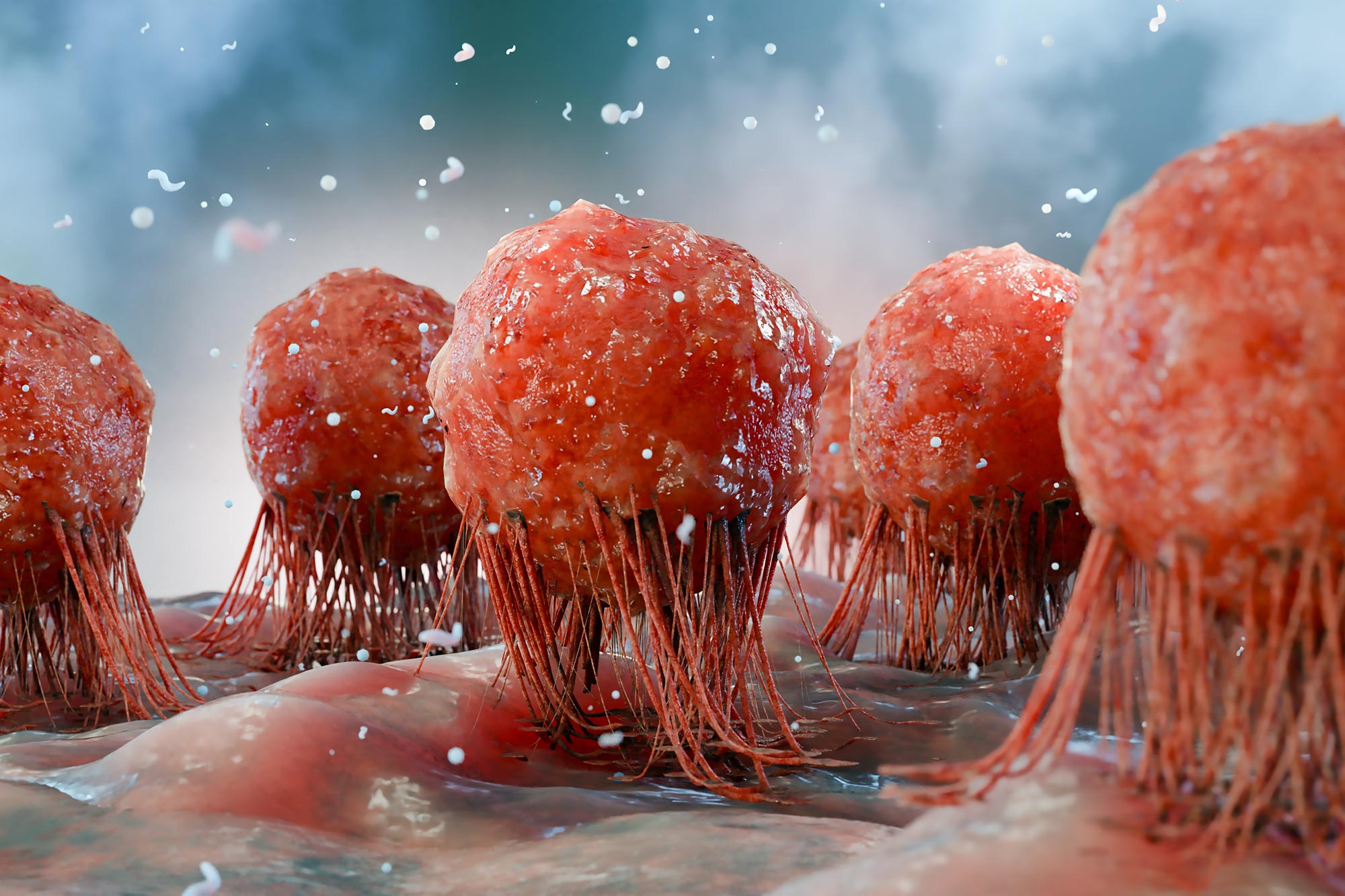
    Cancer Tumor Cells Immune Response
    Quercetin is a naturally occurring plant compound found in foods such as onions, citrus fruits, apples, and buckwheat. Known for its antioxidant and anti-inflammatory properties, this flavonoid has attracted scientific interest for its potential effects on cellular health, immune function, and diseases such as cancer. Credit: Shutterstock

    A natural compound found in common foods has shown promising effects against lung cancer cells.

    Quercetin, a compound found in citrus fruits, onions, and buckwheat, slowed lung cancer cell division and movement in laboratory experiments. At the highest dose tested, cell migration nearly stopped.

    The findings come from researchers at Universitätsklinikum Erlangen at Friedrich-Alexander Universität Erlangen-Nürnberg (FAU), who examined the compound’s effects in laboratory-grown lung cancer cells, mouse lung tissue sections, and living mice. Their study appeared in Cell Death Discovery.

    Lung cancer is the most common cancer worldwide and causes more cancer deaths than any other type. Available treatments do not work for everyone, prompting researchers to investigate additional approaches, including plant compounds such as quercetin, which is known for its anti-inflammatory properties.

    Quercetin Targets Several Cancer Cell Processes

    The team in the hospital’s Department of Molecular Pneumology found that quercetin affected several processes involved in cancer growth. “Many drugs against lung cancer target a single molecule,” explains Prof. Dr. Susetta Finotto. “Quercetin, by contrast, attacked at several points simultaneously in our experiments.”

    Treated tumor cells divided more slowly. In one of the two lung cancer cell types examined, quercetin also lowered oxidative stress. This occurs when reactive oxygen compounds overwhelm cells’ defenses, potentially causing damage that contributes to cancer development.

    The effect on movement was particularly striking because migration helps cancer cells spread and establish new tumors, known as metastases. “The higher the quercetin dose, the fewer cancer cells migrated. At the highest dose, the migration almost completely stopped,” reports Christine Carvalho, the study’s lead author.

    Quercetin also reduced levels of two proteins, EGFR and PD-L1, in the cancer cells studied. EGFR passes growth signals into cells, while PD-L1 can help tumors evade immune defenses.

    Mouse Studies Reveal Immune and Gut Changes

    In mouse lung tissue sections, quercetin increased levels of interferon-alpha-2, a signaling molecule that helps the immune system defend against tumors. The researchers also observed changes beyond the lungs, involving the community of microbes living in the gut.

    “In the mice that received quercetin, the gut microbiome also changed,” explains Prof. Susetta Finotto. “Bacteria that produce certain short-chain fatty acids were more common.” These fatty acids can enter the bloodstream and reach the lungs, where they can inhibit cancer cell growth.

    The mice given quercetin also showed signs of fewer tumor sites. However, only a few animals developed tumors, leaving too little evidence to confirm that finding. Further studies are needed, and whether the effects seen in cells and mice extend to people remains unknown. The experiments also do not establish whether eating quercetin-containing foods would reproduce these results.

    “Our results suggest that a quercetin-rich diet could support treatment for lung cancer,” says Prof. Susetta Finotto. “We also think it may have preventive effects. We want to investigate that next.”

    Reference: “Immunoregulatory role of quercetin in lung cancer” by Christine Carvalho, Elvedina Nendel, Susanne Mittler, Sonja Trump, Adriana Geiger, Jonas Willar, Mircea T. Chiriac, Stefan Wirtz, Carol I. Geppert and Susetta Finotto, 14 September 2026, Cell Death Discovery.
    DOI: 10.1038/s41420-026-03312-7

    Never miss a breakthrough: Join the SciTechDaily newsletter.
    Follow us on Google and Google News.

    Cancer Cell Biology Gut Immune System Lung Cancer
    Share. Facebook Twitter Pinterest LinkedIn Email Reddit

    Related Articles

    Scientists Discover Hidden Cells That Help Lung Cancer Evade the Immune System

    Scientists Find a Way To Keep Cancer-Fighting T Cells From Burning Out

    Can a Common Vitamin Fight the Most Aggressive Brain Cancer?

    How a “Memory-Killing” Protein Could Help Defeat Cancer

    Surprising Finding: Scientists Discover New, Unexpected Mechanism of Cancer Cell Spread

    Scientists Find a New Way To Reverse Immune Suppression in Cancer Tumors

    Lung Cancer Resistance: The Key Is Glucose Metabolism

    New Form of Radiation Cancer Therapy Has No Side-Effects

    New Antibody Drug Boosts the Immune System’s Capacity to Fight Cancer

    Leave A Reply Cancel Reply

    • Facebook
    • Twitter
    • Pinterest
    • YouTube

    Don't Miss a Discovery

    Subscribe for the Latest in Science & Tech!

    Trending News

    Aging’s “Zombie Cell” Problem May Have a Solution, Scientists Discover

    Scientists Discover a Surprising Dental Benefit of Cranberry Juice

    Scientists Discover That Eating Peanuts Every Day May Help Protect the Aging Brain

    Scientists Discover Mysterious 150,000-Year-Old Bone From an Extinct Human Relative in Chinese Cave

    Why Do We Have Necks? Scientists Uncover a 380-Million-Year-Old Evolutionary Twist

    “Strangest of Its Kind”: Scientists Uncover a Bizarre Bacterial Self-Destruct Switch

    Scientists Reverse 60 Years of Aging in Human Cells, Turning 80-Year-Old Cells Into 20-Year-Olds

    A Solar Storm Heading Toward Earth Suddenly Changed in Ways Scientists Didn’t Predict

    Follow SciTechDaily
    • Facebook
    • Twitter
    • YouTube
    • Pinterest
    • Newsletter
    • RSS
    SciTech News
    • Biology News
    • Chemistry News
    • Earth News
    • Health News
    • Physics News
    • Science News
    • Space News
    • Technology News
    Recent Posts
    • A Natural Compound Found in Everyday Foods Shows Surprising Power Against Lung Cancer
    • A Last Refuge: Australian Waters Could Save a Critically Endangered Ocean Predator
    • Do Spiders Dream? Scientists Discover a Mysterious Sleep State
    • Scientists Uncover Why Breast Cancer Becomes Deadlier As We Age
    • Scientists Discover a Surprising New Target for Treating Type 2 Diabetes
    Copyright © 1998 - 2026 SciTechDaily. All Rights Reserved.
    • Science News
    • About
    • Contact
    • Editorial Board
    • Privacy Policy
    • Terms of Use

    Type above and press Enter to search. Press Esc to cancel.