
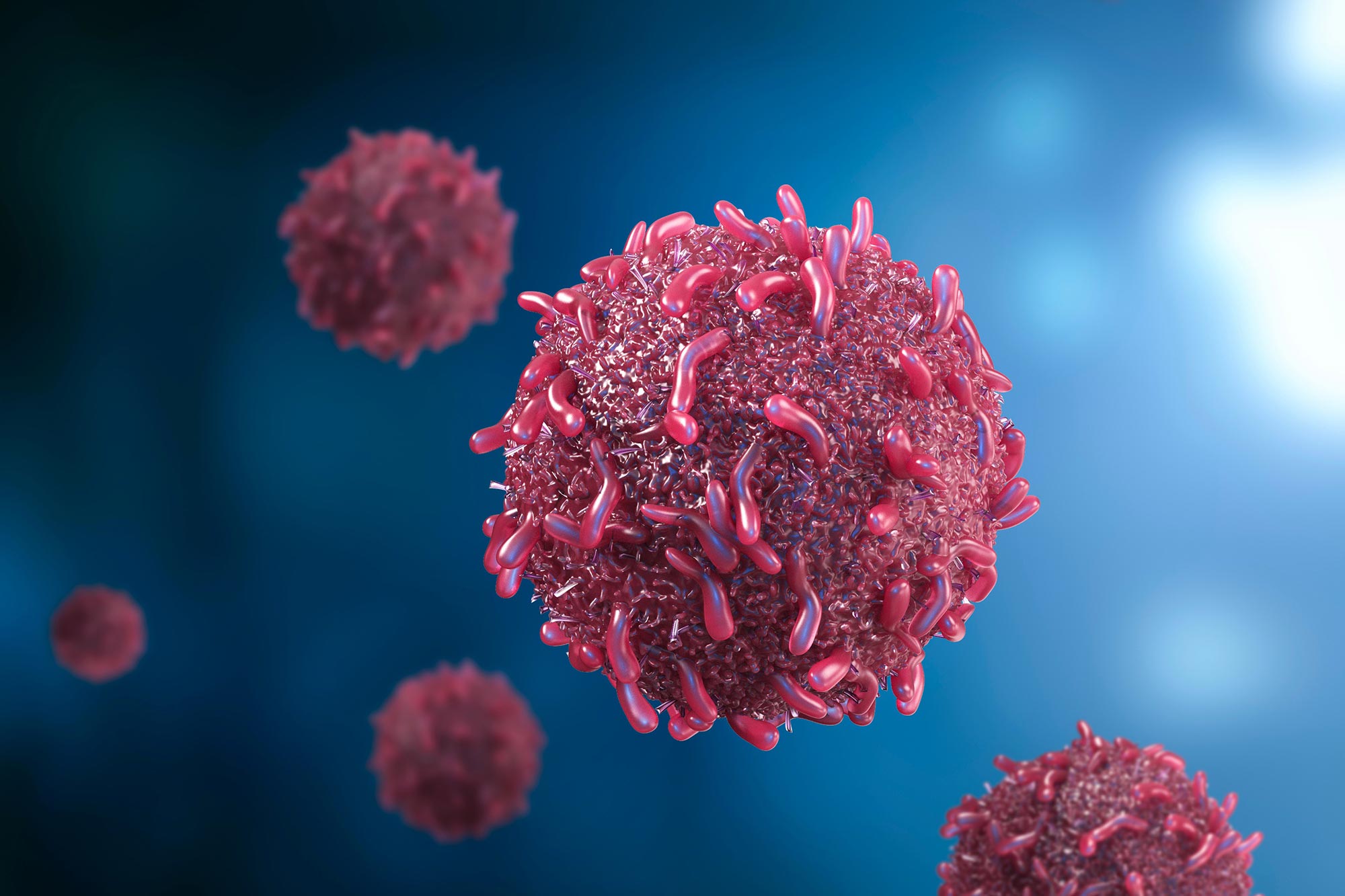
Scientists have found that a protein tied to Alzheimer’s disease may actually strengthen the immune system’s fight against cancer.
At first glance, Alzheimer’s disease and cancer seem unrelated. Alzheimer’s affects memory, cancer attacks the body, yet scientists at MUSC Hollings Cancer Center have identified a surprising connection between them.
In a study published in Cancer Research, the team reports that a protein associated with Alzheimer’s disease can also bolster the immune system. This finding points to ideas that could guide new therapies for cancer, aging and neurodegenerative conditions.
The Alzheimer’s-cancer paradox
Population research has long suggested something unusual: people diagnosed with Alzheimer’s disease appear less likely to develop cancer. That pattern drew the interest of Besim Ogretmen, Ph.D., associate director of Basic Science at Hollings, and prompted his group to investigate the underlying biology linking these seemingly different disorders.
The first step was to confirm the connection. Epidemiologist Kalyani Sonawane, Ph.D., and her team at Hollings achieved this by analyzing five years of nationally representative surveys, yielding striking results. Adults over 59 years with Alzheimer’s were 21 times less likely to develop cancer than those without the disease.
One question was answered but plenty remained. In particular, what is the biological mechanism driving the inverse relationship between Alzheimer’s and cancer?
A biological trade-off
Through a series of experiments, the researchers identified the culprit – the protein amyloid beta, known for damaging neurons in Alzheimer’s disease. Results showed that amyloid beta plays a dual role in the body through its actions on mitochondria – cells’ primary energy source – by damaging brain cells while strengthening the immune system.
In the brain, amyloid beta prevents the cellular cleanup process, known as mitophagy, by which cells remove old or damaged mitochondria. As a result, damaged mitochondria pile up, releasing toxins that harm neurons and drive memory loss and other Alzheimer’s symptoms.
However, in the immune system, amyloid beta has the opposite effect. A type of immune cell called T-cells benefits from amyloid beta blocking mitophagy, as more of their mitochondria remain intact and continue to produce energy. That energy makes the T-cells stronger and more active in fighting threats, such as cancer.
“What we found is that the same amyloid peptide that is harmful for neurons in Alzheimer’s is actually beneficial for T-cells in the immune system,” Ogretmen said. “It rejuvenates the T-cells, making them more protective against tumors.”
Rejuvenating the immune system
To test this finding, the researchers transplanted mitochondria from Alzheimer’s T-cells into aging T-cells that did not have Alzheimer’s. According to Ogretmen, the results were dramatic.
“Older T-cells began functioning like young, active T-cells again. That was an incredible finding because it suggests a whole new way to think about rejuvenating the immune system.”
The results also revealed that amyloid beta contributes to cancer in another way – by depleting fumarate, a small molecule made inside mitochondria during energy production. Fumarate acts like a brake, keeping mitophagy from running out of control. When fumarate levels drop, cells recycle too many of their healthy mitochondria, resulting in a loss of strength.
“When you deplete fumarate, you increase mitophagy much more,” Ogretmen explained. “Fumarate no longer binds proteins involved in that process, so the proteins become more active and induce more mitophagy. It’s like a reinforcing feedback loop.”
In T-cells, fumarate helps to regulate this balance. When the researchers administered fumarate to aging T-cells in mice and human tissue, they found lower levels of mitophagy. By preserving their mitochondria, fumarate gave the immune cells more energy to fight cancer. The discovery that fumarate rescues aging T-cells from excessive mitochondrial loss and enhances their anti-tumor activity suggests another way to protect immune health.
Broad implications for cancer and aging
Together, these findings shed light on why people with Alzheimer’s disease are less likely to develop cancer – and how that protection might be harnessed. Rather than attacking tumors directly, this research points to a new generation of therapies that recharge the immune system itself.
One approach is mitochondrial transplantation, giving older T-cells fresh, healthy “power plants” to revitalize their disease-fighting protection. Another strategy is to maintain or restore fumarate levels to preserve mitochondria and boost T-cells’ anti-tumor activity.
The potential applications for cancer are wide-ranging. Revitalizing T-cells by transplanting healthy mitochondria could strengthen existing treatments like CAR-T cell therapy. Ogretmen’s group has already filed a patent for this discovery, underscoring its potential as a new class of therapy. Fumarate-based drugs or supplements might further extend the life and energy of older immune cells by preserving their mitochondria. These could be used in conjunction with immunotherapy to maintain T-cells’ strength during treatment.
Beyond cancer, these approaches could help to slow immune aging more generally. As mitochondria naturally wear down over time, protecting them could help older adults to fight infections and stay healthier. Further delving into the double-edged impact of amyloid beta could also inform future treatments for neurodegenerative diseases, like Alzheimer’s, by finding ways to isolate its protective immune effects without harming the brain.
For Ogretmen, the novel findings highlight the power of teamwork, noting the collaboration across Hollings’ research programs in cancer biology, immunology and prevention.
“This was a true team effort,” he emphasized. “We’re proud of the different areas of expertise that came together to make these discoveries. The research exemplifies how discoveries in one area can open unexpected doors in another.”
Reference: “Alzheimer’s Disease–Associated Amyloid-β Precursor Protein Prevents Aging Stress–Induced Mitophagy and Fumarate Depletion to Improve Antitumor Immunity” by Mohamed Faisal Kassir, Han Gyul Lee, Natalia V. Oleinik, Wyatt Wofford, Chase Walton, Firdevs Cansu Atilgan, Alhaji H. Janneh, Paramita Chakraborty, Kubra Calisir, Elif Percin, Silvia G. Vaena, Kalyani Sonawane, Ashish Deshmukh, Narayan R. Bhat, Kumar Sambamurti, Onder Albayram, Ozgur Sahin, Shikhar Mehrotra and Besim Ogretmen, 1 October 2025, Cancer Research.
DOI: 10.1158/0008-5472.CAN-24-4740
Funding: National Cancer Institute, National Institute of Dental and Craniofacial Research
Never miss a breakthrough: Join the SciTechDaily newsletter.
Follow us on Google and Google News.
1 Comment
Reference: How a “Memory-Killing” Protein COULD Help Defeat Cancer WILL NOT WORK AND FAIL!
It is for this reason why science has never and WILL NEVER find a solution, cure and/or drug to combat a disease or other illnesses ‘triggered’ by natural phenomena while 1 in 4 SLEEP!
UNTIL NOW, the natural ‘trigger’ has been FOUND, identified by a NEW-FREE-AI-APP!
Why?
Until the ‘trigger-mechanism’ is addressed that stimulates the ‘cell/gene/deoxyribonucleic (DNA)’ to mutate and manifest into a cancerous growth or tumour while we SLEEP no MEMORY-KILLING-PROTEIN will replicate a natural phenomenon if the patient is sent back home to the cause.
It is for this reason why after ‘alleged’ successful Cancer Surgery, the patient is sent home to RELAPSE, GET METASTASIS OR DEATH!
WHY?
Science DOES NOT use all INVISIBLE sciences within any problem-solving research humanity ‘evolved-with’ during our evolution over millennia with Planet Earth, albeit used and verified by NASA to work successfully 100%.
Are you interested in knowing more of ‘proven’ independent research?