
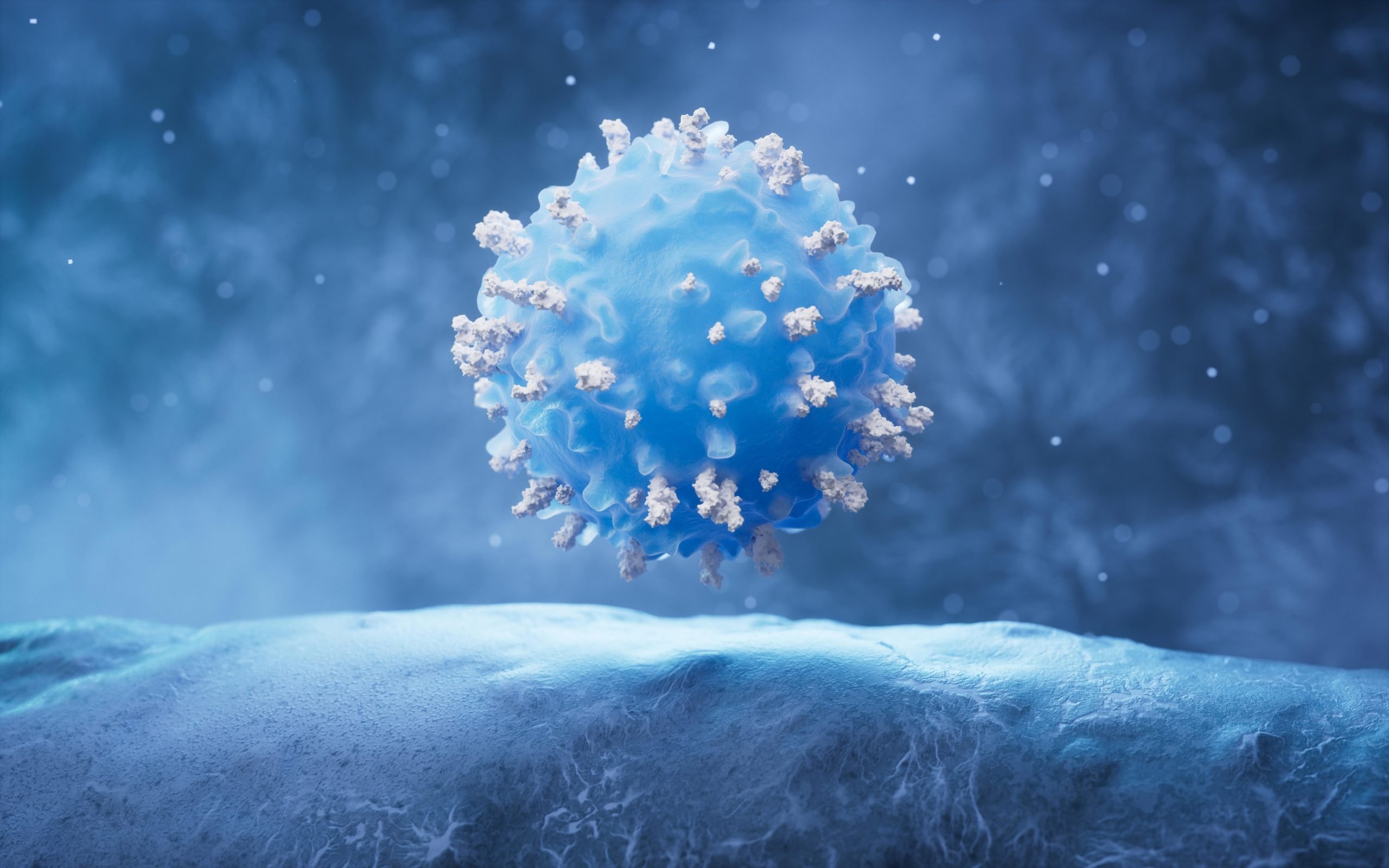
New research challenges a longstanding explanation for why the immune system attacks healthy tissues in lupus.
Scientists investigating lupus have discovered that errors in immune cells may cause the body to attack some of its own defenses. In a study of 34 patients with systemic lupus erythematosus (SLE), 33 had neutrophils containing widespread abnormalities in RNA processing. These changes were absent from blood samples taken from healthy volunteers.
Neutrophils normally help defend the body against infections, but the altered cells produced unusual molecules that other immune cells appeared to recognize as threats. Researchers at the La Jolla Institute for Immunology (LJI) and the University of Washington (UW) found evidence that both T cells and antibody-producing B cells could participate in this response, potentially contributing to the inflammation and tissue damage associated with lupus.
How RNA Errors May Trigger an Immune Attack
The abnormalities involve RNA “splicing,” a process that allows cells to remove unnecessary sections of genetic instructions before using them to produce proteins. In the lupus patients, errors caused sections of RNA to be joined incorrectly. When cells attempted to “read” these altered instructions, they generated unusual peptides, short chains of amino acids that can be recognized by the immune system.
T cells routinely inspect peptides displayed on cell surfaces to identify infections and other threats. When they encounter unfamiliar or “foreign” peptides, especially in the presence of inflammation, they may respond as though they have detected a pathogen. These molecular targets are known as “antigens.” Peptides produced through abnormal RNA processing can become “neoantigens,” potentially making the body’s own cells targets of an immune response.
“When a cell type whose function is pro-inflammatory, such as neutrophils, also expresses potentially immunogenic mutations, the conditions for immune attack are met: T cells sense a foreign antigen plus inflammation or ‘danger’ signals,” explains LJI Professor Stephen Schoenberger, Ph.D.

Researchers Find Widespread Abnormalities in Lupus Patients
The findings, published in Nature, emerged from a collaboration between Schoenberger and UW School of Medicine Professor Tomas Mustelin, M.D., Ph.D. Mustelin’s laboratory had identified unusually frequent RNA splicing errors in neutrophils from lupus patients. Schoenberger, whose research focuses on immune recognition of mutation-derived antigens, investigated whether those errors could produce molecules capable of provoking an immune response.
Schoenberger has previously studied neoantigens in cancer, where mutations can create abnormal molecules that help immune cells recognize and attack tumors. Applying similar methods to lupus, the researchers found that altered neutrophils expressed numerous neoantigens that could alert the immune system. They also identified evidence that B cells, which produce antibodies, were prepared to respond to the affected cells.
“This may get to the very crux of the disease pathogenesis,” says Schoenberger, referring to the biological processes responsible for lupus.
A Different Explanation for Autoimmune Disease
Lupus is a chronic autoimmune disease in which immune activity can damage joints, skin, kidneys, and other organs. Scientists have long investigated why T cells and B cells begin attacking the body’s own tissues. One explanation involves a breakdown of immune “tolerance,” the mechanisms that normally prevent immune cells from responding to healthy tissues.
The new findings support an alternative possibility known as the “neoantigen hypothesis” of autoimmunity. Rather than mistakenly recognizing normal cellular components as dangerous, immune cells may encounter genuinely unfamiliar molecules generated within the body. Their responses could therefore follow the same biological rules used to recognize foreign threats.
“Rather than a failure of immune tolerance, autoimmunity can be caused by the immune system doing exactly what it’s supposed to do, which is to mount an attack on non-self, on things that are foreign,” says Schoenberger.
Are the Abnormalities a Cause or Consequence of Lupus?
Although the researchers identified a potential mechanism for immune “self-attack,” they have not established whether abnormal RNA splicing helps initiate lupus or develops in response to existing inflammation. Neutrophils are already known to contribute to the complex immune processes that sustain the disease.
“Neutrophils clearly participate in a self-amplifying inflammatory circuit in SLE, involving autoantibodies, immune complexes, nucleic acids, type I interferons, and neutrophil extracellular traps (NETs),” says Schoenberger. “So now the big question is whether neoantigens are a cause or consequence of this process? Neutrophils might be responding to inflammation that’s already causing tissue damage.”
Determining when these RNA abnormalities develop, and whether the resulting neoantigens directly drive harmful immune responses, will be necessary to establish their role in lupus. The findings give researchers a specific molecular process to investigate as they work to understand how autoimmune inflammation begins and persists.
Reference: “T and B cells recognize splicing-derived neutrophil neoantigens in lupus” by Rayan Najjar, Xiaoxing Wang, Farheen Shaikh, Ning Wang, Ethan Le, Jie An, Mohammad Pourshamsi, Cecilia Mustelin, Fatemeh Moadab, Spencer Mirabile-Brightman, Leslie Montero, Karla S. Zavala, Vincent Gureghian, Gabriela Cervantes, Sadie J. Van den Bogaerde, Samir Adhikari, Mikhail V. Pogorelyy, Paul G. Thomas, Stephen P. Schoenberger and Tomas Mustelin, 28 October 2026, Nature.
DOI: 10.1038/s41586-026-11219-7
This study was supported by the National Institutes of Health (grants AR075134, AR077266, AR074939, AR081654, and AR007108) and the Briger Foundation for Oncology Research.
Never miss a breakthrough: Join the SciTechDaily newsletter.
Follow us on Google and Google News.