
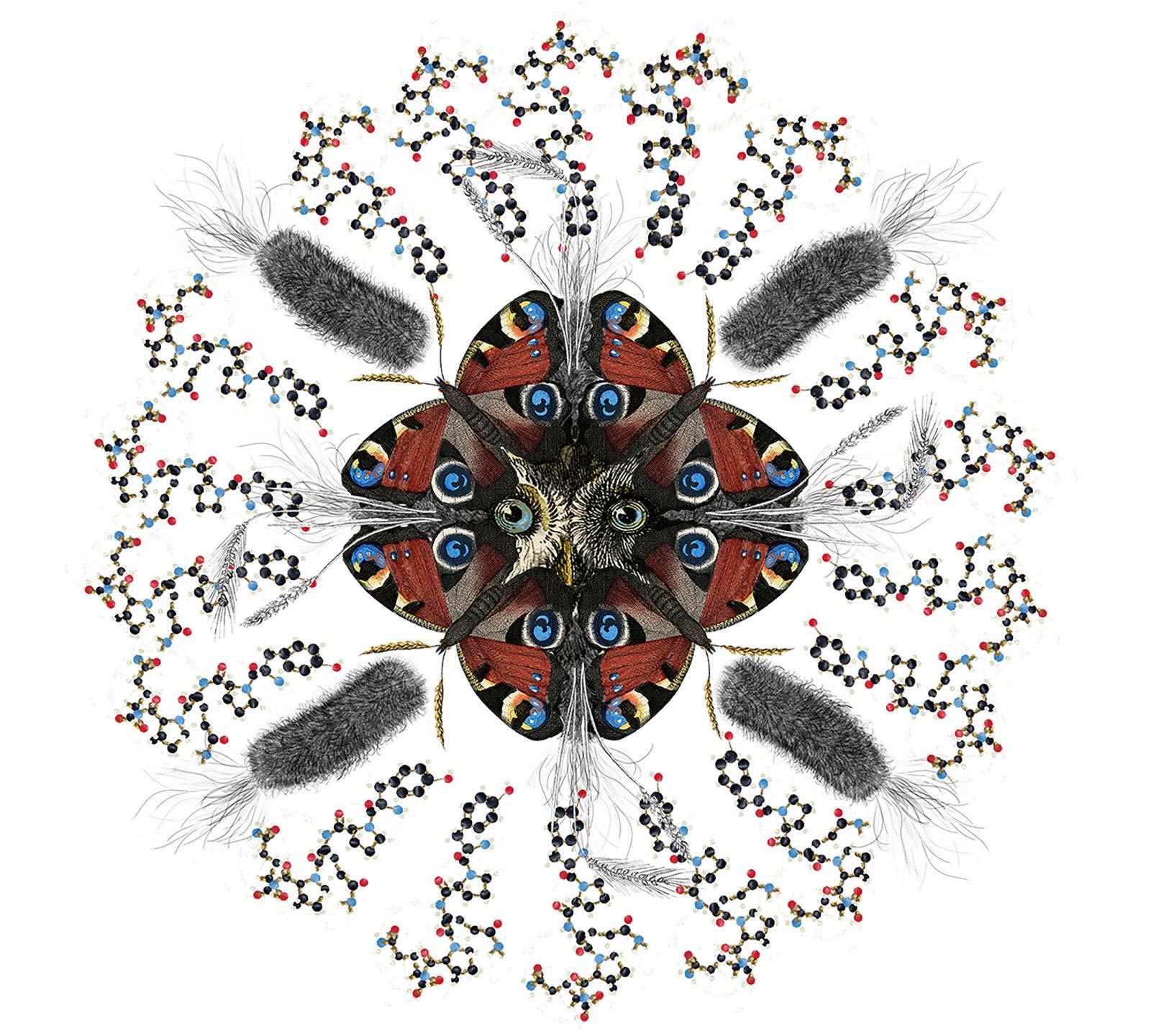
Bacterial exposure has been identified as a potential environmental risk factor in developing celiac disease, a hereditary autoimmune-like condition that affects about one in 70 Australians.
It is estimated that half of all Australians are born with one of two genes that cause celiac disease, and approximately one in 40 are likely to develop the condition.
People with celiac disease must follow a lifelong gluten-free diet, as even small amounts of gluten can cause health problems.
While environmental factors are known to trigger Celiac Disease in those with the genetic predisposition, exactly how that works has remained unclear.
Scientists from the Monash Biomedicine Discovery Institute (BDI) and ARC Center of Excellence in Advanced Molecular Imaging, have now provided a molecular foundation for microbial exposure as a potential environmental factor in the development of celiac disease.
The results of the study, done in collaboration with researchers at Leiden University Medical Center and the Walter and Eliza Hall Institute of Medical Research, have been published in the journal Nature Structural and Molecular Biology.
Co-Lead researcher Dr. Hugh Reid, from Monash University, said the team showed, at the molecular level, how receptors isolated from immune T cells from celiac disease patients can recognize protein fragments from certain bacteria that mimic those fragments from gluten.
Exposure to such bacterial proteins may be involved in the generation of aberrant recognition of gluten by these same T cells when susceptible individuals eat cereals containing gluten, he said.
“In celiac disease, you get aberrant reactivity to gluten and we have provided a proof-of-principle that there’s a link between gluten proteins and proteins that are found in some bacteria,” he said.
“That is, it’s possible that the immune system reacts to the bacterial proteins in a normal immune response and in so doing develops a reaction to gluten proteins because, to the immune system, they look indistinguishable — like a mimic.”
Dr. Reid said the findings could eventually lead to diagnostic or therapeutic approaches to celiac disease.
Reference: “T cell receptor cross-reactivity between gliadin and bacterial peptides in celiac disease” by Jan Petersen, Laura Ciacchi, Mai T. Tran, Khai Lee Loh, Yvonne Kooy-Winkelaar, Nathan P. Croft, Melinda Y. Hardy, Zhenjun Chen, James McCluskey, Robert P. Anderson, Anthony W. Purcell, Jason A. Tye-Din, Frits Koning, Hugh H. Reid and Jamie Rossjohn, 23 December 2019, Nature Structural & Molecular Biology.
DOI: 10.1038/s41594-019-0353-4
About celiac disease
Celiac disease is caused by an aberrant reaction of the immune system to gluten, a protein that occurs naturally in grains such as wheat, rye, barley, and oats, and therefore is typically found in bread, pastries, and cakes. Immune system cells, known as T cells, regard gluten as a foreign substance, and initiate action against it.
In patients with CD, activation of these T cells leads to an inflammatory response in the small intestine causing a wide range of symptoms including diarrhea, bloating, and malabsorption of nutrients, to name a few.
People with celiac disease must follow a lifelong gluten-free diet, as even small amounts of gluten can cause health problems. If left untreated, the disease can cause serious issues including malnutrition, osteoporosis, depression, and infertility, and there is a small increased risk of certain forms of cancer, such as lymphoma of the small bowel.
Never miss a breakthrough: Join the SciTechDaily newsletter.
Follow us on Google and Google News.
22 Comments
I was thrilled to read your article about gluten and bacteria! The rest of the world knows not how loathsome this disease is. I think you should shout this from the rooftops! Please God, may this lead to a remedy for all of us.
I believe oats do not contain gluten but are often cross contaminated during production (e.g. by being grown close to wheat fields).
As such, it shouldn’t be listed as one of the grains containing gluten at the end of the article.
Yes, I am pretty sure Simon is correct. Oats do not contain gluten except through cross contamination from gluten containing grains.
For the oats comments–the protein in oats is similar to gluten and many people with celiac disease react to them.
Oats contain a protein very similar to gluten, 10% of coeliacs also react to it. I’m one of those unfortunately. So, most newly diagnosed coeliacs are advised not to eat oats for a given time span to allow the body to heal. Then to try reintroducing them. Some people will react, some won’t. So technically while there’s no gluten in oats unless by cross contamination, people with CD are usually wary of them.
Just found out that im gluten free having a hard time adjusting I have been reading about it and they say it takes time Its a change for me
Just over two months diagnosed as Coeliac and finding adhering strictly to the GF diet tough. It’s limiting, expensive and anti-social but really has made an improvement to my symptoms.This is fascinating information…could be huge advances in help for Coeliacs ahead.
I have Celiac and can eat oats without a problem
Marina…. it can be daunting; however, it dosen’t need to be expensive or isolating. Think of it as what you can eat. Fast food or out to eat, equals burger with no bun or giant salad with meat and no croutons.
Eating out at restaurants that are not dedicated gluten-free may be unsafe for people with celiac disease, though, as food can easily be cross-contaminated. Unfortunately it’s not as simple as it seems it would be.
I had terrible reaction to gluten, like stomach flue or badly spoiled food. Based on some reading I cut all grain and corn carbs, an all symptoms disappeared in 2 days. At the time it seemed that my problem was bacterial origin, and taking ciprofloxacin for some weeks I could eat all grains without adverse symptoms. Then for decades I was OK on a wheat free diet. But lately taking probiotics I can tolerate high quality wheat that is not ‘enriched’ with emulsifiers and other artificial additives. How can this be explained? I was never diagnosed as a true celiac.
I have CD, diagnosed several years ago. Right before my diagnosis, I ate a raw oyster which caused a serious bout of food poisoning. Could this be the cause of my Celiac Disease?
It is daunting and expensive, but so much better today than 30, 40or 50 years ago. Add dairy and other allergies and it has been nightmarish and a lonely place to live.
Interesting to read this. I am a coeliac and wish there was a tablet on the market to combat all the side effects of this condition.
CD I call it the anti social disease. Gluten is everywhere, some times I am fine with a salad but other times specially in a big gathering or party it’s difficult. I go through a lot of pain and discomfort to cheat , I rather eat the salad or nothing at all if I suspect there could be gluten. I still take enzymes and probiotics and other stuff when I got out. I do hope one day there is a cure or a magical pill for all of us.
The article doesn’t tell you much. To have a suspicion. But if they don’t know the cause they don’t know anything about it. I’m gluten free and I’m going to tell you something I changed my diet by eliminating all packaged food preservative Foods Fast Foods meat Dairy and gluten only eating anything that grows in or out of the ground
Changing your diet will cure the disease. It’s called the body cleansing everything you eat has gluten in it stick to fresh fruits vegetables beans and rice within two months you will be completely cleansed and no longer have the disease. I wish these medical people scientist that we keep feeding money to do research actually do their job. The funny thing is all these Health complications have to happen this is how they make money off of their medication and surgeries and research labs by creating the foods with substance that they already know causes problems and already have cures for. So here’s the Cure eliminate all that b******* start eating healthy and cleanse that body. I promise you your disease will go away just make sure you get all your vitamins and minerals each day Troy-Bilt the meals you eat or snacking you do throughout the day and you will lose all your fat leaving you with your proper body weight an energy level through the roof any of those gluten rashes you get will dissipate as every day goes by eventually eliminating it and not having the problem anymore. I’m going out of my way to share my experience I’m what I did testing on my own body. If I figured this out I’m sure the millions of dollars that the scientists have to figure out these cures would have absolutely no problem fixing the issues hopefully this was great advice to all of you reading this article it’s nice to hear that someone’s working on it and I applaud them for that this article didn’t tell me s*** pretty much saying that they’re on to something.
When your body breaks out in rashes due to gluten called your body has too much of it your kidney and your livers have to filter the s*** and if it has too much and it starts pushing it out towards your fat and through your skin cells showing what you see as a red rash or spotting this is your body trying to get rid of it as it’s not filter the mass amount of gluten people are consuming on a daily basis nobody read labels everybody just grabs grabs grabs because of what they look like or how it tastes eats a s#!tload and then suddenly problems start happening down the road. Start looking at your labels people or wait let me correct that stop buying anything with a label!
Diagnosed 6 years ago. Now in my 40’s very happy to find out, heart broken about my lifestyle change. A huge foodie and baker I’ve learned to evolve and now enjoy plenty of great and somewhat inexpensive foods!
Relentless mouth ulcers with colour changes to my tongue for years and getting worse as time went on, no one had any answers, after lots of reading I have gone gluten free, amazing results, mouth back to normal after all these years.
Does anyone know the specific bacterial strains that would mimic the response to gluten proteins?
not all people have the same genetics as an example some populations can’t tolerate lactose as a genetic predisposition or eat raw fava beans. so for the person that felt they cleaned their body and cured themselves there are probably a meriad of triggers that can set people up to be gluten intolerant such as viral or bacterial insults to the G I tract, toxins, malnutrition, antibiotics to correct a nasty bacterial infection, parasites like hookworm or guardian which can cause a perturbation in the cells lining the GI tract resulting in ‘ leaky’ gut or sensitization and concurrent allergies (at opt) it’s not as simple as said person would like to think. some have Neanderthal genes some have Denisovan genes which may contribute to varied immune responses. and aging can. impact us all.