
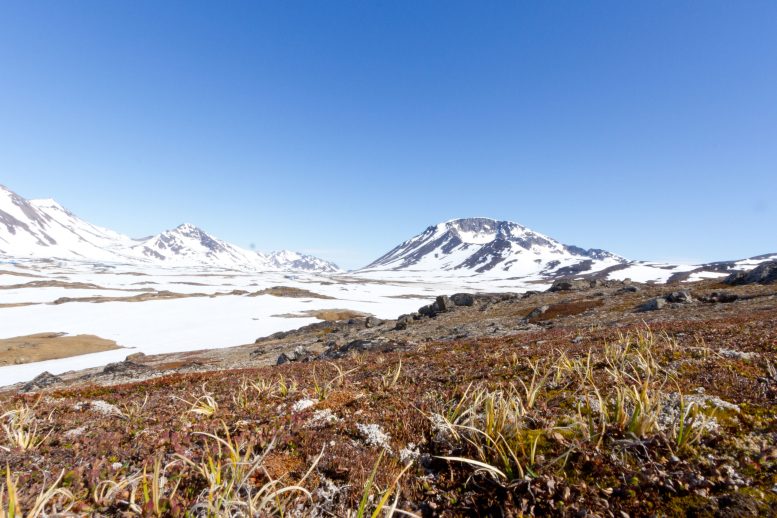
Sediment beneath a secret Cold War base reveals a time when warmer summers helped push Greenland’s ice more than 60 miles back from its current edge.
About 416,000 years ago, the ground beneath Greenland’s Camp Century was exposed to the sky. A new University at Buffalo-led study estimates that summers there were 4.7 degrees Celsius (8.5 degrees Fahrenheit) warmer than today, offering a rare glimpse of the conditions that accompanied a major retreat of the ice sheet.
“It’s striking that a period of moderately warmer temperatures coincided with such a substantial retreat of the ice sheet,” says lead author John Michael Aguilar, a postdoctoral fellow at the UB RENEW Institute.
Published in Climate of the Past, the research also points to a crucial factor in Greenland’s future: how long higher temperatures persist.
A Climate Record Beneath A Cold War Base
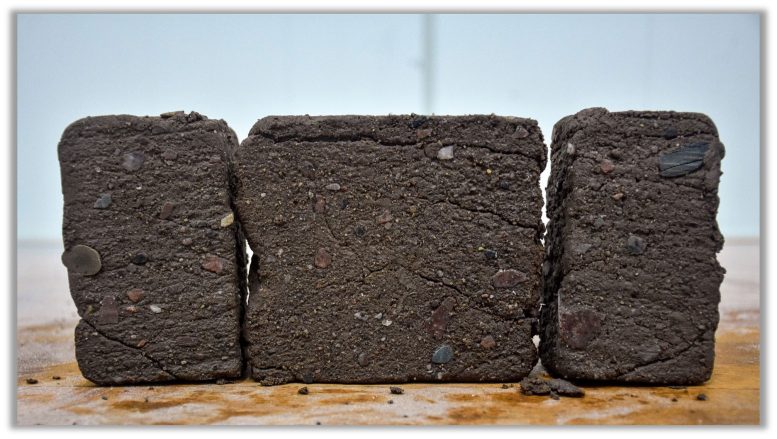
Camp Century housed the U.S. Army’s failed Project Iceworm, a secret plan to hide nuclear missiles beneath Greenland’s ice. During drilling in the 1960s, researchers recovered sediment from nearly a mile (1.6 kilometers) below the surface. Those samples have since become an unlikely archive of Greenland’s climate.
Earlier work showed that the sediment last saw sunlight approximately 416,000 years ago. Exposing the ground at Camp Century would have required the ice sheet’s edge in that region to retreat more than 60 miles (97 kilometers) from its present position.
The new study goes beyond establishing that the ice disappeared. By examining fatty molecules produced by bacteria and preserved in the sediment, the team reconstructed the summer temperatures that accompanied that retreat.
“The types and proportions of these molecules change depending on the temperature,” Aguilar says. “By comparing them with similar molecules found in modern Arctic lakes, we were able to estimate how warm it was at Camp Century.”
Why the Length of Warming Matters
The researchers believe their findings provide the first quantitative estimate of summer temperatures on land anywhere in Greenland during this ancient warm period. Such records are exceptionally difficult to recover because later advances of the ice sheet eroded most sediment from that time.
Surprisingly, Camp Century remained covered by ice even when Greenland experienced similarly warm summers roughly 5,000 to 10,000 years ago, after the last Ice Age.
One possible explanation is that the earlier warm period lasted much longer, potentially tens of thousands of years. Sustained warmth would have given the ice sheet more time to melt, suggesting that peak temperatures alone cannot explain how far it retreats.
“This work gives us a better understanding of how the ice sheet responds to sustained warming and what may be possible in the future,” says corresponding author Elizabeth Thomas, PhD, an associate professor in the Department of Earth Sciences in UB’s College of Arts and Sciences.
What Ancient Melting Means for Greenland’s Future
The findings arrive as scientists anticipate substantial Arctic warming. Depending on emissions, average annual Arctic temperatures could rise by 3.3 to 10 degrees Celsius (5.9 to 18 degrees Fahrenheit) by the end of this century, according to the Intergovernmental Panel on Climate Change (IPCC).
With that warming ahead, Thomas cautions against assuming that Greenland’s ice will respond as slowly as it did during the ancient warm period.
“Today’s human-caused warming is more intense than the warm period 400,000 years ago,” Thomas says. “And climate projections suggest that this warmth could persist for hundreds or thousands of years. Both the magnitude and duration of warming are important to understanding how the ice sheet will respond.”
Forgotten Sediment, Decades of Discovery
The samples nearly slipped out of scientific view. Chester Langway, who led the Camp Century ice core drilling, brought them to UB in 1975. They remained in its Central Ice Core Storage Facility and Information Exchange until his retirement in the mid-1990s, then spent more than two decades largely forgotten at the University of Copenhagen in Denmark.
A chance freezer cleanout in 2018 brought the sediment back to researchers’ attention. Thomas has studied it with University of Vermont collaborators ever since, and its remarkable history became the subject of an Emmy Award-winning documentary.
For Thomas, the latest study brings years of work with Aguilar together. Measuring the molecules was familiar territory; translating them into a reliable comparison with modern temperatures was much harder.
“The type of molecular analysis we did in this study is something we do all the time in my lab, but interpreting the results was unusually challenging. We had to account for how the land’s elevation changed as the ice sheet grew and melted, which affects how temperatures can be compared across time,” Thomas says. “What may look like a routine analysis actually took years to figure out. It’s been quite a journey, not unlike the journey these sediment samples took to get here.”
Reference: “Holocene-like summer climate during Marine Isotope Stage 11 in northwestern Greenland” by John Michael N. Aguilar, Elizabeth K. Thomas, Diana S. Aga, Paul R. Bierman, Jason P. Briner, Isla S. Castañeda and Andrew J. Christ, 28 September 2026, Climate of the Past.
DOI: 10.5194/cp-22-1757-2026
This study was funded by the U.S. National Science Foundation.
Never miss a breakthrough: Join the SciTechDaily newsletter.
Follow us on Google and Google News.