
Close Menu
    Facebook X (Twitter) Instagram
    SciTechDaily
    • Biology
    • Chemistry
    • Earth
    • Health
    • Physics
    • Science
    • Space
    • Technology
    Facebook X (Twitter) Pinterest YouTube RSS
    SciTechDaily
    Home»Earth»Greenland Ice Sheet May Slow Its Melting Quicker Than Expected
    Earth

    Greenland Ice Sheet May Slow Its Melting Quicker Than Expected

    By SciTechDailyAugust 8, 20123 Comments2 Mins Read
    Facebook Twitter Pinterest Telegram LinkedIn WhatsApp Email Reddit
    Share
    Facebook Twitter LinkedIn Pinterest Telegram Email Reddit
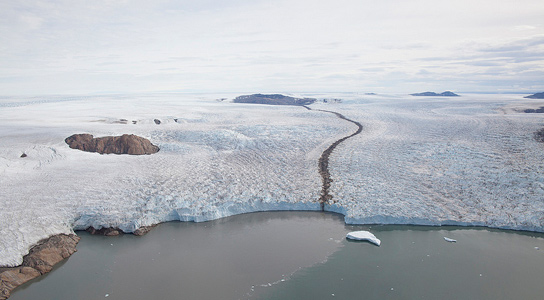
    greenland-ice-sheet-melting
    Upernavik Icestream, Northwest Greenland Credit: Source: Niels J. Korsgaard, Natural History Museum of Denmark

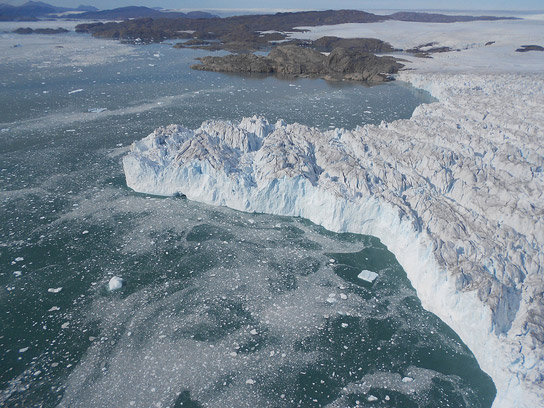
    While satellites have confirmed that Greenland has lost a significant part of its ice sheet, a recent study in Science indicates that the ice sheet may be able to slow its melting much quicker than previously thought.

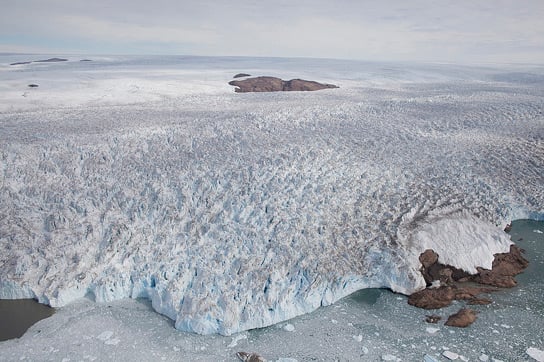
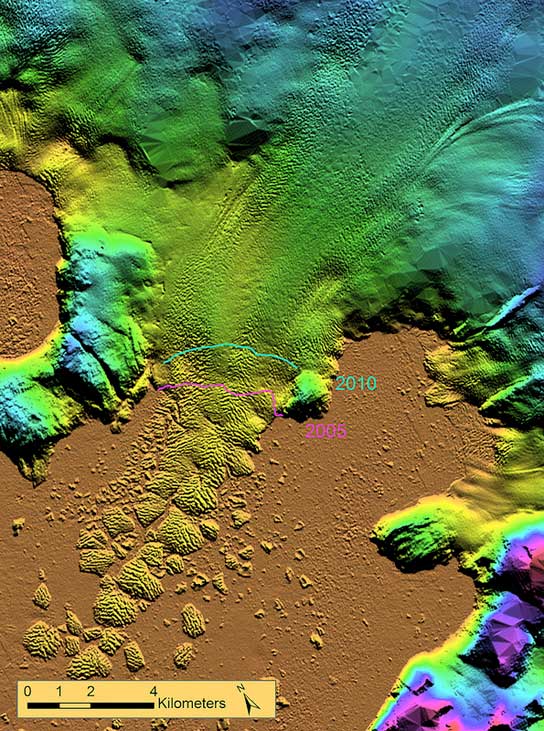
    Kurt Kjær of the University of Copenhagen and his Danish colleagues have used aerial photos of the ice sheet, dating back to the early ’80s, to compare episodes of rapid melting in the last few decades.
    greenland-ice-sheet-ocean

    The Greenland Ice Sheet covers 80% of Greenland, and it’s the second largest on Earth. It dumps 240 billion tons of fresh water into the oceans every year, which accounts for a fifth of the annual sea level rise. If it melts completely, low-lying places like Palau and New York City could be submerged.

    The researchers discovered that the ice sheet is a dynamic environment, able to shift quickly from melting to holding firm. The record melt we’ve seen this year could be over in about eight years. This could imply that using the current speed of melting as part of an assumption when trying to predict the sea level rise in the coming century is flawed.
    greenland-ice-sheet-retreat

    It remains to be seen if current global temperatures favor a quick holding pattern of the Greenland Ice Sheet. It’s also likely that the melting will continue over the coming years, not halt. With enough information, the dynamic systems involved could be simulated and it would be possible to get a clearer picture of how much the sea level will rise in the next few decades. Naturally, basing the predictions on data for the last 30 years is also flawed. Climate change needs to be examined on a longer scale, possible over hundreds or thousands of years to make accurate predictions.
    false-color-satellite-imagery-greenland-ice-sheet

    Reference: “Aerial Photographs Reveal Late–20th-Century Dynamic Ice Loss in Northwestern Greenland” by Kurt H. Kjær, Shfaqat A. Khan, Niels J. Korsgaard, John Wahr, Jonathan L. Bamber, Ruud Hurkmans, Michiel van den Broeke, Lars H. Timm, Kristian K. Kjeldsen, Anders A. Bjørk, Nicolaj K. Larsen, Lars Tyge Jørgensen, Anders Færch-Jensen and Eske Willerslev, 3 August 2012, Science.
    DOI: 10.1126/science.1220614

    Never miss a breakthrough: Join the SciTechDaily newsletter.
    Follow us on Google and Google News.

    Climate Change Climatology Global Warming Greenland Ice Ice Melt
    Share. Facebook Twitter Pinterest LinkedIn Email Reddit

    Related Articles

    Why Greenland Is Melting Faster Than the Rest of the World: New Insights Into Arctic Amplification

    Greenland Losing Ice 7 Times Faster Than in 1990s – Lost 3.8 Trillion Metric Tons of Ice Since 1992

    New Research Shows Greenland Ice Sheet Movement is Decreasing Despite Warming

    Study Shows Greenland’s Undercut Glaciers Melting Faster than Thought

    A Comprehensive Review on the Ice Melt in Antarctica & Greenland

    Unusually High Frequency of Heatwaves Indicates Human Influence on Global Warming

    Satellites Confirm Extensive Ice Sheet Melt in Greenland

    1930s Photos Reveal History of Greenland Glaciers

    Third Pole Glacial Measuring Stations Will Give Monitor Glacier Health in Tibet

    3 Comments

    1. Ken Hranicky on August 9, 2012 9:20 am

      “Climate change needs to be examined on a longer scale, possible over hundreds or thousands of years to make accurate predictions.”

      I see what you did there.

      Yes, we should sit on our hands and wait to see what happens.

      I am no scientist, but I do believe ice melts when the temperature gets high enough. We are coating the planet with heat trapping gases. Temperatures are rising. BUT we don’t dare make predictions because they won’t be ‘accurate’. Good luck with that.

      Reply
    2. peter on August 30, 2013 8:10 am

      Yeah, I got the distinct impression that there was a lot of politisizing in this article, giving both sides sound bites. But “flawed” is overstated. We use evidence period. There is NO evidence that temperatures WILL reverse! Simply because colder equals ice does not equate to stablizing the ice sheet within ten years.

      Reply
    3. Storm Petrol on August 15, 2019 4:02 pm

      Writing “Sci Tech Daily” off my list of approved sources…

      Reply
    Leave A Reply Cancel Reply

    • Facebook
    • Twitter
    • Pinterest
    • YouTube

    Don't Miss a Discovery

    Subscribe for the Latest in Science & Tech!

    Trending News

    The Universe Is Expanding Too Fast and Scientists Can’t Explain Why

    “Like Liquid Metal”: Scientists Create Strange Shape-Shifting Material

    Early Warning Signals of Esophageal Cancer May Be Hiding in Plain Sight

    Common Blood Pressure Drug Shows Surprising Power Against Deadly Antibiotic-Resistant Superbug

    Scientists Uncover Dangerous Connection Between Serotonin and Heart Valve Disease

    Scientists Discover a “Protector” Protein That Could Help Reverse Hair Loss

    Bone-Strengthening Discovery Could Reverse Osteoporosis

    Scientists Uncover Hidden Trigger Behind Stem Cell Aging

    Follow SciTechDaily
    • Facebook
    • Twitter
    • YouTube
    • Pinterest
    • Newsletter
    • RSS
    SciTech News
    • Biology News
    • Chemistry News
    • Earth News
    • Health News
    • Physics News
    • Science News
    • Space News
    • Technology News
    Recent Posts
    • A Common Diabetes Drug May Hold the Key to Stopping HIV From Coming Back
    • Ancient “Syphilis-Like” Disease in Vietnam Challenges Key Scientific Assumptions
    • Drinking Alcohol To Cope in Your 20s Could Damage Your Brain for Life
    • Scientists Crack Alfalfa’s Chromosome Mystery After Decades of Debate
    • Ancient Ant-Plant Alliance Collapses As Predatory Wasps Move In
    Copyright © 1998 - 2026 SciTechDaily. All Rights Reserved.
    • Science News
    • About
    • Contact
    • Editorial Board
    • Privacy Policy
    • Terms of Use

    Type above and press Enter to search. Press Esc to cancel.