
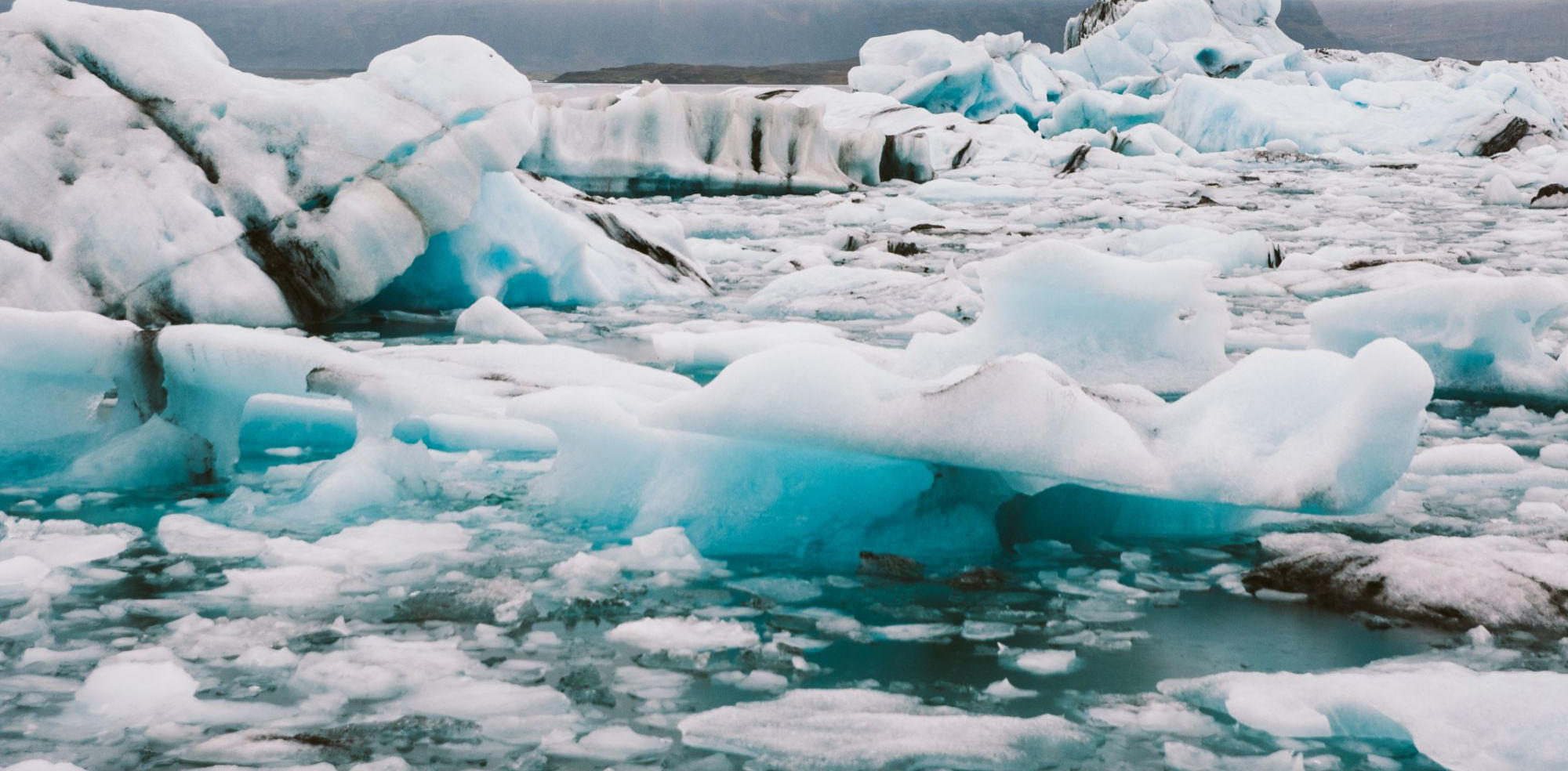
The study’s findings on climate factors provide new insights into Greenland’s climate and offer valuable information for forecasting the future behavior of the Greenland ice sheet.
Human activities have fueled global warming, resulting in rising average temperatures across the planet. However, Greenland is experiencing warming at a much faster pace than the global average, causing the rapid melting of its ice sheet. This heightened warming in the Arctic, referred to as Arctic Amplification, could significantly elevate sea levels, endangering coastal regions and ecosystems worldwide. Gaining insight into the causes of this phenomenon is essential for forecasting the future impacts of climate change.\
Studies have previously attributed Arctic Amplification to local climate feedback processes, heat release from the Arctic Ocean, and energy transport from the south. Melting sea ice during summers further amplifies warming trends through a process known as surface albedo feedback, where less ice leads to less sunlight being reflected into space.

Additionally, the Greenland blocking index—a climate mode indicating the strength of high-pressure blocking conditions over Greenland—has been linked to temperature trends in the region. However, past studies have primarily focused on overall warming trends, often overlooking the specific causes of extreme year-to-year temperature events and relying mainly on energy balance models.
A New Study on Greenland’s Anomalous Warming
To address these gaps, a team of researchers from Korea, led by Professor Kyung-Ja Ha, from the Department of Climate System at Pusan National University, including Manuel Tobias Blau, also from Pusan National University, and Dr. Eui-Seok Chung from the Division of Atmospheric Sciences at Korea Polar Research Institute, investigated the anomalous warming trends in Greenland from 1979 to 2021. “In this study, we focused on the year-to-year perturbations of the surface energy budget to explain Greenland’s extreme temperature,” explains Prof. Ha. Their study was published in the journal Communications Earth & Environment on July 28, 2024.
The researchers employed a surface energy budget framework, which separates the contributions of radiative and non-radiative sources, to analyze temperature anomaly events over Greenland. Their findings revealed that increases in clear-sky downwelling longwave radiation—the heat radiated by the atmosphere to the surface on clear-sky days—and the resulting surface albedo feedback were the dominant factors in Greenland’s surface warming.
The Role of Atmospheric Temperature and Heat Exchange
The researchers also investigated the mechanism for this increase in clear-sky radiation and found an increase in atmospheric temperature as the primary driver. Specifically, in warm years, the combination of increased surface temperatures and tropospheric warming led to turbulent heat exchange between the atmosphere and the surface.
This process also enhanced moisture transport from the south to Greenland and contributed to the formation of a high-pressure system, resembling a blocking anticyclone, which trapped and sustained warm conditions. These dynamics resulted in intense ice melting, creating a feedback loop that further amplified the warming effects. Moreover, different modes of natural climate variability, particularly those related to the blocking index, can either amplify or moderate these warming trends, leading to extreme temperature events.
“The results suggest a significant impact of natural variability in explaining the atmospheric anomalies leading to extreme summers over Greenland,” says Prof. Ha. Highlighting the importance of the study, she adds, “Considering climate change, the extreme summer temperature over Greenland will further accelerate the ice sheet melting, leading to a rapid sea level rise.”
By shedding light on the drivers of Greenland’s extreme summer temperatures, this study offers crucial insights that could help project the future development of the Greenland ice sheet and inform strategies to prevent further degradation.
Reference: “Extreme summer temperature anomalies over Greenland largely result from clear-sky radiation and circulation anomalies” by Manuel Tobias Blau, Kyung-Ja Ha and Eui-Seok Chung, 28 July 2024, Communications Earth & Environment.
DOI: 10.1038/s43247-024-01549-7
Never miss a breakthrough: Join the SciTechDaily newsletter.
Follow us on Google and Google News.
3 Comments
Why did they name it GREENland?? Maybe the snow and ice are the real climate anomalies…. Think about it.
The Vikings, who only lived around the Southern tip of Greenland, outside the Arctic Circle, gave it that name to attract more settlers Greenland has had an ice sheet for about the last 3 million years, Antarctica for about 30 million years.
The Arctic and Antarctic are quite different from each other. One is mostly ocean and the other mostly continent.
Antarctica is much colder.
Antarctic mean temp. -18F summer -76F winter
Arctic mean temp. 32F summer -40F winter
Circumpolar ocean currents and circumpolar winds around Antarctica have a lot to do with it’s sea ice extent, which is different what effects sea ice in the Arctic. And they tend to lock in the cold and isolate it somewhat from the rest of the world’s climate.
The Antarctic continent is about 6.5 times as big as Greenland. And contains about 7 million cubic miles of ice
The Greenland ice sheet is about 700,000 cubic miles of ice.