
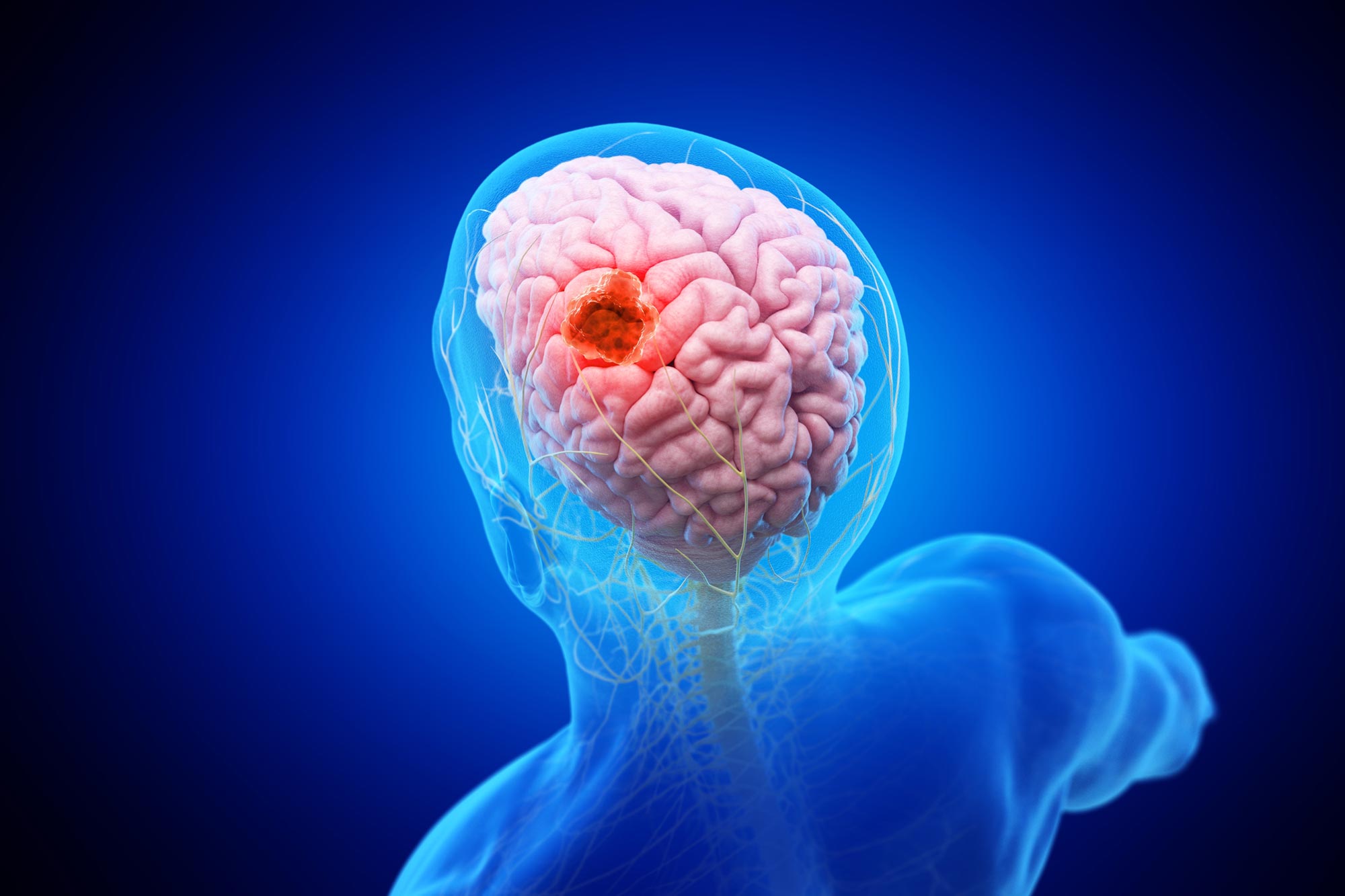
Scientists have discovered hidden rules governing how glioblastoma cells change states and resist treatment.
Glioblastoma is one of the deadliest brain cancers, partly because its cells can change identities to survive treatment. Now, two studies published in Nature reveal that these changes follow predictable patterns, potentially offering new ways to make the tumors less aggressive.
Researchers from EMBL, the German Cancer Research Center (DKFZ), and the Wellcome Sanger Institute discovered that glioblastoma cells transition between distinct states according to specific molecular rules. Some cells resemble neurons, others share features with stem cells, and some adopt aggressive, injury-like states. This flexibility, known as cellular plasticity, helps tumors resist therapy.
Mapping the Hidden Patterns of Brain Cancer
To investigate these changes, scientists analyzed DNA, RNA, and epigenetic information from tumors collected from 12 patients, creating one of the most comprehensive molecular atlases of glioblastoma.
“We asked – can we go back to the drawing board?” said Omer Bayraktar of the Wellcome Sanger Institute. “Can we assume that we know nothing about this disease, and reconstruct how a cancer cell behaves in glioblastoma through quantitative approaches?”
“We wanted to figure out whether there is a specific rule-based system that determines how cells transition between these states,” said Oliver Stegle of EMBL Heidelberg and DKFZ. “And we asked not only whether there were rules, but also what would drive such rules.”
The analysis showed that cancer cells follow recurring paths between states rather than switching randomly. Different cell states also occupy specific regions within tumors, a pattern researchers confirmed using laboratory-grown tumor organoids.
“By integrating the single-cell data with spatial transcriptomic data, we found that there is a meticulous and very specific spatial architecture of cancer cell states,” explained Bayraktar. “And this was present in every single glioblastoma tumor in every single patient we studied.”
AI Uncovers the Molecular Controls
Researchers then examined gene regulation in more than one million patient-derived glioblastoma cells. Using a deep learning tool called scDORI, they identified molecular regulators that influence how cancer cells change states. Some act as safeguards, keeping cells in relatively stable states and limiting their plasticity.
“A tumor generates an almost endless number of variations on its own regulatory program,” said Stegle. “Instead of seeing this heterogeneity only as an obstacle, we can use AI to learn from it and extract the rules that determine how cells choose their fate.”
The findings suggested that manipulating a small number of regulators might redirect cancer cells toward less aggressive states.
“One of our premises has always been that when we understand these rules, we can not only observe what the cells are doing, but we can also change what they are doing,” said Moritz Mall of DKFZ. “We could perhaps reprogram them, and maybe push them into a state that is less malignant, less dangerous.”
Reprogramming Tumor Cells Shows Promise
Experiments supported this possibility. Increasing the activity of MYT1L, one of the identified regulators, reduced cellular plasticity and malignant characteristics in patient-derived glioblastoma cells. Mice transplanted with these modified tumor cells survived longer than those receiving control cells.
“The results with MYT1L were interesting, but the findings go much beyond that,” explained Mall. “Our approach predicts the regulators for all of the major tumor cell states, and we tested those predictions experimentally. We were able to steer tumor cells into specific states by manipulating just a handful of regulators.”
Although clinical treatments remain a future possibility, researchers are already applying the approach to other cancers and brain disorders.
“With the help of this atlas and the new AI tool, we identified new regulatory sequences that enable us to potentially drive specific cell states in a tumor-specific setting,” said Mall. “Now that we have this framework, we can apply it to many other questions and cancers.”
References:
“A spatiotemporal cancer cell trajectory underlies glioblastoma heterogeneity” by Grant de Jong, Fani Memi, Tannia Gracia, Olga Lazareva, Oliver Gould, Georgios Solomou, Alexander Aivazidis, Manas Dave, Qianqian Zhang, Melanie Jensen, Ahmet Sureyya Rifaioglu, Joao D. Barros-Silva, Sabine Eckert, Di Zhou, Yvette Wood, Elizabeth Tuck, Sezgin Er, Koen Rademaker, Robert Petryszak, Henry Marshall, Kenny Roberts, Andrew L. Trinh, Shreya Rai, Tyler Shaw, Agnes Oszlanczi, Hayden Powell, Pasha Mazin, Stanislaw Makarchuk, Yinshui Chang, Katarzyna Kania, Liying Jin, Catherine Tudor, Hon Man Chan, Harriet Johnson, Benjamin Rumney, Holly Anderson, Jasmine Halliwell, Vanessa Brito Pereira, Zoi Katsirea, Irfan Mamun, Ilaria Mulas, Annelies Quaegebeur, Mayen Briggs, Jessica Cox, Jimmy Tsz Hang Lee, Laura Rueda-Gensini, Manu Saraswat, Zaira Seferbevoka, Adam Young, Minal Patel, Tarryn Porter, Moritz Gerstung, Martin Prete, Elena Prigmore, Moritz Mall, Harry Bulstrode, Julio Saez-Rodriguez, James Briscoe, David H. Rowitch, Richard Mair, Sam Behjati, Oliver Stegle and Omer Ali Bayraktar, 4 November 2026, Nature.
DOI: 10.1038/s41586-026-11234-8
“Decoding the regulatory programs governing glioblastoma plasticity” by Manu Saraswat, Laura Rueda-Gensini, Elisa Heinzelmann, Tannia Gracia, Fani Memi, Grant de Jong, Jannes Straub, Cedar Schloo, Dirk C. Hoffmann, Erik Jung, Tim Kindinger, Louis Masclef, Bettina Weigel, Bryce Lim, Faustus Tuschmann, Sophie Weil, Oliver Gould, Richard Mair, Katharina Mikulik, Martin Rohbeck, Wolfgang Wick, Frank Winkler, Omer Ali Bayraktar, Oliver Stegle and Moritz Mall, 4 November 2026, Nature.
DOI: 10.1038/s41586-026-11177-0
Never miss a breakthrough: Join the SciTechDaily newsletter.
Follow us on Google and Google News.