

Close Menu
    Facebook X (Twitter) Instagram
    SciTechDaily
    • Biology
    • Chemistry
    • Earth
    • Health
    • Physics
    • Science
    • Space
    • Technology
    Facebook X (Twitter) Pinterest YouTube RSS
    SciTechDaily
    Home»Science»What Is Science, Really? Even Scientists Can’t Agree
    Science

    What Is Science, Really? Even Scientists Can’t Agree

    By Santa Fe InstituteNovember 15, 2026No Comments3 Mins Read
    Facebook Twitter Pinterest Telegram LinkedIn WhatsApp Email Reddit
    Share
    Facebook Twitter LinkedIn Pinterest Telegram Email Reddit
    Shrugging Doctor Scientist Lab Coat
    A new study reveals surprising differences in how scientists understand the purpose and practice of science, even among researchers working in the same field. Credit: Shutterstock

    Even scientists in the same specialty disagree about science’s purpose, a survey finds, raising concerns that AI could automate one narrow approach at others’ expense.

    Is science a search for objective truth, an exercise in creative problem-solving, or both? A study published in Royal Society Open Science found that scientists disagree about the meaning and purpose of science more than the general public does.

    Study leader Marina Dubova, a former Santa Fe Institute postdoctoral researcher, is now an assistant professor of psychology at the University of California, Berkeley. Working with Princeton University researcher Qiawen E. Liu, she surveyed 91 scientists and 99 members of the public. Participants evaluated 18 historical descriptions of science, including science as detective work, a search for truth, and a mirror reflecting reality.

    Science seems more certain to the public

    Scientists and the public generally agreed that science involves following curiosity and solving mysteries. The public tended to share an idealized picture of science as a reliable way to discover how the world works, placing less emphasis on creativity or uncertainty. That outlook could shape how people judge research and help explain their frustration when scientists cannot give firm answers or revise their conclusions as new evidence emerges.

    The public’s views were closer to those of physicists and biologists than to those of researchers in psychology or the social sciences. One possible explanation, Dubova suggests, is that physics and biology feature more prominently in science education. More research is needed to test that connection.
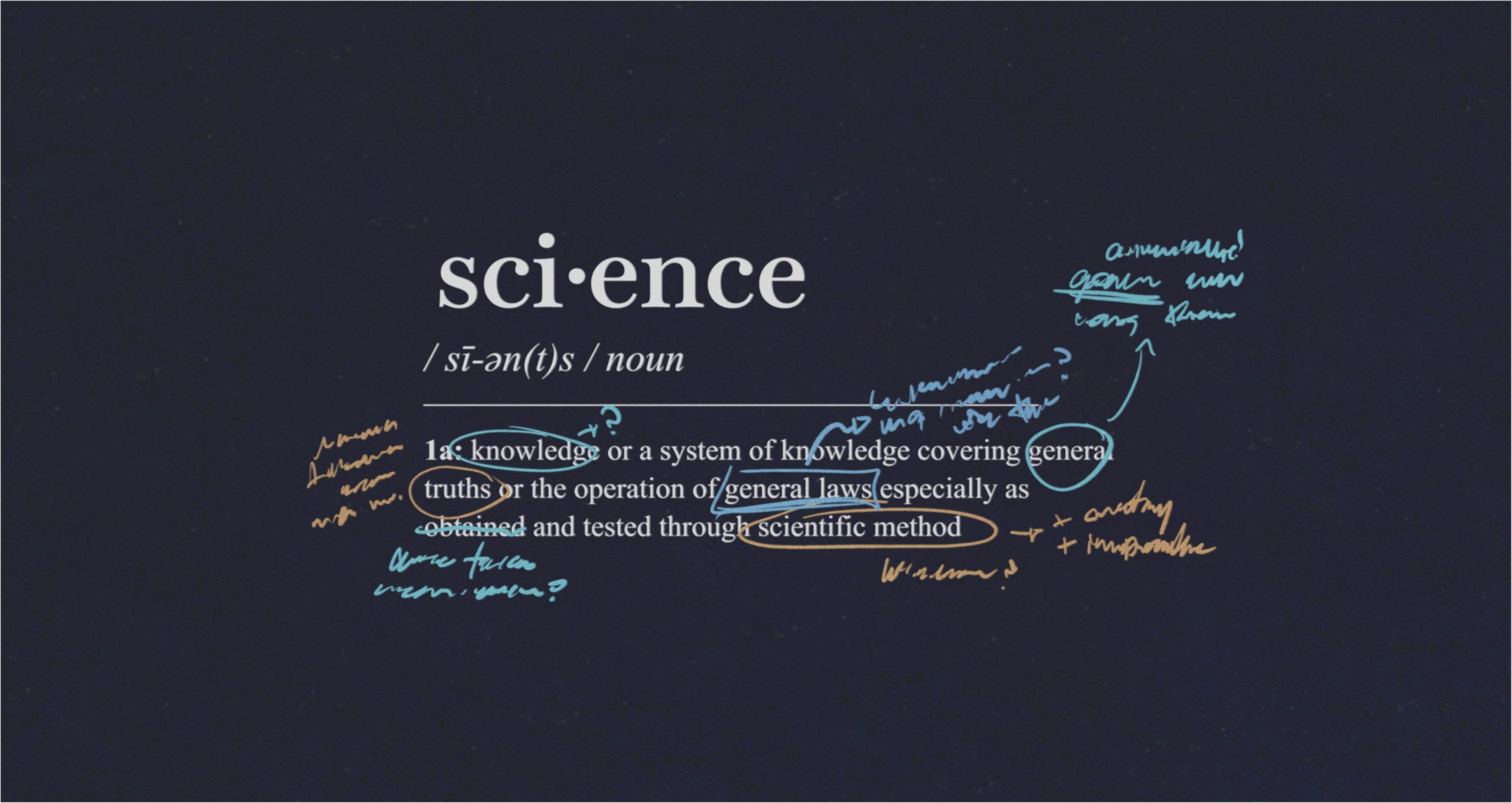
    Annotated Dictionary Definition of Science
    The study found that scientists disagree about the meaning and purpose of science even more than the general public does. Credit: Edson De la O / Santa Fe Institute

    Same specialty, different ideas about science

    Some scientists emphasized the search for objective truth, while others gave more weight to the judgment and creativity researchers bring to their work. They also disagreed about whether research follows established methods or requires improvisation. Few of the 18 descriptions received scientists’ full support, and they often had reservations even about ideas they generally agreed with.

    “What was surprising to me was that there was quite a bit of disagreement between scientists, including scientists who are in the same subfield,” says Dubova. She suspects that researchers develop their approaches partly through experience, much as chefs develop different instincts about when to follow a recipe and when to improvise. Those differing conceptions of science could influence which discoveries researchers pursue.

    AI could favor one vision of science

    That diversity also raises a question for efforts to automate scientific research. As researchers develop artificial intelligence systems capable of conducting science, whose understanding of the work will those systems embody? Dubova worries that automation could reinforce one narrow conception of science at the expense of other valuable approaches.

    For Dubova, the study is an early step toward understanding how these outlooks shape research itself. “Don’t take the common understanding of science for granted,” she says. “Always ask. Always be curious about what someone has in mind.”

    Reference: “Everyone knows what science is…until you ask” by Marina Dubova and Qiawen E. Liu, 11 November 2026, Royal Society Open Science.
    DOI: 10.1098/rsos.260933

    The research was supported by SFI’s Lou Schuyler Seed Grant Fund, established in 2022 to support exploratory research by early-career scientists. Dubova used the funding to compensate study participants, helping make the research possible.

    Never miss a breakthrough: Join the SciTechDaily newsletter.
    Follow us on Google and Google News.

    Artificial Intelligence Cognitive Science Psychology Santa Fe Institute
    Share. Facebook Twitter Pinterest LinkedIn Email Reddit

    Related Articles

    Science Reveals the Key Differences in How Men and Women Achieve Success

    New Research Shows Why You Don’t Need To Be Perfect To Get the Job Done

    New Research Demonstrates That Common Sense Is Not So Common After All

    Loneliness, Insomnia, Drinking: The Costs of Working With AI Systems

    The Power of a Negative Mood: How It Enhances Analytical Thinking

    Surprising Study Finds Infants Outperform AI in “Commonsense Psychology”

    Unlocking the Secrets of the Gaze: What Our Eyes Reveal About Us

    When Companies’ Diversity Messages Backfire

    Our Creativity Has Increased as a Result of the COVID-19 Lockdown

    Leave A Reply Cancel Reply

    • Facebook
    • Twitter
    • Pinterest
    • YouTube

    Don't Miss a Discovery

    Subscribe for the Latest in Science & Tech!

    Trending News

    Ancient Tomb Reveals That People Were Getting High on Cannabis 2,800 Years Ago

    Scientists Discover New Form of Prostate Cancer

    Mars May Not Be Dead After All, New Discovery Suggests

    A Tiny Region Deep Inside Your Brain Helps Decide What You Remember

    Scientists Develop a Groundbreaking Rechargeable Battery That Runs on Vitamin B12

    Scientists Discover a Hidden Immune System Difference That Could Explain Why Obesity Affects Men and Women Differently

    More Than a Billion Years of Earth’s History Is Missing – Scientists May Finally Know Why

    Popular Weight-Loss Drugs May Have a Surprising Effect on Your Brain

    Follow SciTechDaily
    • Facebook
    • Twitter
    • YouTube
    • Pinterest
    • Newsletter
    • RSS
    SciTech News
    • Biology News
    • Chemistry News
    • Earth News
    • Health News
    • Physics News
    • Science News
    • Space News
    • Technology News
    Recent Posts
    • What Is Science, Really? Even Scientists Can’t Agree
    • Scientists Just Challenged a 50-Year-Old Theory About How Evolution Works
    • After 40 Years, Scientists Finally Detect Evidence of an Almost Impossible Particle Decay
    • “A Magnetar Is Born”: Supercomputer Simulates One of the Universe’s Most Violent Collisions
    • Researchers Turn Moon Dust Into LEGO-Like Bricks That Could Build Future Lunar Bases
    Copyright © 1998 - 2026 SciTechDaily. All Rights Reserved.
    • Science News
    • About
    • Contact
    • Editorial Board
    • Privacy Policy
    • Terms of Use

    Type above and press Enter to search. Press Esc to cancel.