
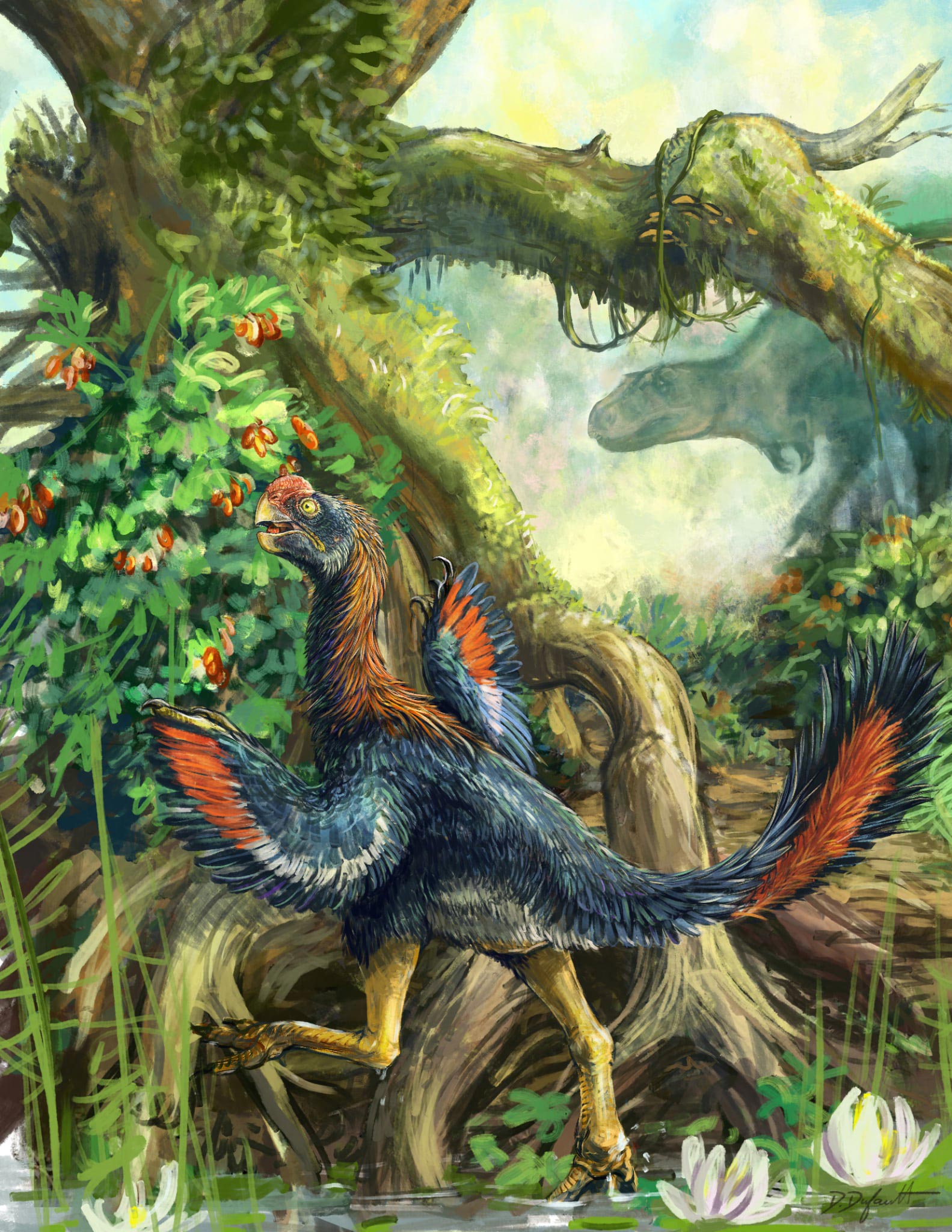
A dinosaur’s resemblance to modern fruit-eating parrots offers clues to how prehistoric animals adapted as flowering plants transformed life on land.
As flowering plants spread across the Cretaceous landscape, fruits became larger and more abundant, offering dinosaurs an entirely different source of food. Paleontologists have long struggled to understand how this transformation influenced dinosaur evolution. Now, the discovery of a turkey-sized dinosaur that lived alongside T. rex suggests that some dinosaurs developed remarkably sophisticated ways of eating fruit, much like parrots do today.
The newly identified species, Infernogallus jamesi, is the first known dinosaur with anatomical adaptations specifically linked to fruit consumption. The discovery was made by researchers from Stony Brook University, the Royal Ontario Museum (ROM), and the North Dakota Geological Survey. Led by Dr. Gregory Funston, assistant professor in the Department of Anatomical Sciences at Stony Brook University, the study was published in Nature Communications.
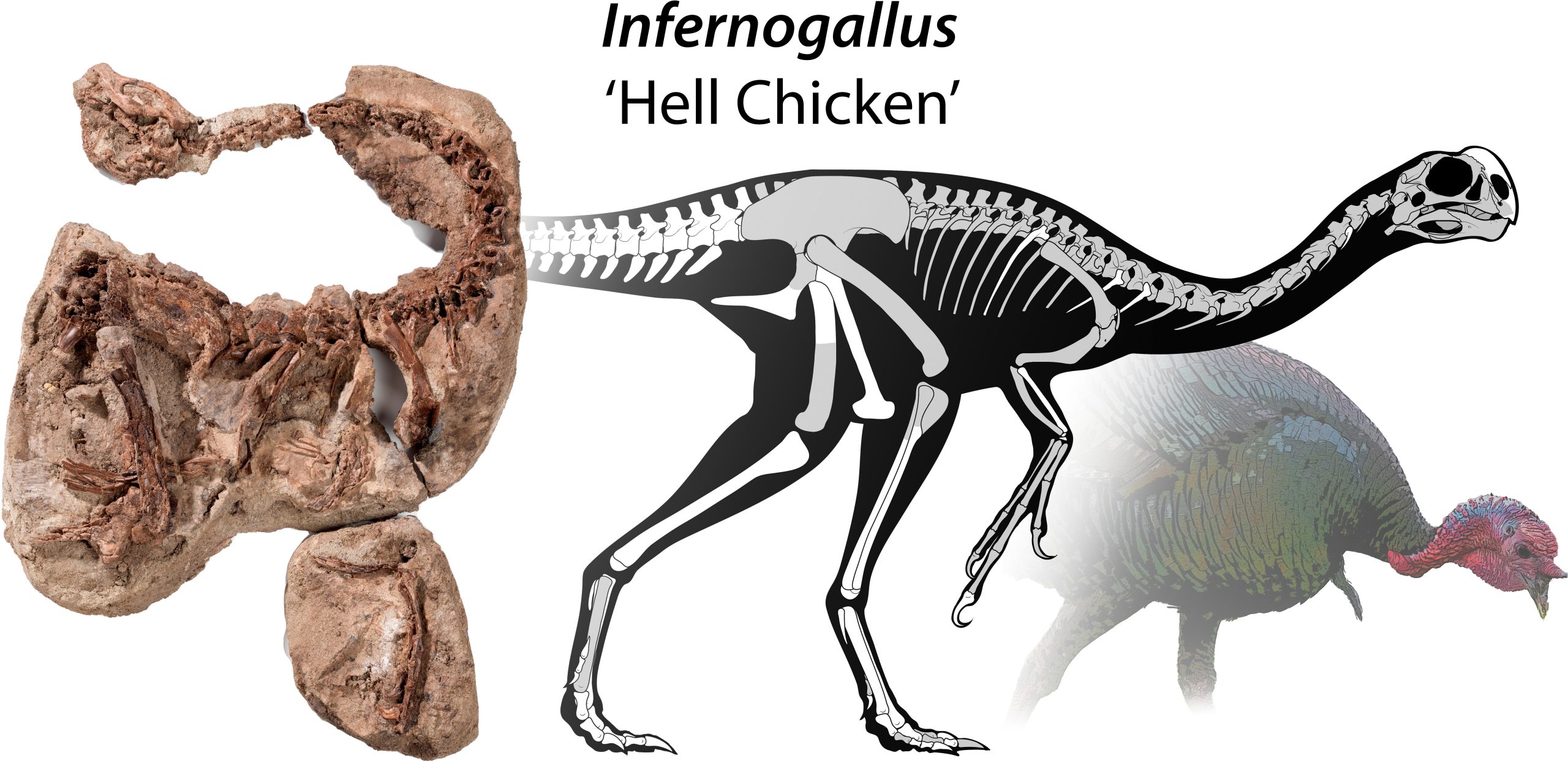
“We knew dinosaurs evolved to fill so many different roles in ecosystems in the Cretaceous, but we never expected to discover fruit-eating dinosaurs,” says Dr. Gregory Funston. “For more than 100 years, we didn’t know what the skulls of these animals looked like. Now, we know they were even weirder than we could have predicted.”
A feathered, toothless “hell chicken”
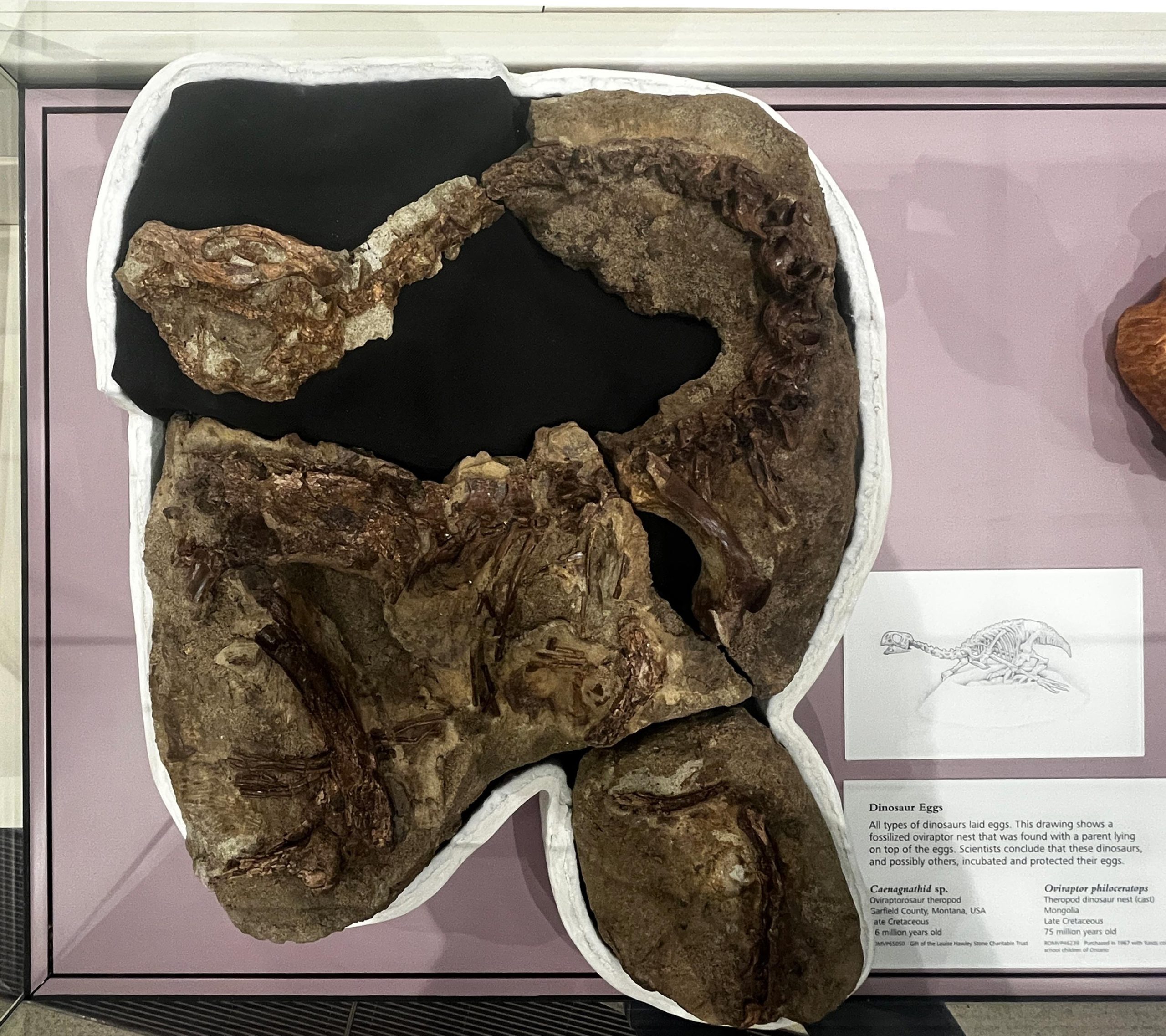
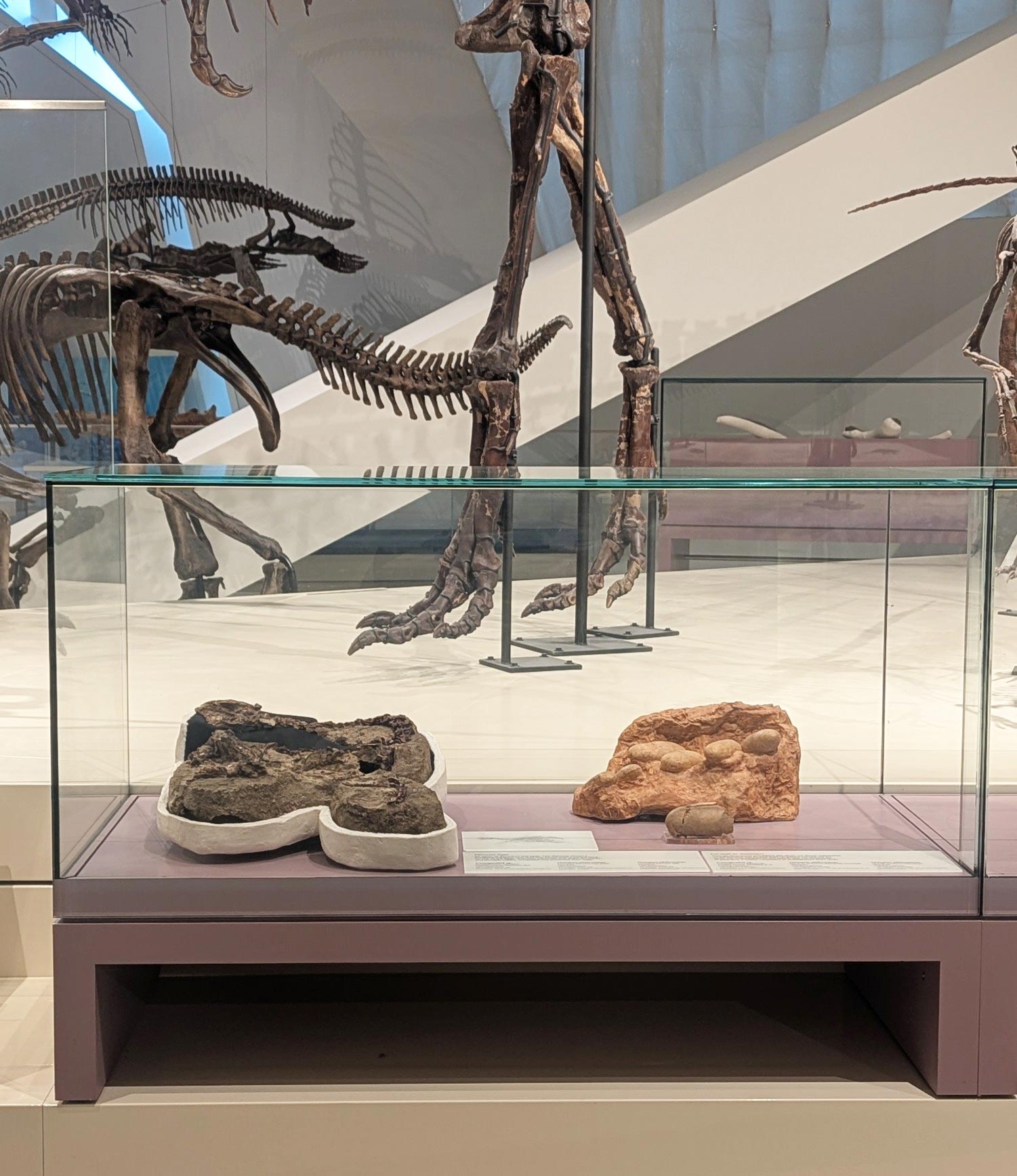
The dinosaur’s name, Infernogallus, means “hell chicken,” a reference to the Hell Creek Formation where its fossils were discovered. The formation stretches across Montana, North Dakota, South Dakota, and Wyoming and preserves remains of familiar dinosaurs such as T. rex and Triceratops, which lived alongside Infernogallus. Its nearly complete skull, with the bones still connected, and partial skeleton are currently on display at the Royal Ontario Museum.
Despite descending from meat-eating dinosaurs, Infernogallus belonged to a group of toothless, feathered oviraptorosaurs known as caenagnathids. Weighing approximately 25 pounds (12 kilograms) as a fully grown adult, it was one of the smallest members of its group.
A beak that chewed like ours
“It’s pretty rare for animals to become specialized for a diet of fruit, so when it happens, it comes with some remarkable adaptations,” says Dr. Thomas Dudgeon, Rebanks Postdoctoral Research Fellow at ROM and a co-author of the study. “The anatomy of Infernogallus is bizarre among dinosaurs, and we quickly realized that we were dealing with something special.”
Using CT scans to reconstruct the skull, the researchers noticed something unusual about the bones forming the roof of the mouth. These bones curved downward into the mouth, positioning certain chewing muscles horizontally rather than vertically. Instead of relying on the rigid, up-and-down bite characteristic of dinosaurs such as T. rex, Infernogallus could have moved its beak back and forth in a chewing motion similar to our own.
Forward-facing chewing muscles are uncommon in the animal kingdom, although they occur in mammals capable of complex chewing and in certain fruit-eating birds. The particular muscle arrangement identified in Infernogallus resembles that of the modern vulturine parrot (Psittrichas), suggesting that the dinosaur was adapted to processing soft food in its mouth rather than its gut. Its chewing motion appears to have been especially suited to separating the flesh of stone fruits from their hard central pits.
Dinosaurs may have helped plants spread
The finding also reveals an intriguing parallel in evolutionary history. As fruits became larger and more common, caenagnathids developed increasingly specialized chewing capabilities.
Fossilized fruits document how flowering plants gradually replaced cone-bearing plants as the dominant vegetation on land during the Cretaceous. By eating fruit, dinosaurs may have helped disperse seeds and influenced the evolution of flowering plants, fulfilling an ecological role that birds, reptiles, and small mammals play today.
“Complete remains of small dinosaurs like Infernogallus are very rare in the fossil record. The strange skull of Infernogallus is an exciting find because it reveals surprising insights into dinosaur evolution and feeding specialization,” says Dr. David Evans, chief curator of natural history and Temerty Chair in Vertebrate Paleontology at ROM and senior author of the paper. “This discovery shows that we still have a lot to learn about the world of T. rex, and about dinosaurs more generally.”
The discovery also contributes to an ongoing debate over whether dinosaurs were already in decline before their extinction. The specialized feeding behavior of Infernogallus suggests that the diversity of dinosaurs, and the ecological roles they occupied near the end of the Cretaceous, may have been greater than the fossil record has so far revealed.
Reference: “Fruit-eating adaptations in a Late Cretaceous oviraptorosaur (Theropoda)” by Gregory F. Funston, Thomas W. Dudgeon, D. Jade Simon, Danielle M. Dufault, Clint Boyd, Denver Fowler, Philip J. Currie and David C. Evans, 10 October 2026, Nature Communications.
DOI: 10.1038/s41467-026-78343-w
Never miss a breakthrough: Join the SciTechDaily newsletter.
Follow us on Google and Google News.