
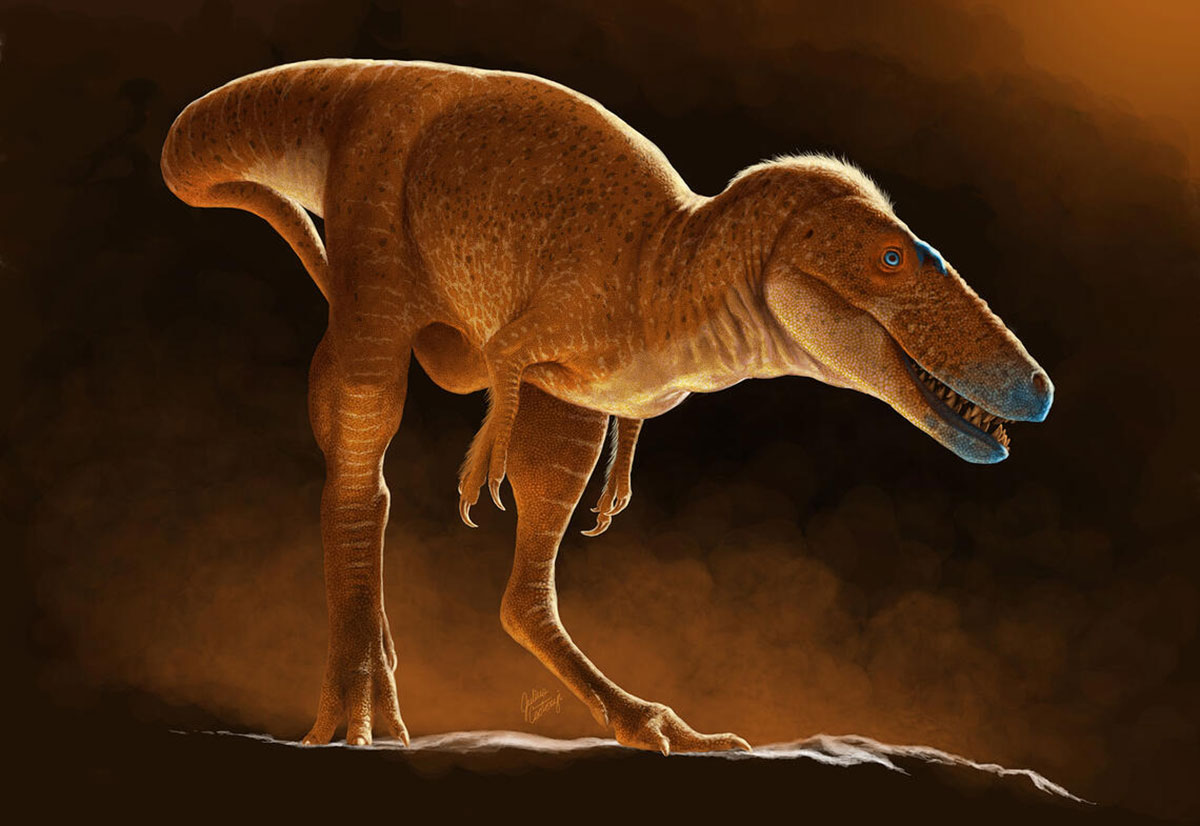
Khankhuuluu served as a precursor to the famed bone-crushing kings of the Cretaceous.
Paleontologists have uncovered a previously unknown dinosaur species named Khankhuuluu, identified as the closest-known ancestor of the enormous Tyrannosaurs.
The discovery comes from an international research collaboration led by Jared Voris and Dr. Darla Zelenitsky from the Faculty of Science at the University of Calgary. Their findings are detailed in the journal Nature.
According to Voris, the study’s first author and a PhD candidate in the Department of Earth, Energy, and Environment, Khankhuuluu lived around 86 million years ago. It was a medium-sized, fast-moving predator that emerged after the decline of earlier large carnivorous dinosaurs.
Scientists describe Khankhuuluu as the nearest known ancestor to the massive Tyrannosaurs made famous in popular culture, including Jurassic Park.
“This new species provides us the window into the ascent stage of Tyrannosaur evolution; right when they’re transitioning from small predators to their apex predator form,” says Voris.
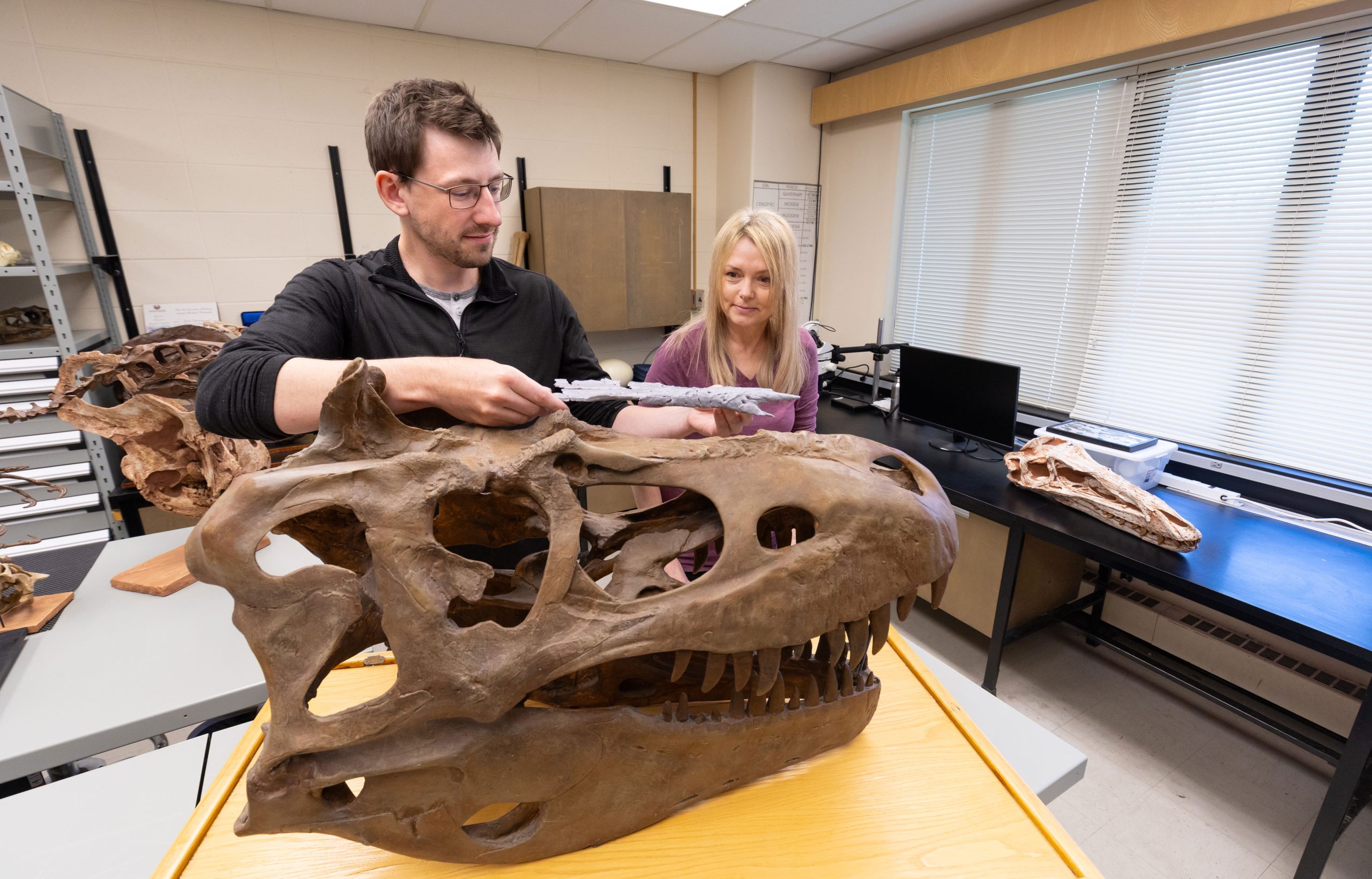
Khankhuuluu translates from Mongolian to mean “prince of dragons” or “the dragon prince.” The name denotes its place in the lineage of Tyrannosaurs, as Khankhuuluu was the prince before species like Tyrannosaurus rex, the Tyrant Lizard King. As the closest-known ancestor, Khankhuuluu shares many characteristics with its Tyrannosaur descendants – though it lacked some of the more defining features that Tyrannosaurs had.
Physical Features and Behavior
The new species weighed 750 kilograms (about the size of a horse), making it two to three times smaller than its massive descendants.
Khankhuuluu had tiny rudimentary horns that would evolve to be more noticeable in species like Albertosaurus or Gorgosaurus used for mating display or intimidation. It had a long, shallow skull that shows Khankhuuluu didn’t have the ability to crunch through bone like the T. rex. The new species can be defined as a mesopredator, similar to coyotes, meaning it used speed and agility to take down its prey.
The fossils, found in the Bayanshiree Formation in southeastern Mongolia, had been studied in the 1970’s by paleontologist Altangerel Perle. Perle likened the fossils to another medium-sized Tyrannosaur called Alectrosaurus from China. Voris went to Mongolia in 2023 to study fossils at the Institute of Paleontology and soon realized there were features that differentiated them from the Alectrosaurus.
Tracing the Tyrannosaur Lineage
The discovery also provides more details on Tyrannosaur evolution.
“Khankhuuluu, or a closely related species, would have immigrated to North America from Asia around 85 million years ago,” explains Zelenitsky, a paleontologist and associate professor in the Department of Earth, Energy and Environment. “Our study provides solid evidence that large Tyrannosaurs first evolved in North America as a result of this immigration event.”
The results of the study show that the movement of Tyrannosaurs back and forth between Asia and North America was less frequent and less sporadic than previously known. Khankhuuluu is the last known ancestor of Tyrannosaurs found in the Asian fossil record.
The research reveals that the new species, or one of its kin, traveled across a land bridge into North America, where it evolved into the famous apex predator Tyrannosaurs. The fossil record indicates Tyrannosaurs were exclusive to North America for a few million years before immigrating to Asia, where the lineage split into two groups. One group branched off to become even bigger apex predators, ultimately evolving into T. rex, and the other group evolved into a medium-sized long-snouted species (dubbed ‘Pinocchio rexes’).
Looking ahead, the next step for researchers is to investigate the earlier ancestors of these apex predators, which are still poorly known.
Reference: “A new Mongolian tyrannosauroid and the evolution of Eutyrannosauria” by Jared T. Voris, Darla K. Zelenitsky, Yoshitsugu Kobayashi, Sean P. Modesto, François Therrien, Hiroki Tsutsumi, Tsogtbaatar Chinzorig and Khishigjav Tsogtbaatar, 11 June 2025, Nature.
DOI: 10.1038/s41586-025-08964-6
Funding: Natural Sciences and Engineering Research Council of Canada, Japan Society for the Promotion of Science
Never miss a breakthrough: Join the SciTechDaily newsletter.
Follow us on Google and Google News.
2 Comments
thank you fo the
Jobs