
Close Menu
    Facebook X (Twitter) Instagram
    SciTechDaily
    • Biology
    • Chemistry
    • Earth
    • Health
    • Physics
    • Science
    • Space
    • Technology
    Facebook X (Twitter) Pinterest YouTube RSS
    SciTechDaily
    Home»Biology»Central American Bats Harbor a New Subtype of Influenza
    Biology

    Central American Bats Harbor a New Subtype of Influenza

    By SciTechDailyMarch 6, 2012No Comments2 Mins Read
    Facebook Twitter Pinterest Telegram LinkedIn WhatsApp Email Reddit
    Share
    Facebook Twitter LinkedIn Pinterest Telegram Email Reddit
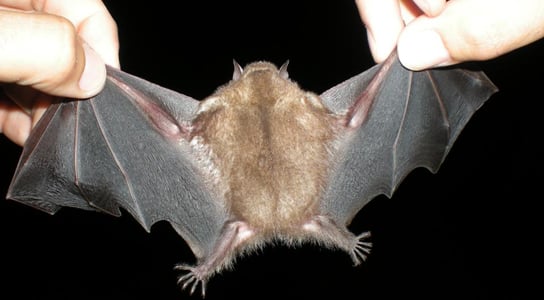
    Sturnira-lilium
    Yellow-shouldered bat Sturnira lilium

    It’s been reported that fruit bats in Guatemala are hosting a new type of the influenza A virus, according to a new study published in the journal Proceedings of the National Academy of Sciences. The novel subtype has been designated H17 and has diverged from known influenza viruses long ago.

    This has allowed researchers to shed some light on their evolution and it doesn’t seem to pose an immediate threat to humans. However, it is similar enough to other subtypes that it’s possible that a genetic exchange might pose a risk.
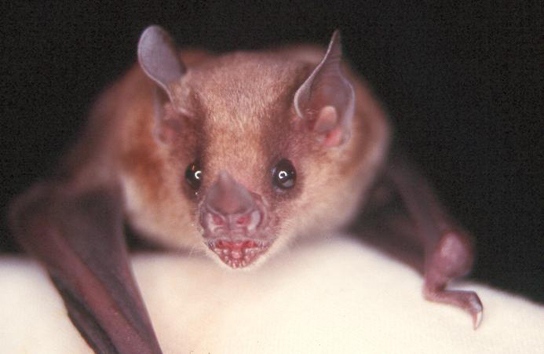
    Sturnira-lilium-front

    Ruben Donis, chief of molecular virology and vaccines at the CDC in Atlanta says that the impact isn’t yet known. They are currently testing bats in South America, Africa, and Asia to document the geographical distribution of H17. The researchers are far from being able to speculate on the pandemic potential of H17, but this is another indicator that bats are important vectors of such viruses.

    Bats have been linked to the Ebola, SARS, and nipah viruses. There are over 1,200 known species of bats, and they are the second-largest mammal group, making it unsurprising that they carry a large variety of viruses.
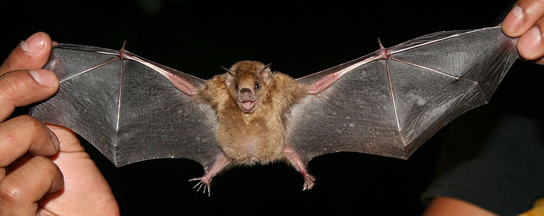
    sturnira-lilium-wingspan

    Out of 316 bats sampled from 21 different species, 3 yellow-shouldered bats (Sturnira lilium) tested positive for H17. It’s not yet clear how H17 is transmitted, but the researchers suspect that oral-fecal transmission might be the culprit, as the highest concentration of virus was found in the intestinal tract.

    Reference: “A distinct lineage of influenza A virus from bats” by Suxiang Tong, Yan Li, Pierre Rivailler, Christina Conrardy, Danilo A. Alvarez Castillo, Li-Mei Chen, Sergio Recuenco, James A. Ellison, Charles T. Davis, Ian A. York, Amy S. Turmelle, David Moran, Shannon Rogers, Mang Shi, Ying Tao, Michael R. Weil, Kevin Tang, Lori A. Rowe, Scott Sammons, Xiyan Xu, Michael Frace, Kim A. Lindblade, Nancy J. Cox, Larry J. Anderson, Charles E. Rupprecht and Ruben O. Donis, 27 February 2012, Proceedings of the National Academy of Sciences.
    DOI: 10.1073/pnas.1116200109

    Never miss a breakthrough: Join the SciTechDaily newsletter.
    Follow us on Google and Google News.

    Bats CDC Epidemiology Influenza Virology
    Share. Facebook Twitter Pinterest LinkedIn Email Reddit

    Related Articles

    Epidemiologists Trying to Track Down Novel Coronavirus

    Synthesizing a Flu Vaccine Without the Virus

    Crystal Meth Could Reduce Susceptibility to the Common Flu

    Gene Sequencing of New Coronavirus Speeds Up Testing

    Monkeys Cured of Ebola Zaire Virus With Antibody Cocktail

    Visual Science’s Ebolavirus 3D Model is 10 Times More Complex Than Their HIV Model

    NDM-1 Super Bacteria Scares Medical Community in India

    Moratorium Into Research of Modified Contagious H5N1 Avian Flu Strains

    Ruminant Orthobunyavirus Takes Northern Europe By Surprise

    Leave A Reply Cancel Reply

    • Facebook
    • Twitter
    • Pinterest
    • YouTube

    Don't Miss a Discovery

    Subscribe for the Latest in Science & Tech!

    Trending News

    JWST Finds a “Star” 100 Billion Times Brighter Than Any Star Should Be

    Scientists Find a Hidden Biological Link Across Different Forms of Autism

    Astronomers Discover a Ghostly River of Stars That Could Reveal Dark Matter

    Why Is Colorectal Cancer Rising in People Under 50? New Clues Point to the Environment

    Quantum Fluctuations Break a Crystal’s Symmetry Rules

    Why Does an Irregular Heartbeat Strike 40 Years Early in Some People?

    Scientists Reveal How ADHD Could Fuel Creative Thinking

    Scientists Find Just 3 Minutes of Sprinting Can Transform Blood Chemistry

    Follow SciTechDaily
    • Facebook
    • Twitter
    • YouTube
    • Pinterest
    • Newsletter
    • RSS
    SciTech News
    • Biology News
    • Chemistry News
    • Earth News
    • Health News
    • Physics News
    • Science News
    • Space News
    • Technology News
    Recent Posts
    • 55-Million-Year-Old Penguin Fossils Preserve Clues to a Warmer Antarctica
    • A 35,000-Year-Old Neanderthal Pelvis May Explain Why Men and Women Walk Differently
    • Hidden Brain Wiring May Help Preserve Thinking As Gray Matter Shrinks
    • Dual Stem Cell Treatment Restores Vision in First Human Trial
    • Your Waist Size May Reveal More About Your Health Than You Think
    Copyright © 1998 - 2026 SciTechDaily. All Rights Reserved.
    • Science News
    • About
    • Contact
    • Editorial Board
    • Privacy Policy
    • Terms of Use

    Type above and press Enter to search. Press Esc to cancel.