
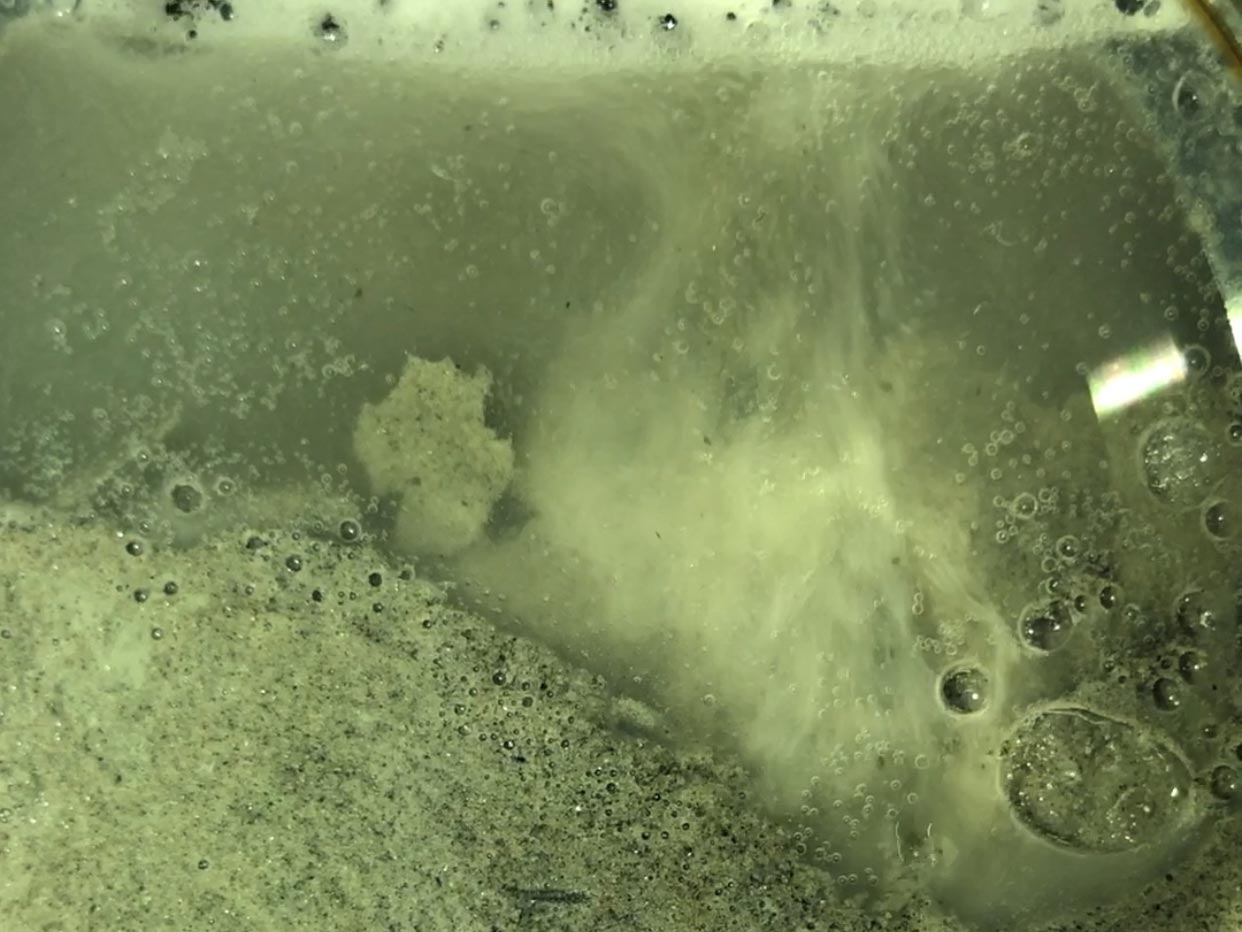
New research from The University of Texas at Austin has explained an important mystery about natural gas hydrate formations and, in doing so, advanced scientists’ understanding of how gas hydrates could contribute to climate change and energy security.
The research used a computer model of gas bubbles flowing through hydrate deposits, a common phenomenon which according to existing models, should not be possible based on physics. The new model helps explain how some deposits grow into massive natural gas hydrate reservoirs, such as those found beneath the Gulf of Mexico.
A paper describing the research was published on February 16, 2020, in the journal Geophysical Research Letters.
Gas hydrates are an icy substance in which gas molecules, typically methane, become trapped in water-ice cages under high pressure and low temperature. They are found widely in nature, house a substantial fraction of the world’s organic carbon, and could become a future energy resource. However, many questions remain about how hydrate deposits form and evolve.
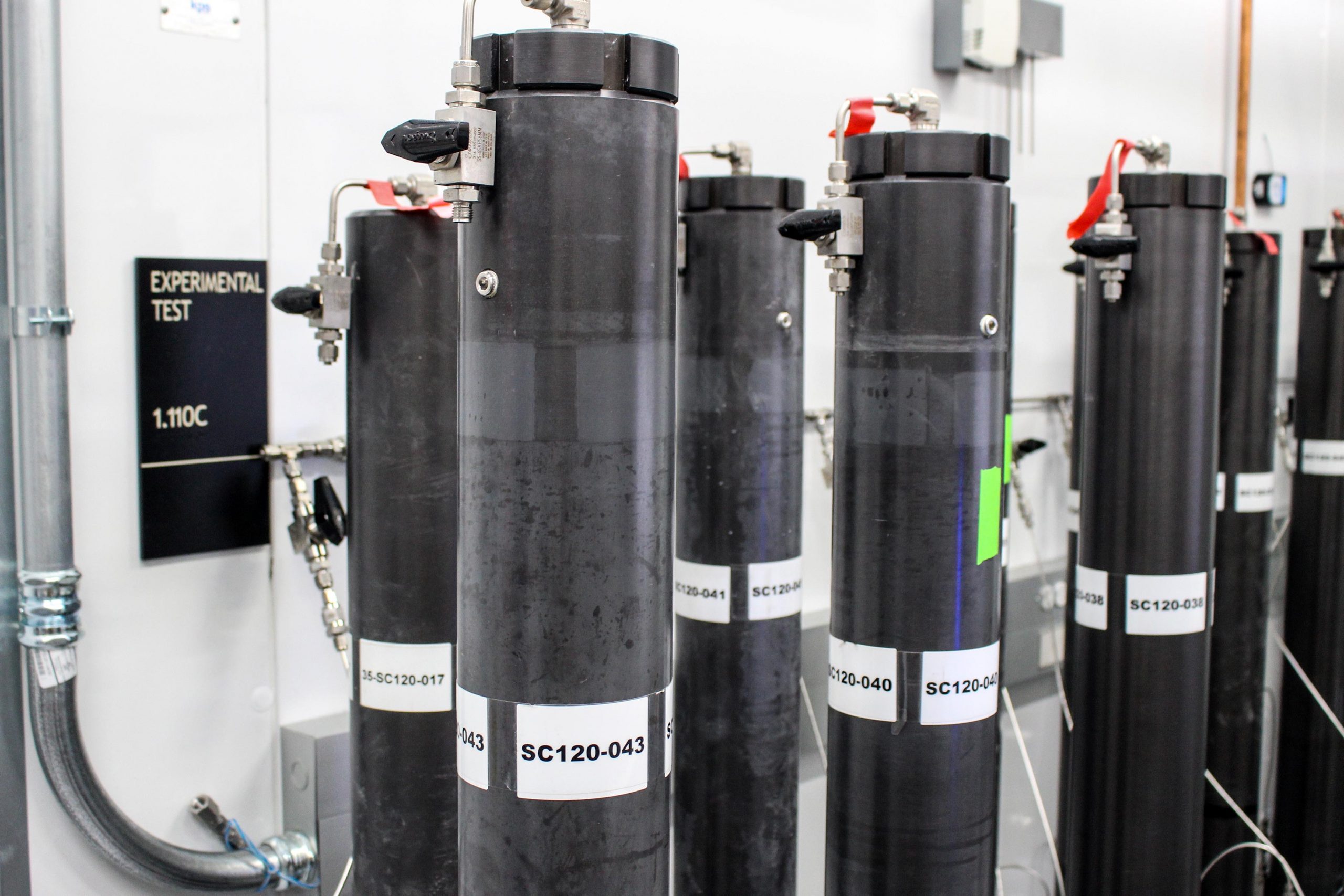
One such question was raised by observations in the field which spotted methane flowing freely as a gas through hydrate deposits in the subsurface. What puzzled scientists is that under conditions where hydrates occur, methane should only exist as a hydrate, not as a free gas. To solve the mystery of the free-flowing gas, a team of UT researchers led by Dylan Meyer, a graduate student at the UT Jackson School of Geosciences, recreated in the lab what they saw in the field.
Using this data, they hypothesized that as hydrate forms in a deposit, it also acts as a barrier between gas and water, restricting the speed at which new hydrate forms, and allowing much of the gas to bubble through the deposit. They developed this idea into a computer model and found that the model matched experimental results. When scaled up, they also matched evidence from field studies, making it the first model of the phenomena to successfully do both. Crucially, the model suggests that gas flowing through the subsurface can accumulate into large, concentrated hydrate reservoirs, which could be suitable targets for future energy sources.
“The model convincingly reproduces a range of independent experimental results, which strongly support the fundamental concepts behind it,” said Meyer. “We believe this model will be an essential tool for future studies investigating the evolution of large, highly concentrated hydrate reservoirs that experience relatively rapid gas flow through porous media.”
The study is the first time this kind of model has been built using data from experiments designed to mimic the gas flow process. The team produced their own hydrate deposit in the lab using a mixture of sand, water, and gas and recreating the extreme conditions found in nature. Their efforts provided them with realistic and relevant data from which to develop their model.
Co-author Peter Flemings, a professor at the Jackson School, said that understanding how methane gas travels through hydrate layers in the subsurface is important for understanding methane’s role in the carbon cycle and its potential contribution to global warming.
“The paper gives an elegant and simple model to explain some very challenging experiments,” said Flemings.
The study’s experiments were conducted in specialized labs at the Jackson School, but the model was the result of a cross-campus collaboration between two UT schools, the Jackson School and the Cockrell School of Engineering.
Meyer, Flemings, and Kehua You, a research scientist at the University of Texas Institute for Geophysics (UTIG), had developed the original computer code to explain their experimental results, but it wasn’t until they teamed up with David DiCarlo, an associate professor at the UT Cockrell School of Engineering, who showed them how the results could be presented using analytical math, that they could successfully tackle the problem in a way that mirrored what they were seeing in nature.
The paper is the culmination of Meyer’s graduate research and builds on two previously published papers that focused on the results of his lab experiments. Meyer graduated in 2018 with a doctoral degree from the Jackson School and is now a postdoctoral researcher at Academia Sinica in Taipei.
The research was funded by the U.S. Department of Energy (DOE) and is part of a broader partnership between the DOE and The University of Texas at Austin to investigate methane hydrate deposits in the Gulf of Mexico.
Many of the lab experiments that fed into the current study were performed by Meyer at the UT Pressure Core Center, a laboratory at the Jackson School equipped to store and study pressurized cores taken from natural methane hydrate deposits in 2017 and which remains the only such university-based facility.
Reference: “Gas flow by invasion percolation through the hydrate stability zone” by Dylan W. Meyer, Peter B. Flemings, Kehua You and David A. DiCarlo, 15 January 2020, Geophysical Research Letters.
DOI: 10.1029/2019GL084380
Never miss a breakthrough: Join the SciTechDaily newsletter.
Follow us on Google and Google News.