
Close Menu
    Facebook X (Twitter) Instagram
    SciTechDaily
    • Biology
    • Chemistry
    • Earth
    • Health
    • Physics
    • Science
    • Space
    • Technology
    Facebook X (Twitter) Pinterest YouTube RSS
    SciTechDaily
    Home»Technology»Surprising Secret to Making Stronger Concrete: Sewage
    Technology

    Surprising Secret to Making Stronger Concrete: Sewage

    By RMIT UniversityApril 8, 2020No Comments3 Mins Read
    Facebook Twitter Pinterest Telegram LinkedIn WhatsApp Email Reddit
    Share
    Facebook Twitter LinkedIn Pinterest Telegram Email Reddit
    Stronger Concrete Sewage Enhanced Slag
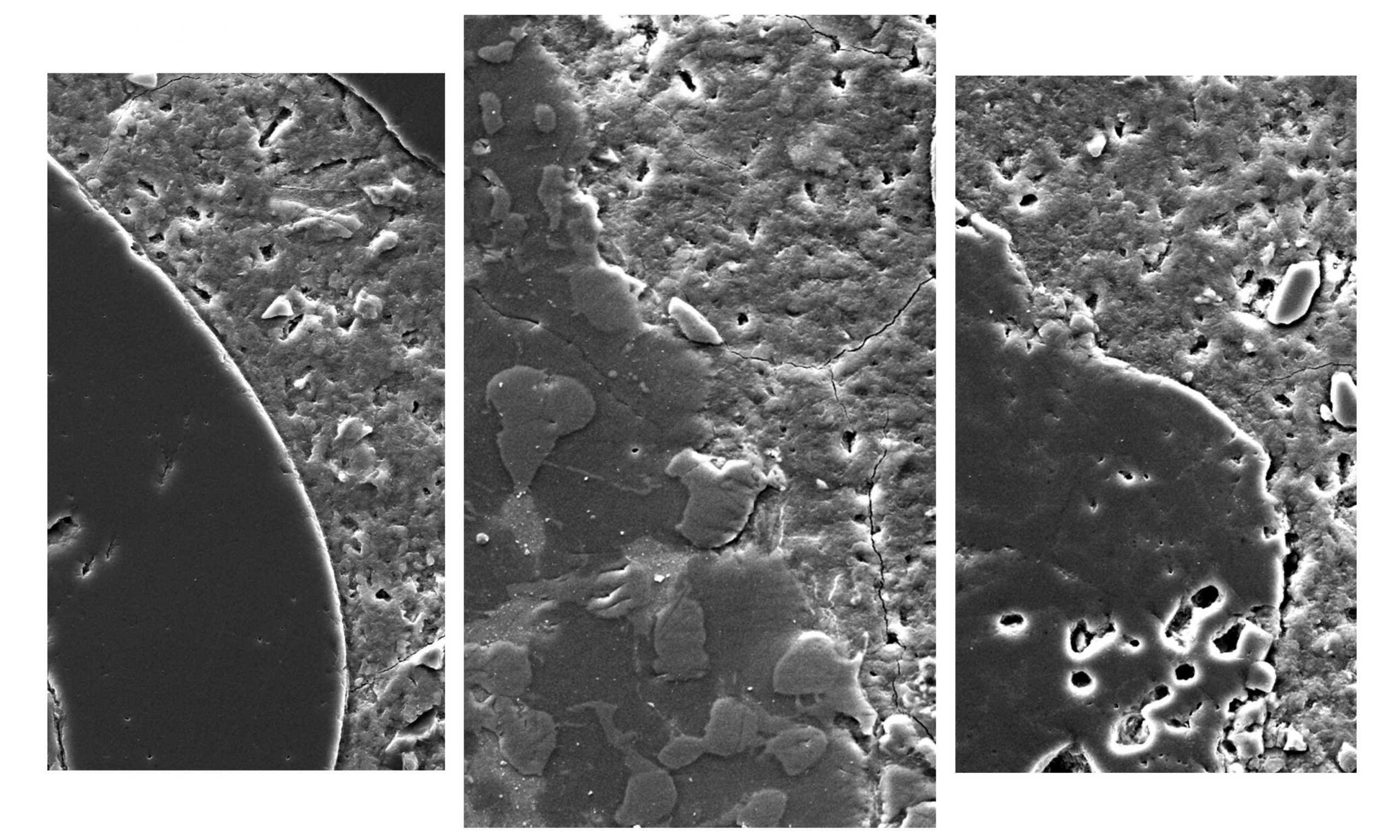
    Magnified images showing concrete made with treated slag (centre), conventional aggregates (left) and raw slag (right). The treated slag forms a more seamless bond with the cement paste, making the concrete stronger. Credit: RMIT University

    A by-product of steel making can be used to both treat wastewater and make stronger concrete.

    Researchers have shown how a by-product of steel making can be used to both treat wastewater and make stronger concrete, in a zero-waste approach to help advance the circular economy.

    Produced during the separation of molten steel from impurities, steel slag is often used as a substitute aggregate material for making concrete. Steel slag can also be used to absorb contaminants like phosphate, magnesium, iron, calcium, silica, and aluminum in the wastewater treatment process, but loses its effectiveness over time.

    Engineering researchers at RMIT University examined whether slag that had been used to treat wastewater could then be recycled as an aggregate material for concrete.

    The concrete made with post-treatment steel slag was about 17% stronger than concrete made with conventional aggregates, and 8% stronger than raw steel slag.

    Water engineer Dr. Biplob Pramanik said the study was the first to investigate potential applications for “sewage-enhanced” slag in construction material.

    “The global steelmaking industry produces over 130 million tons of steel slag every year,” Pramanik said. “A lot of this by-product already goes into concrete, but we’re missing the opportunity to wring out the full benefits of this material.

    “Making stronger concrete could be as simple as enhancing the steel slag by first using it to treat our wastewater.

    “While there are technical challenges to overcome, we hope this research moves us one step closer to the ultimate goal of an integrated, no-waste approach to all our raw materials and by-products.”

    In the study, civil and water engineering researchers found the chemical properties of the slag are enhanced through the wastewater treatment, so it performed better when used in concrete.

    “The things that we want to remove from water are actually beneficial when it comes to concrete, so it’s a perfect match,” Pramanik said.

    Civil engineer Dr. Rajeev Roychand said the initial study was promising but further research was needed to implement the approach at a larger-scale, including investigating the long-term mechanical and durability properties of enhanced slag.

    “Steel slag is currently not in widespread use in the wastewater treatment industry – just one plant based in New Zealand uses this by-product in its treatment approach,” he said.

    “But there is great potential here for three industries to work together – steel making, wastewater treatment, and construction – and reap the maximum benefits of this by-product.”

    Reference: “Recycling steel slag from municipal wastewater treatment plants into concrete applications – A step towards circular economy” by Rajeev Roychand, BiplobKumar Pramanik, Guomin Zhang and Sujeeva Setunge, 21 October 2019, Resources, Conservation and Recycling.
    DOI: 10.1016/j.resconrec.2019.104533

    Never miss a breakthrough: Join the SciTechDaily newsletter.
    Follow us on Google and Google News.

    Materials Science Recycling RMIT University Wastewater
    Share. Facebook Twitter Pinterest LinkedIn Email Reddit

    Related Articles

    3D Printing Paves Way for “Designer” Titanium Alloys

    “Transforming Industries” – Light-Based Tech Could Inspire Moon Navigation and Next-Gen Farming

    A New Way To Make Carbon Fiber: Could We Make Cars Out of Petroleum Residue?

    Smarter Artificial Intelligence Technology in a New Light-Powered Chip

    World’s First Photodetector That Can See All Shades of Light

    New Electronic Skin Can React to Pain Like Human Skin – For Better Prosthetics and Smarter Robots

    Nano-Thin Flexible Touchscreens Could Be Printed at Home – 100x Thinner Than Current Technology

    3D-Printed High-Performance Titanium-Copper Alloys for Medical Devices, Defense and Aerospace

    Waste to Energy Technology Commercially Available in the US

    Leave A Reply Cancel Reply

    • Facebook
    • Twitter
    • Pinterest
    • YouTube

    Don't Miss a Discovery

    Subscribe for the Latest in Science & Tech!

    Trending News

    NASA’s Voyager 1 Is About to Become the First Spacecraft One Light-Day From Earth

    A Woman Who Lived 30,000 Years Ago Is Changing What We Know About Ice Age Europe

    A Rare Radioactive Element Reveals a Hidden Secret About the Heaviest Atoms

    Breakthrough Cancer Treatment Wipes Out Deadly Brain Tumors in Every Mouse Tested

    Something Remarkable Is Happening to Dogs Living Near Chernobyl’s Nuclear Plant

    Hubble Uncovers a Mysterious 93-Billion-Mile Structure Hiding in a Nearby Star System

    Earth’s Oceans Were Slowly Suffocating Millions of Years Before a Devastating Mass Extinction

    Why Are Men Twice As Likely To Develop Parkinson’s? Scientists Discover a Hidden Clue in the Brain

    Follow SciTechDaily
    • Facebook
    • Twitter
    • YouTube
    • Pinterest
    • Newsletter
    • RSS
    SciTech News
    • Biology News
    • Chemistry News
    • Earth News
    • Health News
    • Physics News
    • Science News
    • Space News
    • Technology News
    Recent Posts
    • Deep-Sea Scientists Capture Extraordinary 4K Footage of a Fish With a See-Through Head
    • Scientists Find That Older Brains React Very Differently to a Night of Poor Sleep
    • A Hidden Substance in Drinking Water May Be Linked to Heart Problems in Children
    • Scientists Find a Clever Way to Read Quantum Information Without Destroying It
    • Chemical Breakthrough Could Unlock the “Holy Grail” of Solid-State Battery Technology
    Copyright © 1998 - 2026 SciTechDaily. All Rights Reserved.
    • Science News
    • About
    • Contact
    • Editorial Board
    • Privacy Policy
    • Terms of Use

    Type above and press Enter to search. Press Esc to cancel.